
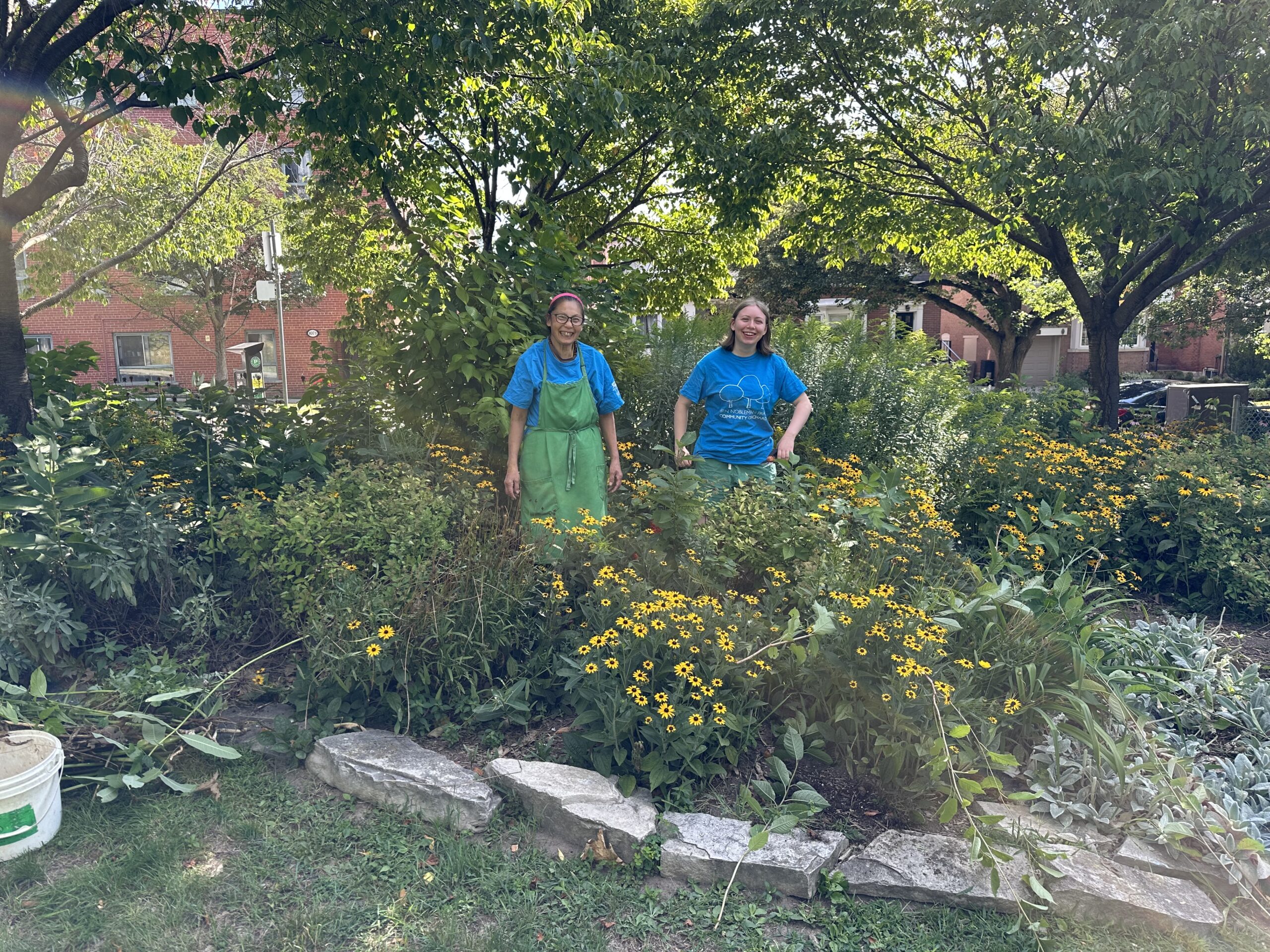
Annie and Eleanor, geared up for Operation: Save the Spirea! Hidden among the Black-Eyed Susans were our spirea shrubs, and it was time to help them see the light again. Photo credit: OrchardPeople.com
It was one of those perfect late August days in the park. The heat was finally breaking, there was a cool breeze in the air, and our volunteer team came out in full force for another stewardship day at Ben Nobleman Park Community Orchard.
Our top priority? Operation: Save the Spirea.
In our pollinator garden, we have lots of spirea shrubs. They’re beautiful plants, but lately, they’ve been crowded out by black-eyed Susans, weeds, and all sorts of eager neighbors. So, our team got to work. Volunteers waded into the garden, picked a spirea to focus on, lifted up its lower branches, cleared out the weeds hidden underneath, and weeded all around the base. Sometimes that meant moving black-eyed Susans, but don’t worry—they spread like wildfire, so we’ll never run out! Thanks to everyone’s hard work, our spireas can now breathe a little easier.
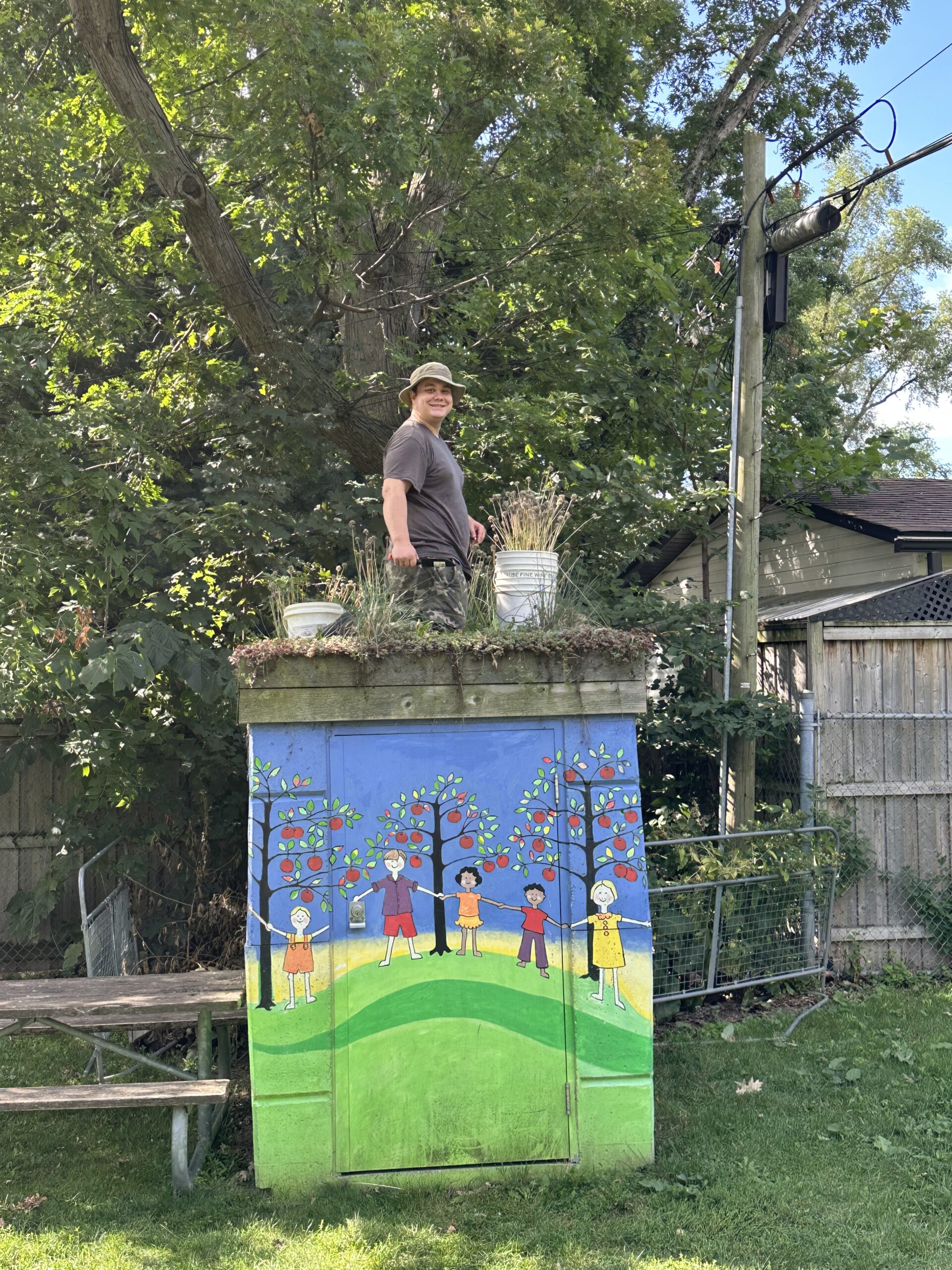
While that was happening, our new volunteer Ian climbed up onto the green roof of the orchard shed. Up there he found a patch of chives that had finished flowering, a few rogue dandelions, and of course our sedums, quietly waiting their turn in the sun. After a good tidy-up, the green roof is looking fresh and ready for another season.
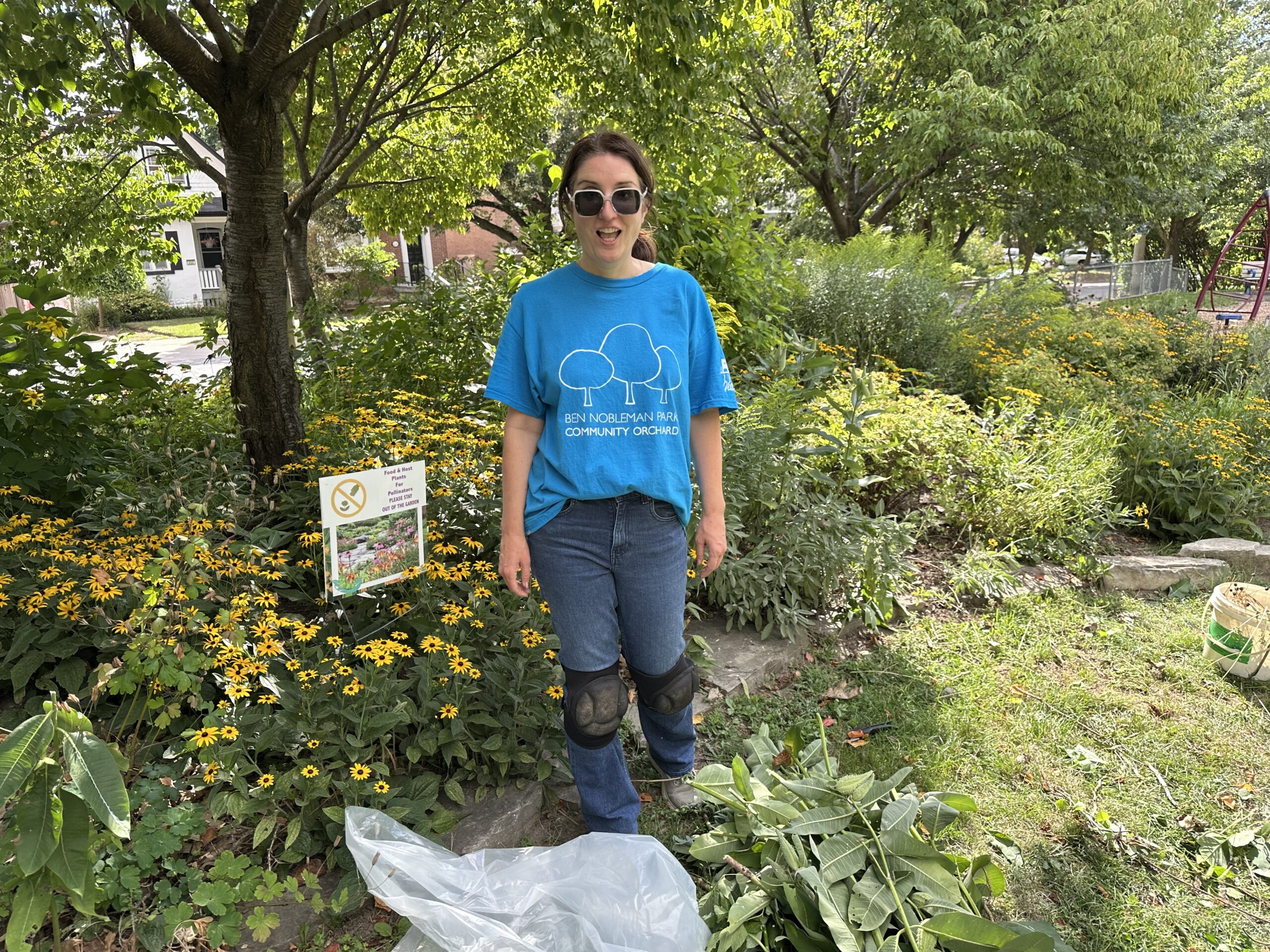
Meanwhile, Carolyn did her usual magic with the trees. She gave our plum a light prune, removed a dead stem from the mulberry, and then joined the pollinator garden crew. Carolyn also led the day’s stewardship session—thank you, Carolyn, for keeping everything running smoothly.
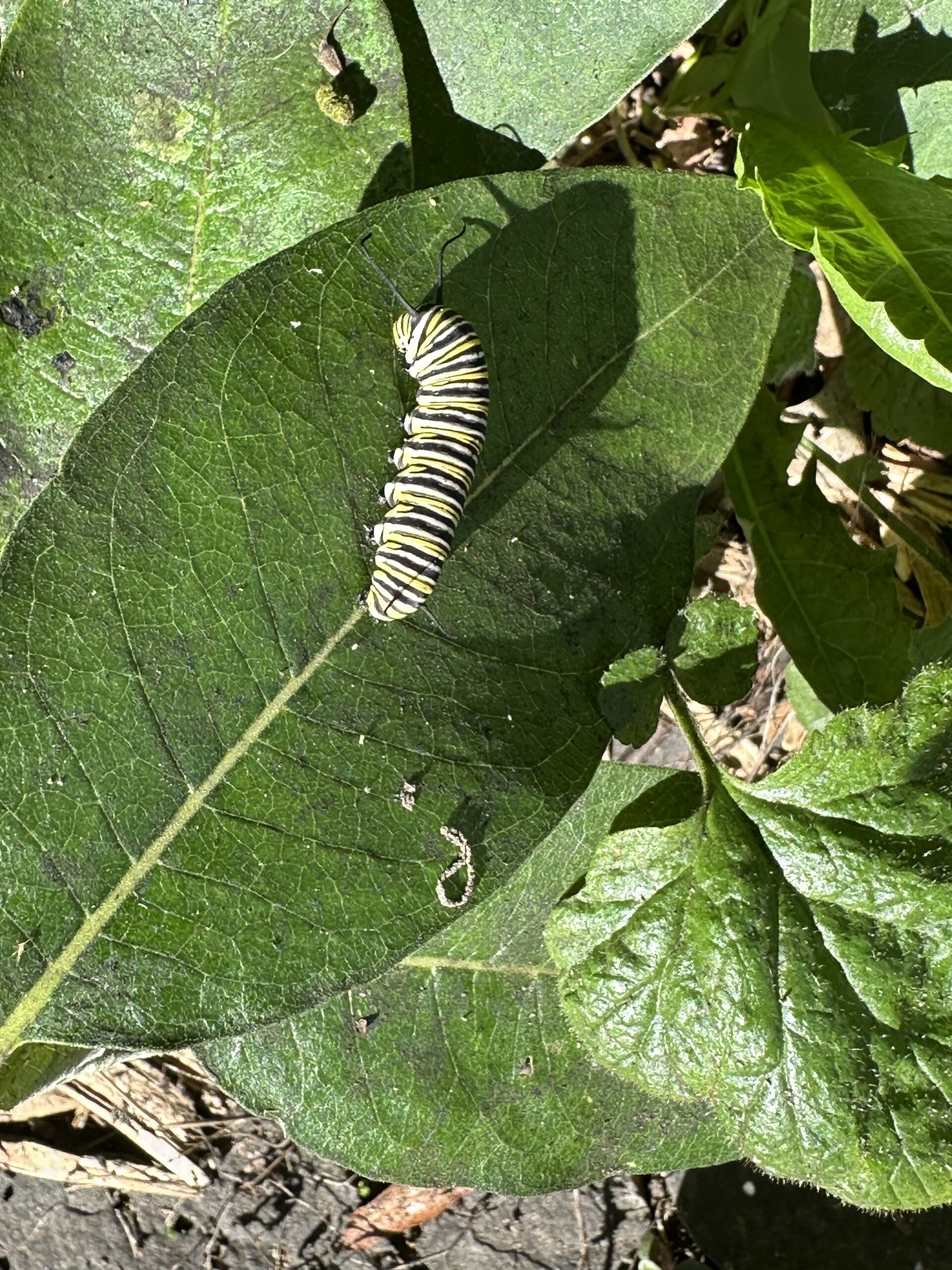
And of course, what’s a day in the orchard without discovering a few critters? We’ve been thinning out milkweed plants, and I thought it was too late in the season to find monarch caterpillars. But sure enough, on a young milkweed we spotted a big, beautiful monarch caterpillar. Jose named him Mauro—and Mauro stole the show for a while as we admired him munching away. Maybe the monarchs really do prefer the tender young leaves.
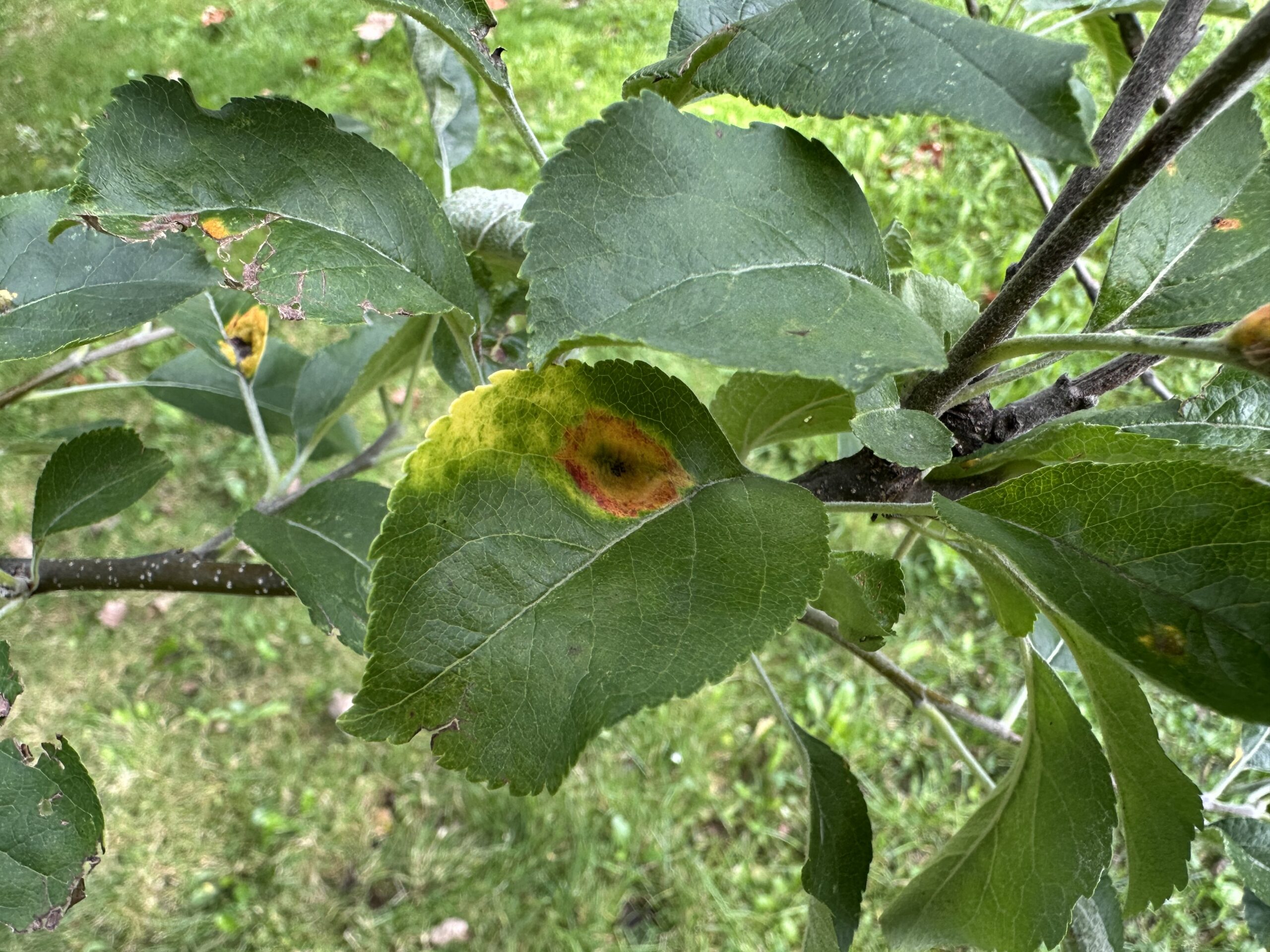
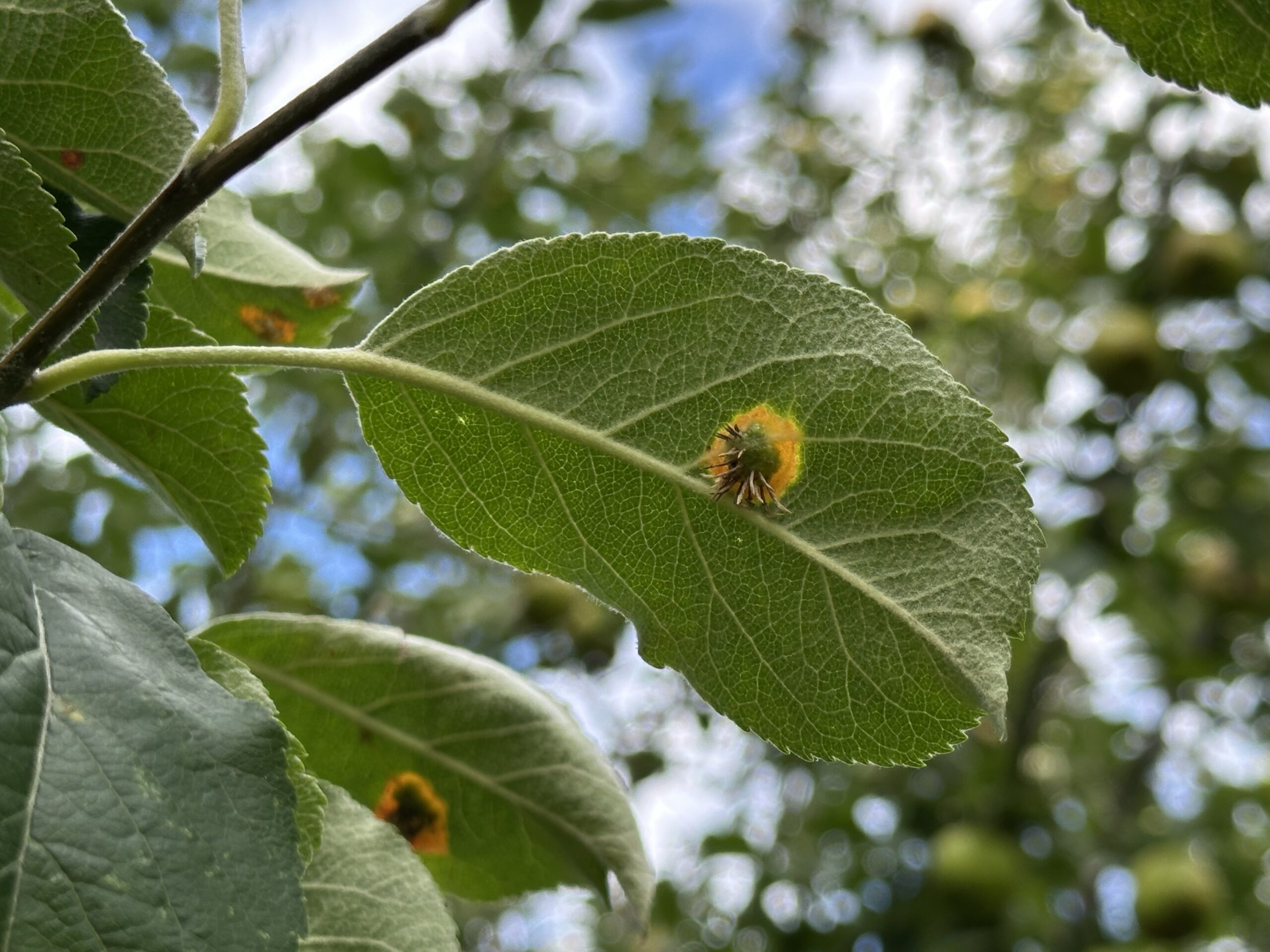
We also did a little “learning orchard” work by observing one of our apple trees that’s been struggling with multiple issues. The leaves are showing signs of rust (orange spots on top, fungal growths underneath). Come fall, it will be very important for us to rake up and remove those leaves so the rust spores don’t overwinter and return next year.
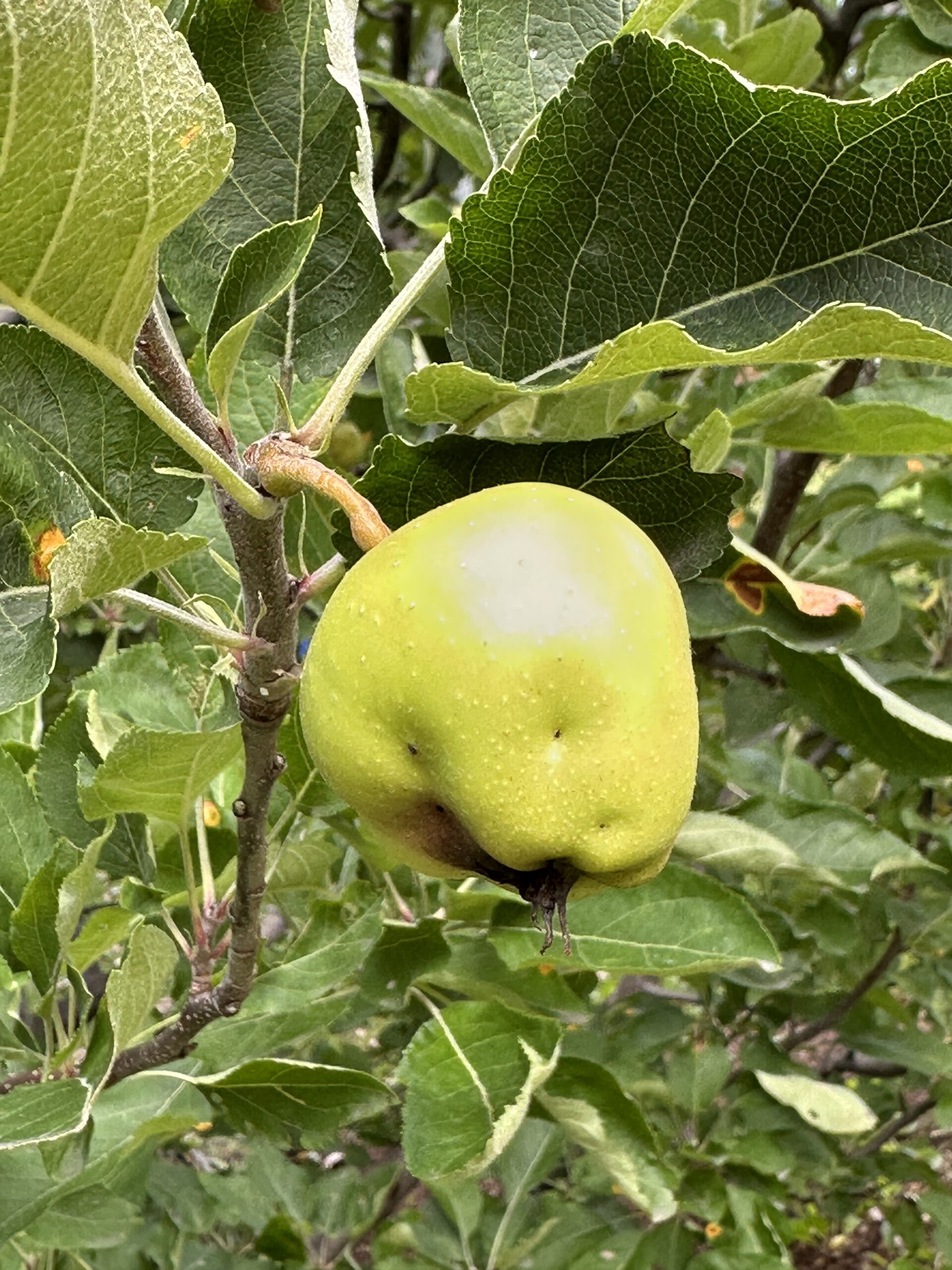

Some of the fruit had small holes with oozing sap—a classic sign of codling moth. On another tree, apples showed puckered, dimpled skin, which usually points to apple maggot. In the weeks ahead, we may cut open some of the affected fruit so volunteers can learn to spot the difference between the two pests.
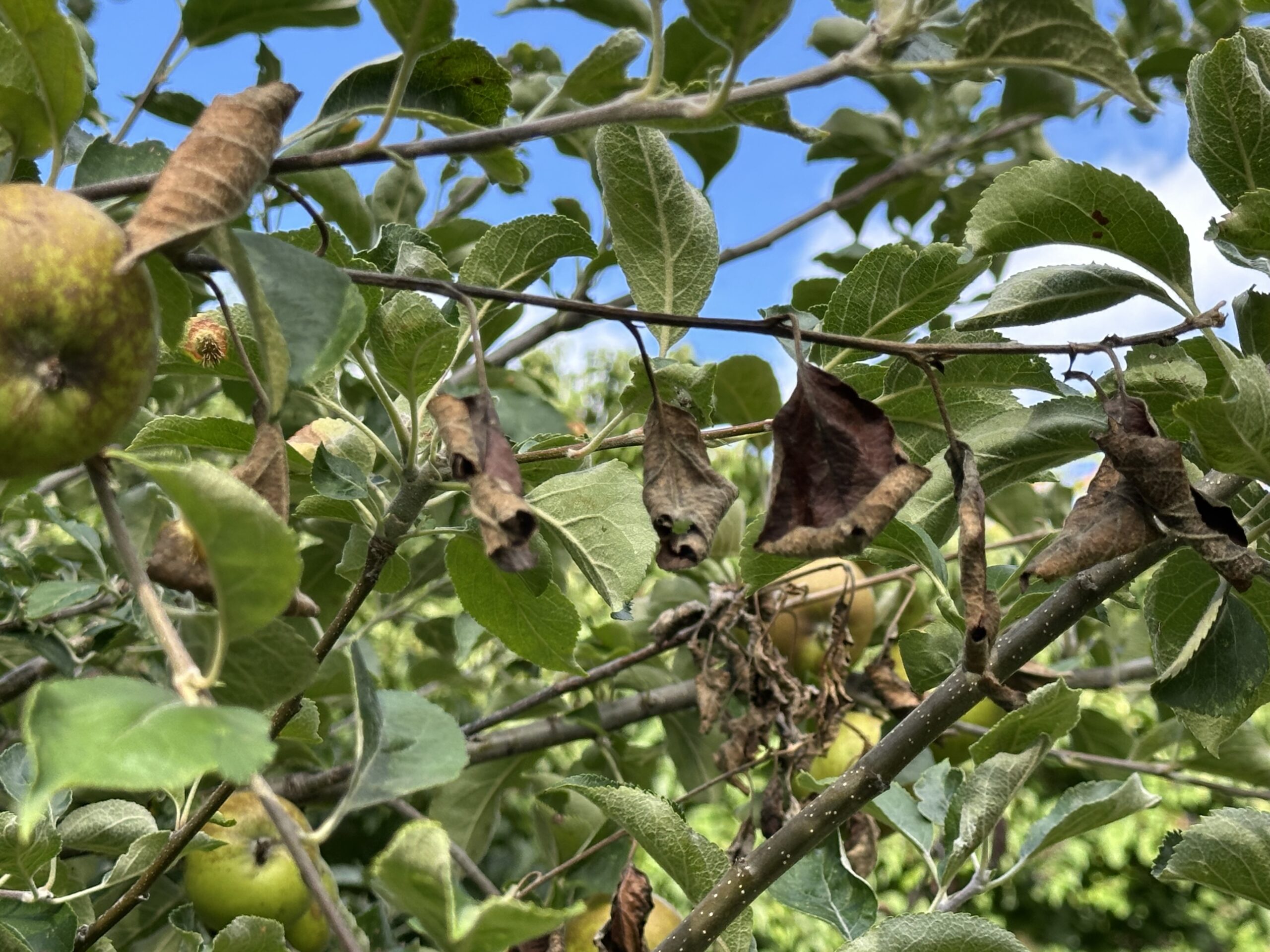
And yes, this same tree also has fire blight. We’ve been carefully pruning out the blighted branches, and our pruning team will keep an eye on it.
All in all, it was a delightful, breezy day at the orchard. We got a lot done, enjoyed the company of friends, and learned a few new things along the way. Huge thanks to everyone who came out and helped make the orchard a little healthier and happier.
And before I forget—did you know you can take a self-guided, interactive tour of the orchard? It’s a wonderful way to learn about not just the orchard itself but also the history of our community. Or you can watch the video version of the tour below. We’d love for you to explore it!
Susan Poizner is one of the volunteers for The Ben Nobleman Park Community Orchard in Toronto. She is the creator of the fruit tree care education website OrchardPeople.com. Susan is the author of four fruit tree care books including Grow Fruit Trees Fast: A Beginner’s Guide to a Healthy Harvest in Record Time. She is also the host of the Orchard People podcast and an ISA Certified Arborist.