

It was another beautiful day at Ben Nobleman Park. Despite a light sprinkle of rain, volunteers showed up in full force, and once again we wrangled the plants in the pollinator garden.
Our biggest task today was removing seedling trees and suckers before they could take over the garden. We also restored the pathways so that it will be easier for us to get into the garden and care for it.
Along the way, we discovered what we thought might qualify as an award-winning cherry tree sucker!
The ornamental cherry trees in our pollinator garden are notorious for sending up vigorous shoots (called suckers) from their roots. We cut these shoots as close to the ground as possible so that the pollinator bed isn’t gradually taken over by ornamental cherry trees.
But this plant was enormous. It was the size of a shrub, with multiple stems and remarkably vigorous growth.
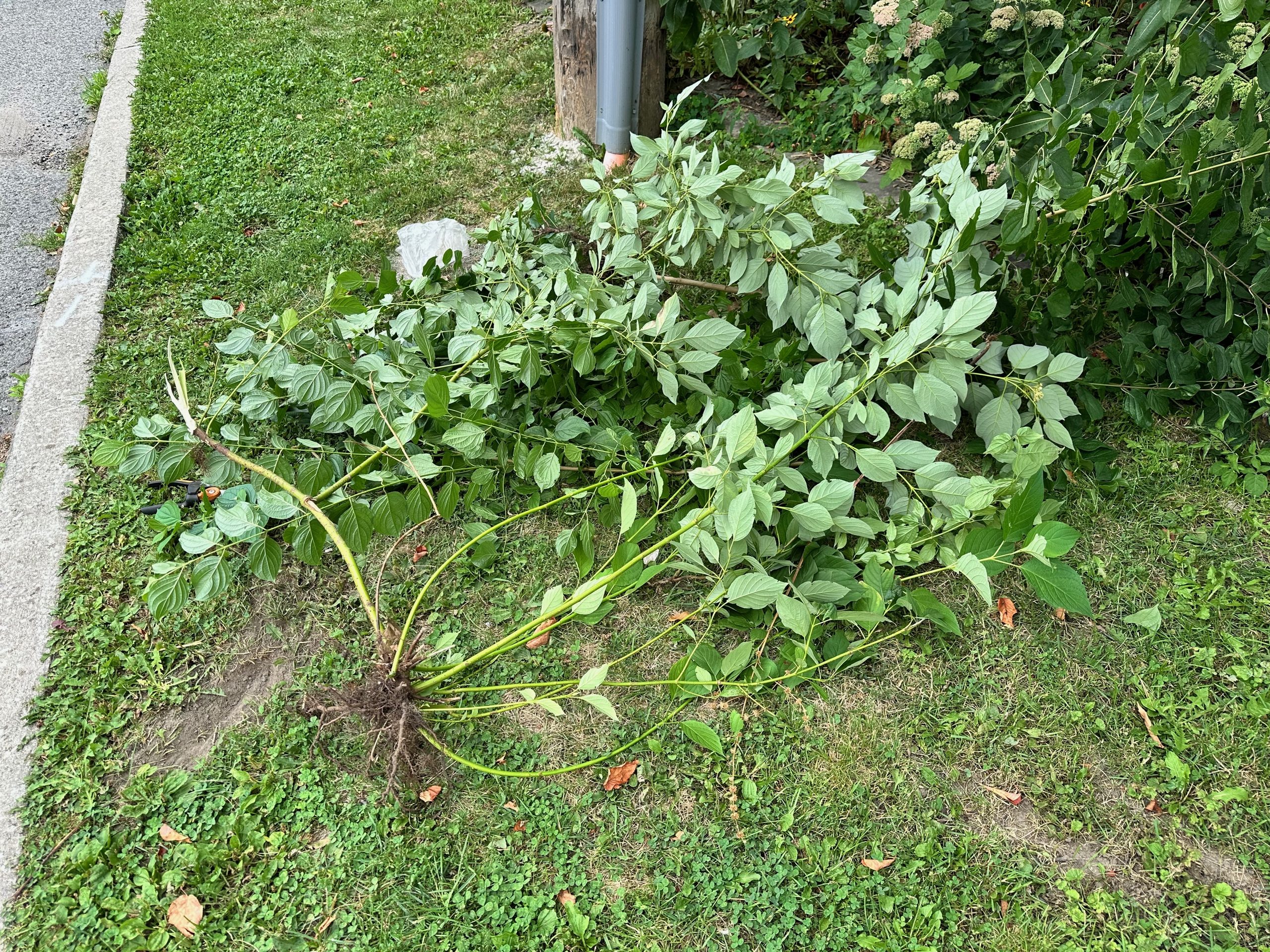
Fortunately, no task is too challenging for volunteer Ian. He dug the whole thing out, roots and all. Some of its roots appeared to lead toward one of the ornamental cherry trees growing beside the pollinator bed, so at first we assumed we had found a particularly ambitious cherry sucker.
But then we noticed something strange. The leaves of the ornamental cherry tree had serrated, or finely toothed, edges. The mystery plant’s leaves had smooth edges. Its leaves also grew in pairs opposite one another along the stem, and the veins curved gracefully toward the tip.

Those clues told us that it wasn’t a cherry tree after all. It appeared to be a dogwood, and the greenish-yellow stems gave us another clue. Since we already have yellow-twig dogwood growing in the garden, this vigorous shrub was indeed probably a sucker…but it came from one of the dogwoods in the center of the garden rather than from one of the cherry trees.
So, it was not an award-winning cherry sucker after all. Instead it was probably an award-winning yellow-twigged dogwood sucker!
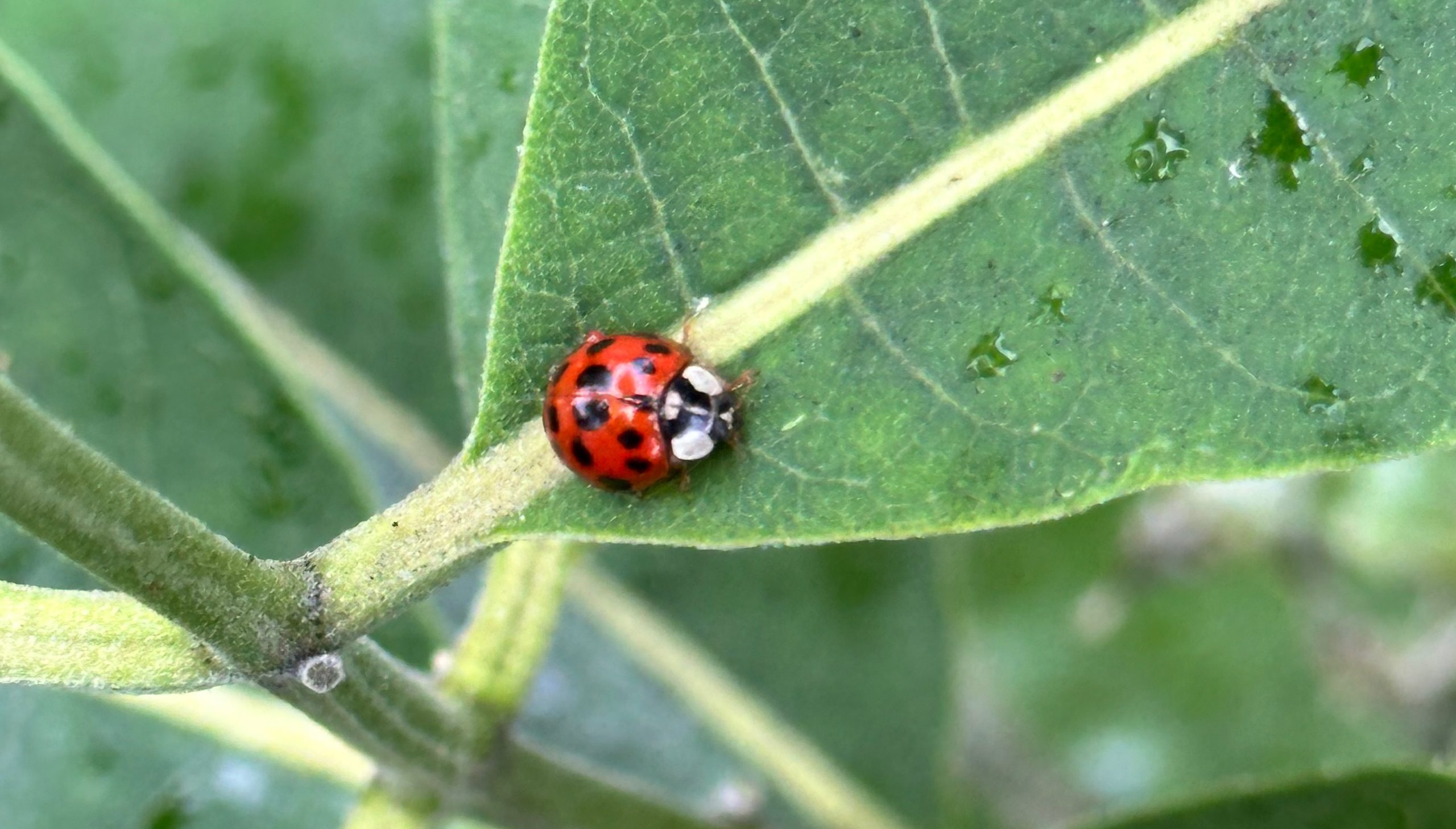
We also had some interesting insect visitors. One was a rough stink bug. The other was a multicoloured Asian lady beetle. The creamy-white patches near its head looked so much like eyes, but they are actually markings on the shield-like section behind its head. Its real eyes were much smaller and harder to see.

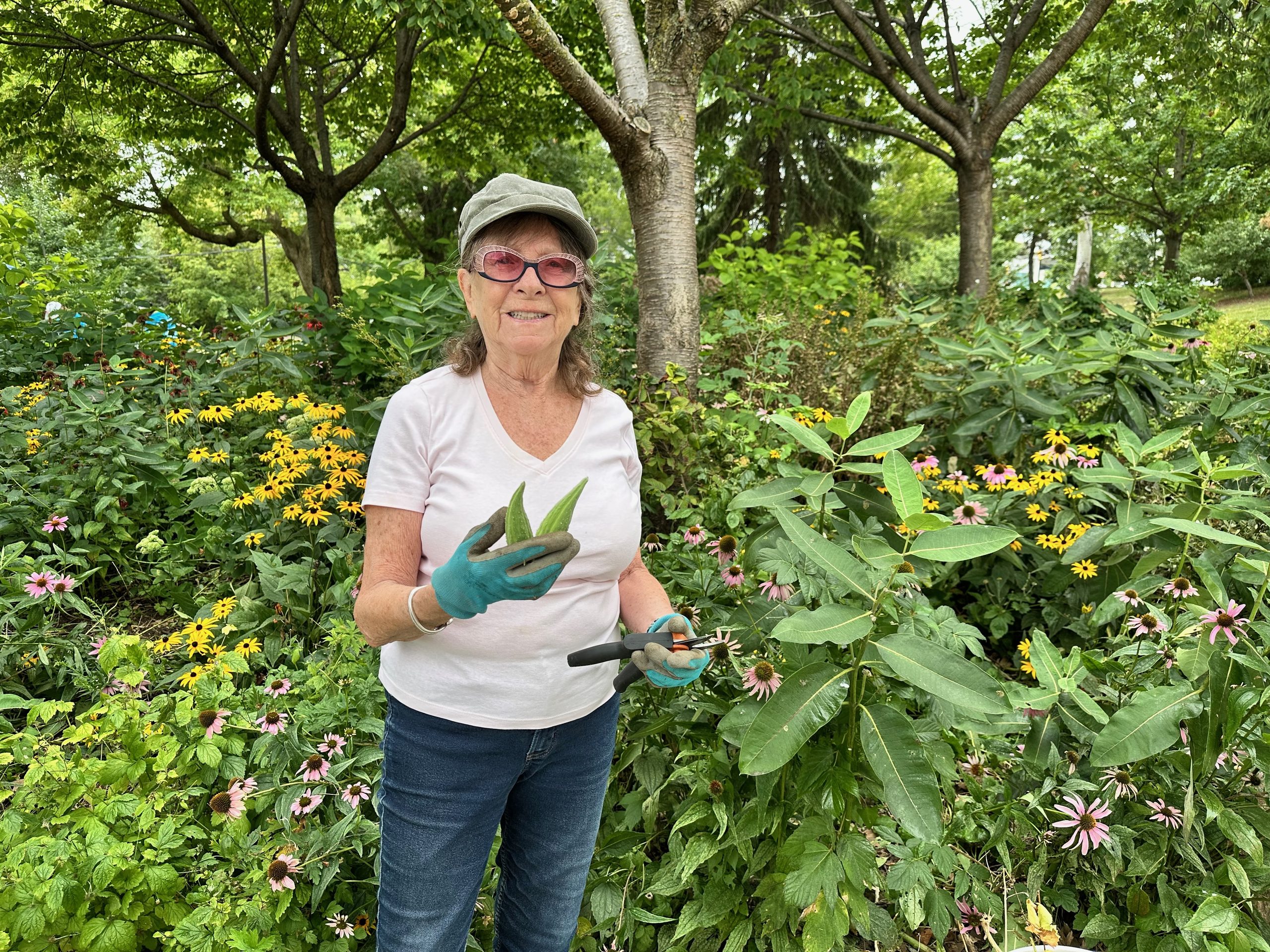
We were also happy to welcome a wonderful new volunteer, Shayndelynne, who is a citizen scientist with a special interest in monarch butterflies.
Shayndelynne collected seeds from our milkweed plants so that they wouldn’t spread throughout the bed. She will plant some in her own garden, where they can continue supporting monarchs.
If you would like some milkweed seeds for your garden, join us at one of our upcoming stewardship days. Shayndelynne will be happy to share some with you!
She was terrific, and we are so happy to have her on the team.
It was a fantastic morning, and we got so much work done. It’s incredibly rewarding to finish a good morning’s work and immediately see the results. The pollinator bed now looks beautiful, open and well cared for.
More rain is expected this evening. Hopefully, all the clearing and soil work we did will help that water soak into the ground where the plants can use it.
Thank you to everyone who came out and helped. We’ll see you at our next stewardship day! To find out when it is check our calendar. And if you want to join us, send an email to growingforgreen@gmail.com.
By the way, after stewardship, two of us went for a delicious breakfast at the newly branded Blue Rabbit Bar & Grill Restaurant (located at 1028 Eglinton Avenue West). We loved it and we hope to return one evening for their live music night where our friend and Cedarvale neighbour, Joyce Dillman will be singing. We’ll keep you posted on when that will be!