
An Unexpected Experiment on Our Old Plum Tree
Fall has arrived at Ben Nobleman Park, and the park looks absolutely beautiful. The trees are slowly slipping into dormancy. Some still have green leaves hanging on, others are nearly bare, and the maples are bursting with reds and oranges. It’s one of those times when the park feels peaceful and alive all at once.

Susan was surprised to find that a park visitor had tried air layering on our old plum tree — a technique that only works during the growing season. In winter, the damp moss can trap moisture and cause the wood to rot. Photo credit: OrchardPeople.com
But during a recent walk through the orchard, something caught my eye. On our old plum tree in the northeast corner, I noticed bundles tied around the branches — plastic wrap or bags packed with what looked like moist soil or moss. I moved closer and realized it looked like an air layering experiment.
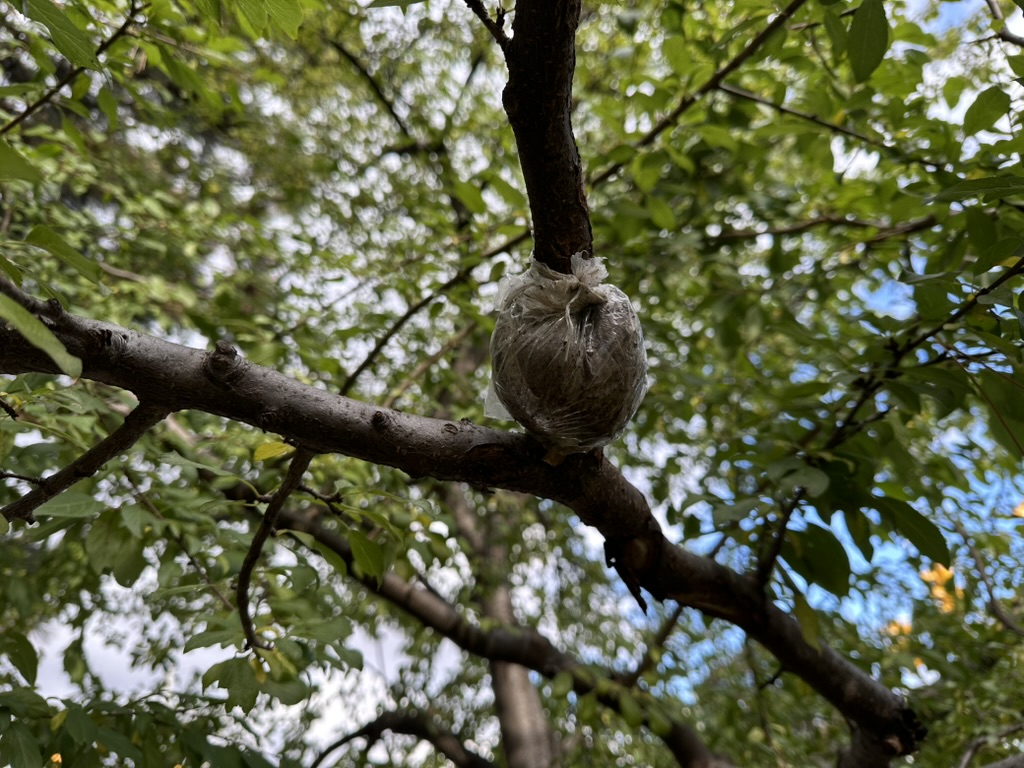
Air layering is a propagation method where people wrap a section of a branch in moist sphagnum moss and then secure that in plastic. The goal is to encourage new roots to grow on that branch so that you can then prune it off and plant it in another garden.
Air layering can work — but only when the tree is actively growing. And it works best on younger branches, not old, woody ones. So, doing this in the fall, when our trees are going dormant, was bound to fail. Worse, those tightly wrapped bundles could hold moisture against the bark and cause rot over winter.
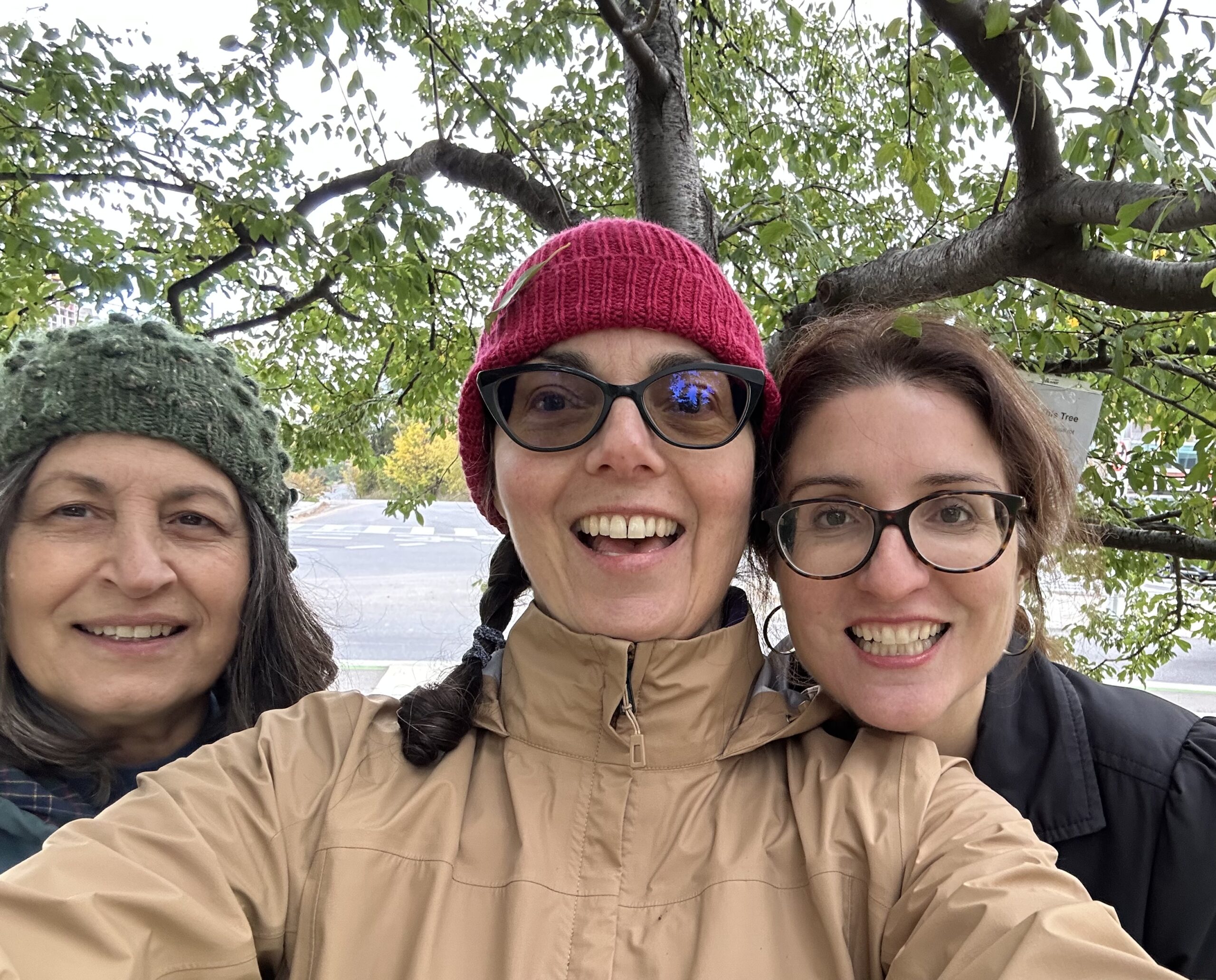
We knew we had to help the tree. So, Giselle, Carolyn, and I met at the park with scissors and a box cutter to investigate.
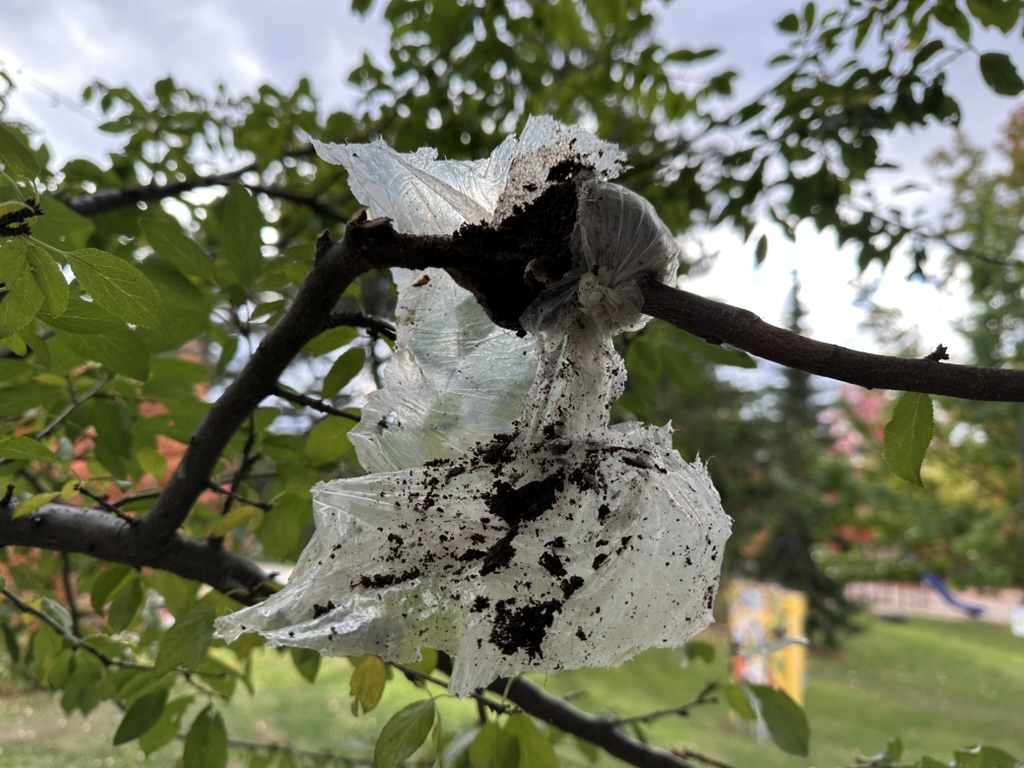
One by one, we carefully opened the bundles. Sphagnum moss spilled out as we worked. Some of the packages were tied on tight — even high up in the branches. But when we peeled them away, we were relieved to see that the branches underneath were unharmed. Whoever did this hadn’t made deep cuts, just small scrapes in the bark. The branches were healthy. These bundles had only been on the tree for a week or two, so our old plum tree had weathered the experiment well.
We felt like we were fruit tree detectives! Who had done this? We decided it was probably someone curious and creative, maybe a person who grew up in a warmer climate where trees can be propagated year-round. Maybe they just wanted to grow their own plum tree at home.
When we first saw the bundles on our tree, we found it disturbing. Who had been messing with the trees we love and care for every year? But after we saw that the branches were fine, we decided to reframe this whole experience. Now we see this experiment as an act of love for trees, even if it wasn’t done at the right time or in the right way. Still, we wanted to leave a friendly message for our mystery propagator.
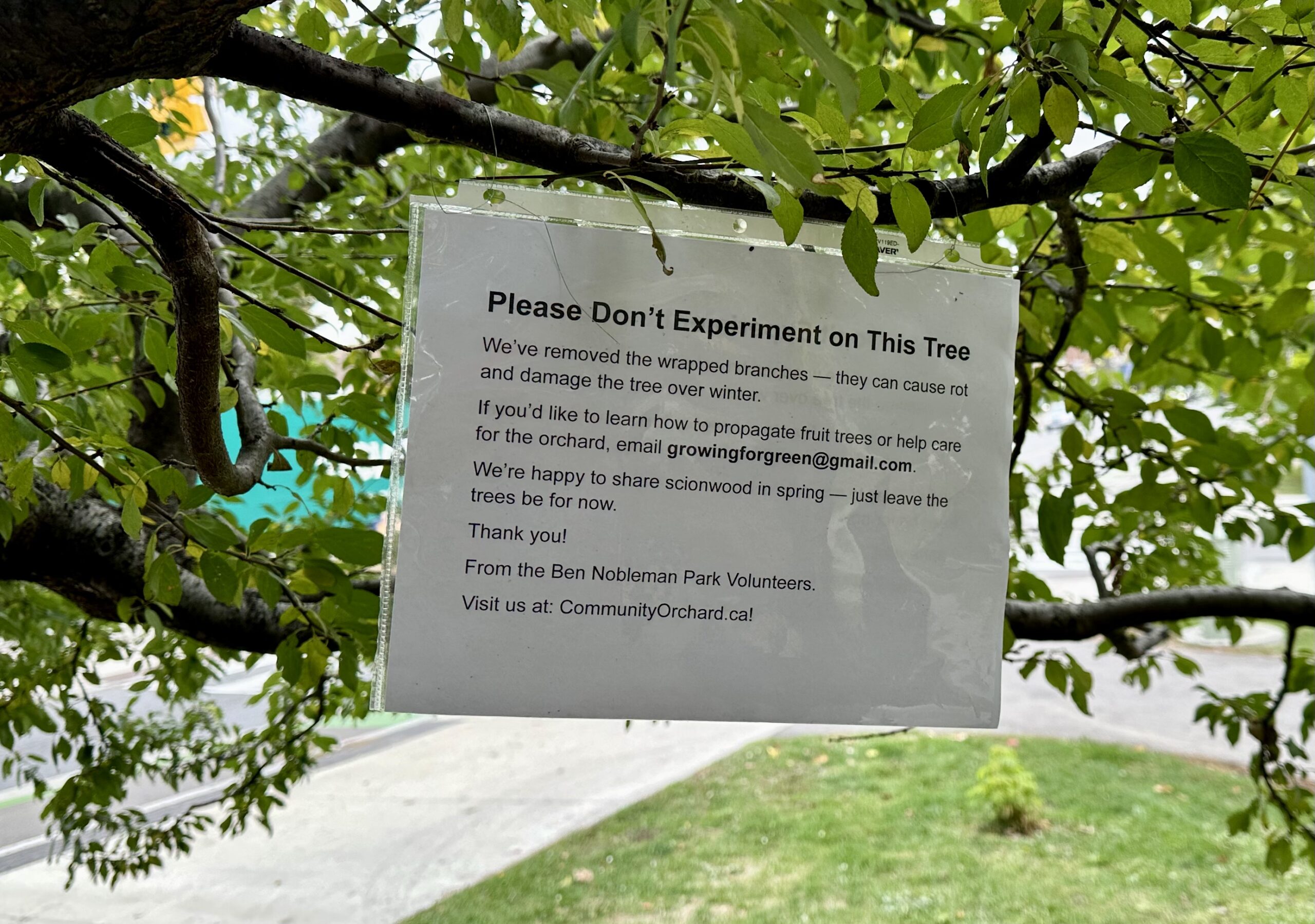
So, we wrote a note and hung it gently on the tree:
Please Don’t Experiment on This Tree
We’ve removed the wrapped branches — they can cause rot and damage the tree over winter.
If you’d like to learn how to propagate fruit trees or help care for the orchard, email growingforgreen@gmail.com.
We’re happy to share scionwood in spring — just leave the trees be for now. Thank you!
From the Ben Nobleman Park Volunteers. Visit us at: CommunityOrchard.ca!
We tied the note loosely so it wouldn’t harm the branch and stepped back to admire our work. The tree looked healthy and proud again.
And in the end, something that started out as a worry turned into something rather lovely. We learned a lot that morning — about patience, curiosity, and reframing unexpected surprises. Personally, I even found myself intrigued by the air layering technique. Maybe it’ll be a topic for a future podcast episode.
If the person (or people) who tried this experiment happens to read this post — please come join us! You clearly love fruit trees, and we’d love to meet you. In the spring, when the trees wake up again, we can try some proper propagation experiments together.
Until then, our plum tree can rest — and so can we — knowing it’s safe, healthy, and ready for winter
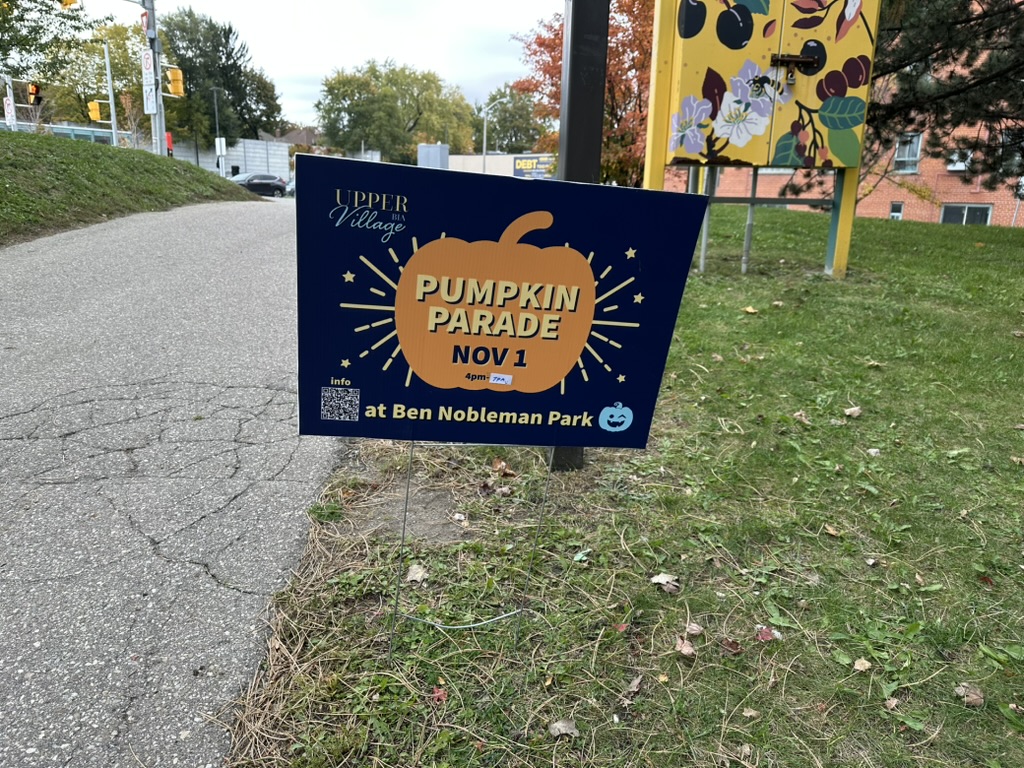
PS. While we don’t have any more stewardship days coming up this year, we do always look for excuses to get together. Come and join us to support our local BIA in our annual Pumpkin parade taking place on November 1 at dusk in the Ben Nobleman Park. Bring your pumpkin if you have one. Last year was fun! See you there! Can’t make it? Check out the Upper Village BIA’s Virtual Tour which I co hosted.
See you there!
Susan Poizner is one of the volunteers for The Ben Nobleman Park Community Orchard in Toronto. She is the creator of the fruit tree care education website OrchardPeople.com. Susan is the author of four fruit tree care books including Grow Fruit Trees Fast: A Beginner’s Guide to a Healthy Harvest in Record Time. She is also the host of the Orchard People podcast and an ISA Certified Arborist.