

The apricot trees in Ben Nobleman Park Community Orchard have been surrounded in drama this year.
Apricots blossoms almost died in a late spring frost
In the early spring, our two apricot trees were in full bloom when a late frost was forecast. We knew that a frost would kill the blossoms and dash our hopes for fruit this year.

So the volunteers of Ben Nobleman Park Community Orchard collected tarps from around the community, linked them together and used them to cover the trees. The goal was to use the tarps to help keep the trees slightly warmer.
We hoped the blossoms would survive. In the video below you can see the dramatic moment of us managing to cover these large trees.
The trees produced a bumper crop that had to be thinned
Our work paid off. Two days later we removed the tarps and soon after baby fruit appeared where the blossoms once were. It was a bumper crop! So much so within a few weeks a group of us spent time thinning the fruit.

If an apricot tree produces too much fruit, then that fruit will not ripen properly and it will not have room to grow to full size.
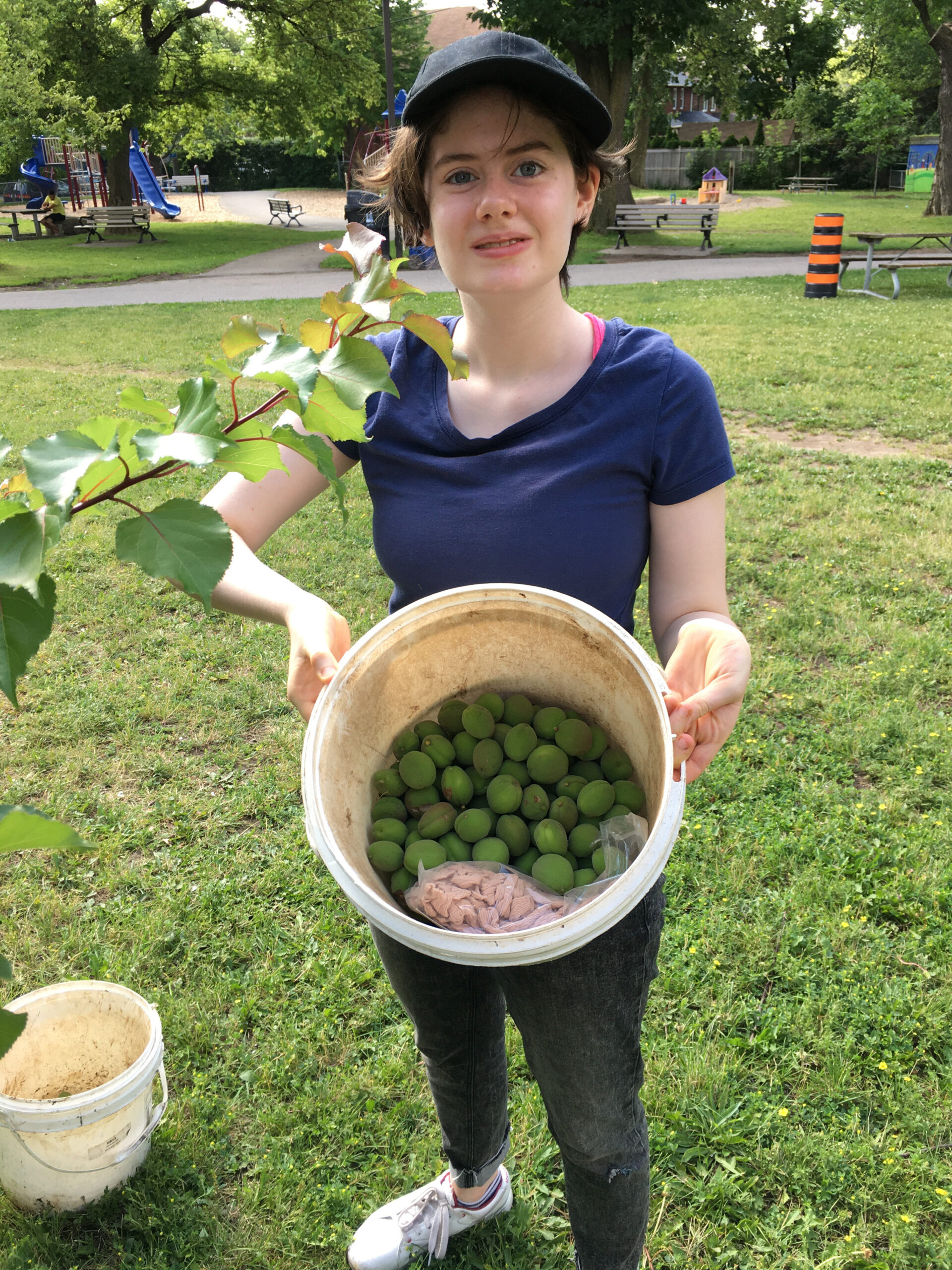
Just days before the fruit started ripening, it vanished
In late July, all was well, the crop was about to ripen and we couldn’t wait to have our first taste.
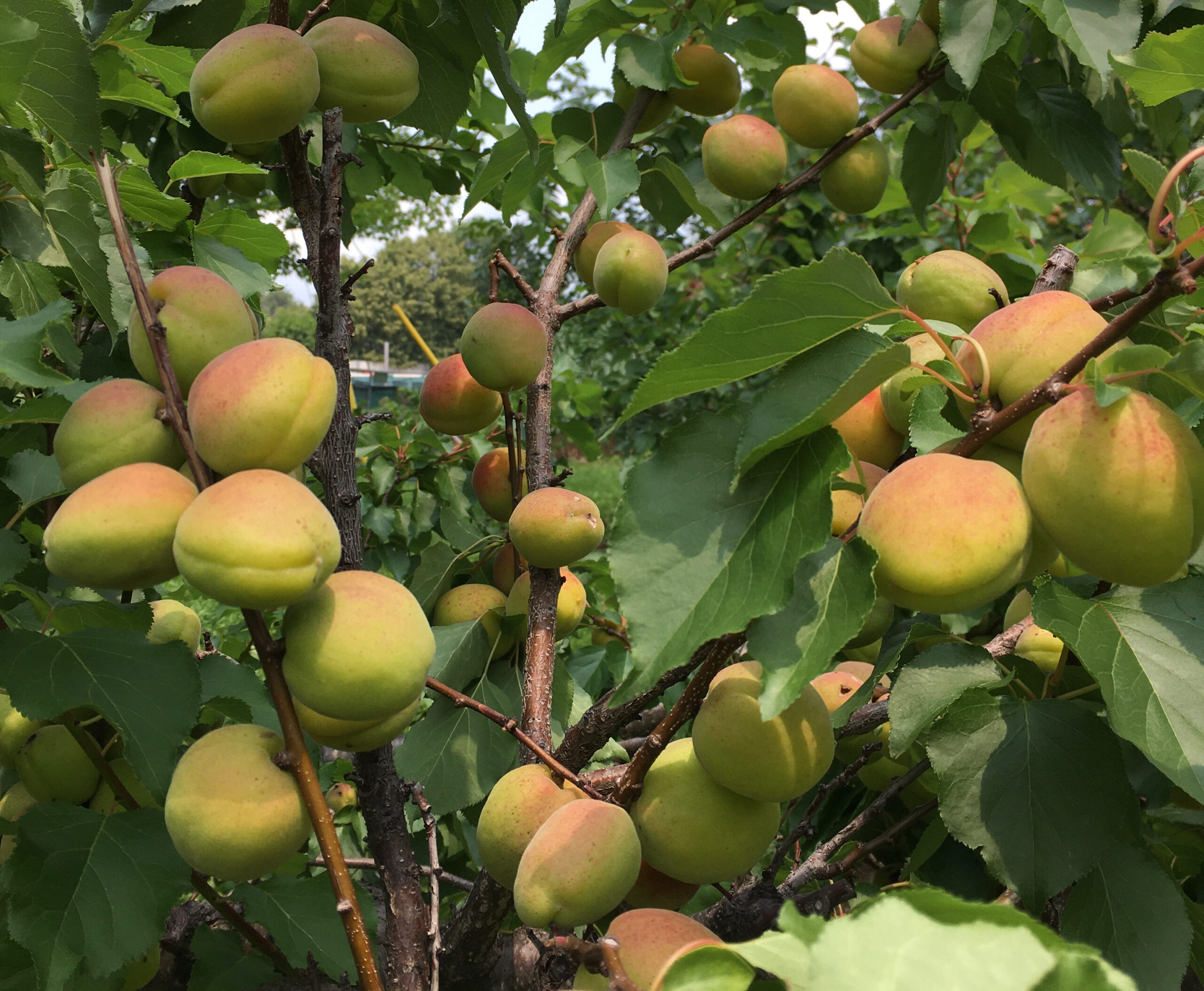
But then the fruit on the tree started to vanish.
A park visitor saw a woman harvesting the unripe fruit, filling up a large tote bag.
A few nights later, the woman returned (or was it a different person?). She was spotted harvesting all the rest of the fruit on the tree. It was 10.30 at night.
Understanding the park’s harvesting guidelines
Certainly we, as orchard volunteers, are disappointed. We’d love to have been able to enjoy the fruit of our labours. We understand that this is a community orchard, and the fruit is for the entire community.
But our hope is that park visitors will harvest responsibly keeping these guidelines in mind:
- Wait until the fruit is ripe before harvesting.
- Harvest and enjoy a handful of fruit or as much as you can enjoy while in the park. Then leave the rest for someone else.
- For those who want a larger share of the harvest, join one of the community harvest days. To find out about those, you can ask to be added to our community list by sending an email to growingforgreen (at) gmail.com.
Signage ideas for the future
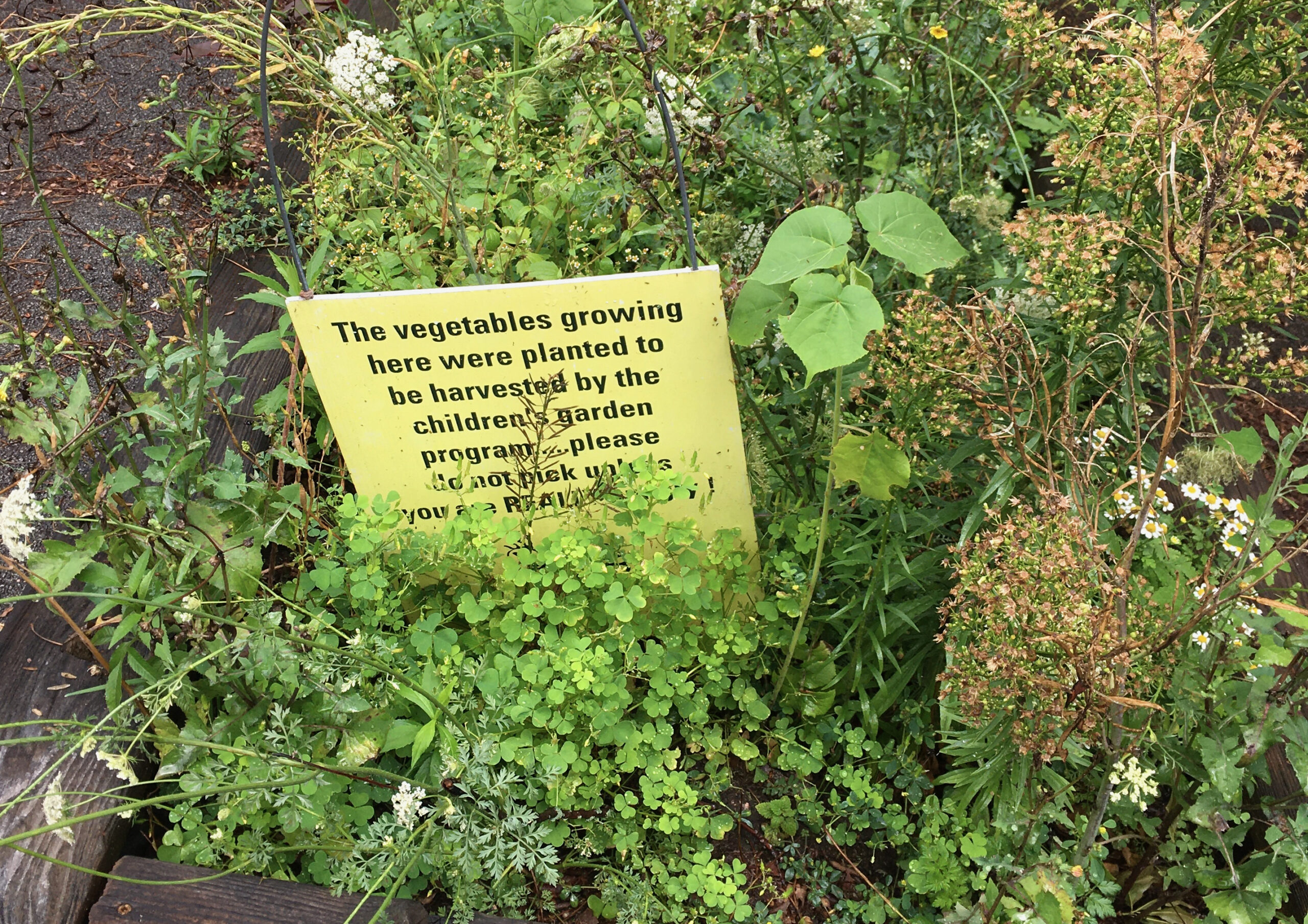
During a recent visit to the children’s garden in High Park, I saw a sign I liked….it said “The vegetables growing here were planted to be harvested by the children’s garden program. Please do not pick unless you are REALLY hungry.”
It’s impossible to know why those who harvested the apricot trees this year took all the fruit. Hopefully they had a good reason and that fruit will help them in some positive way.
So that was a sad discovery for the volunteers at our stewardship session this past weekend. But it was balanced by some wonderful news too.
Good news flash #1: We had an early, apple tree mini-harvest
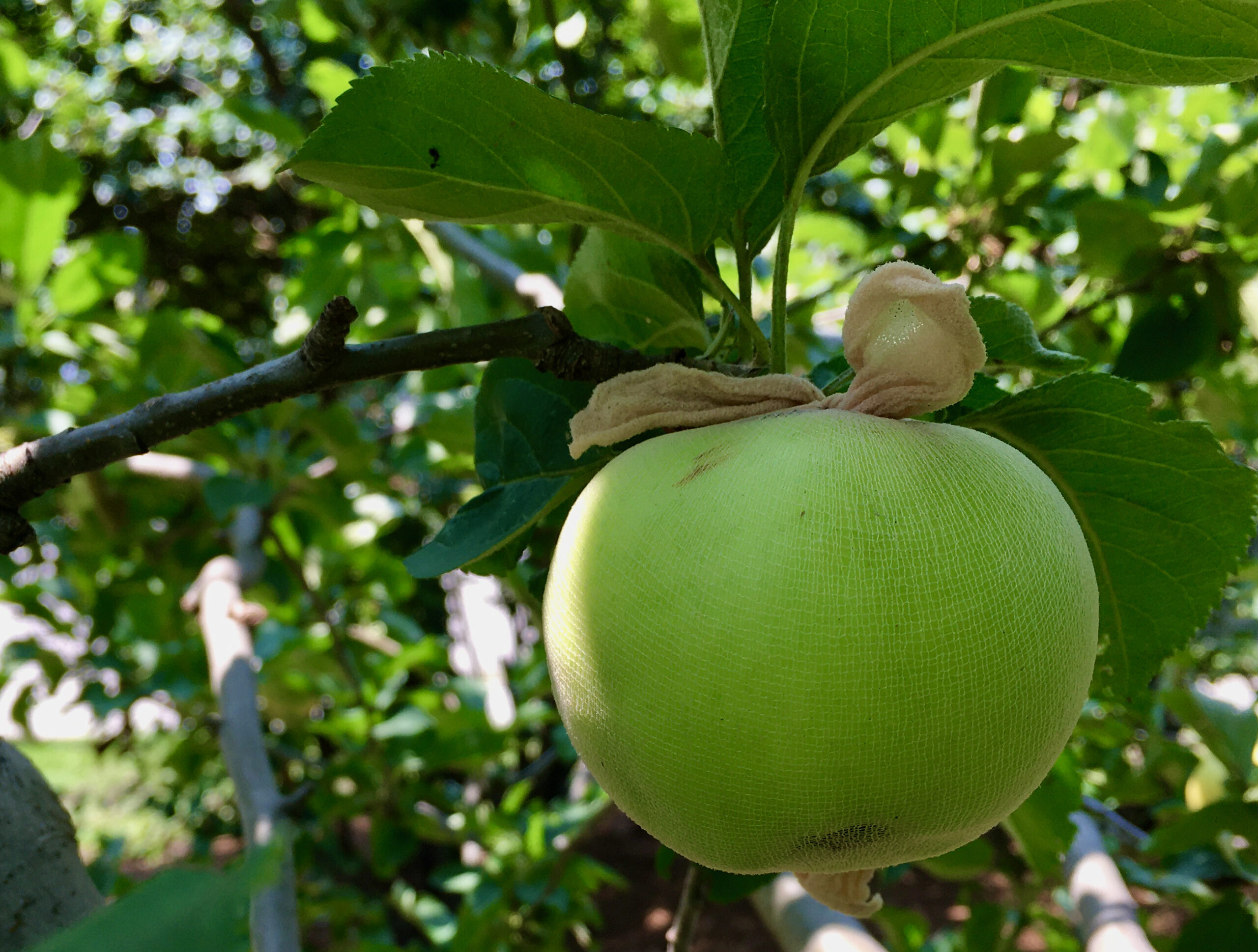
We have also worked hard to care for our apple trees. One of the jobs we did was cover the apples with orchard sox. These nylons sox protect the growing fruit from insect pests. They prevent insects from laying their eggs under the skin of the growing fruit.

We also thin the apples when we cover them with sox. Usually we keep just one apple in every cluster.

This year we went through two bags of Orchard Sox, so we covered a total of 288 apples!
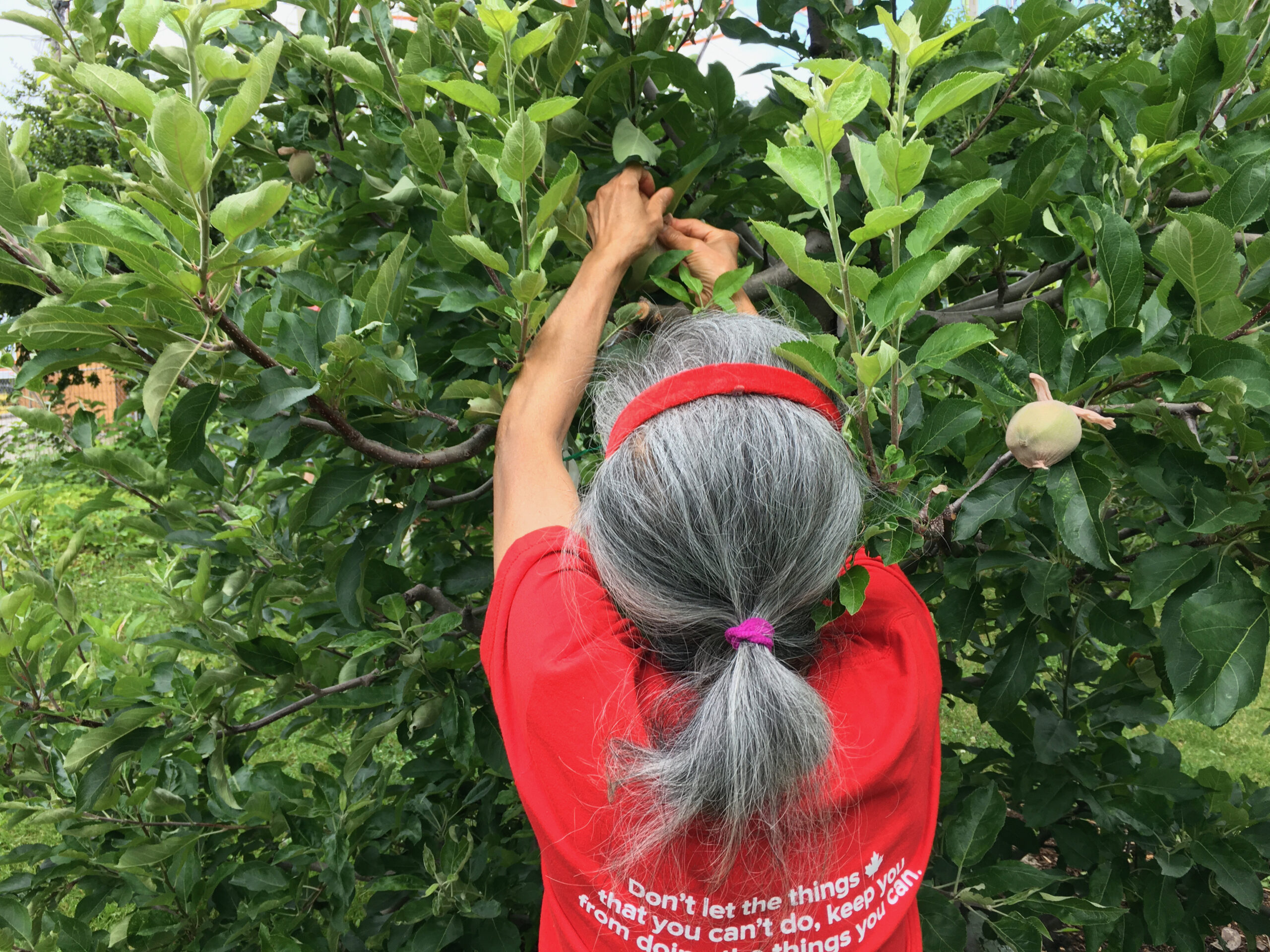
We have just one tree that produces ripe apples earlier in the season. Usually these are ready in late august but this tree had some small ripe apples on it. Each member of our team of 10 volunteers was able to enjoy a juicy, sweet and tasty apple!
Good News Flash #2: We have monarch butterfly babies in our pollinator garden
And to make us even happier…this weekend our pollinator garden, was buzzing with beneficial insects. Lots of bees were buzzing around the blossoms but then we found something very special.
While numbers of Monarch butterflies are down around the world, we found a monarch larvae (caterpillar) on one of our milkweed plants. You can see it in the minute long video below.
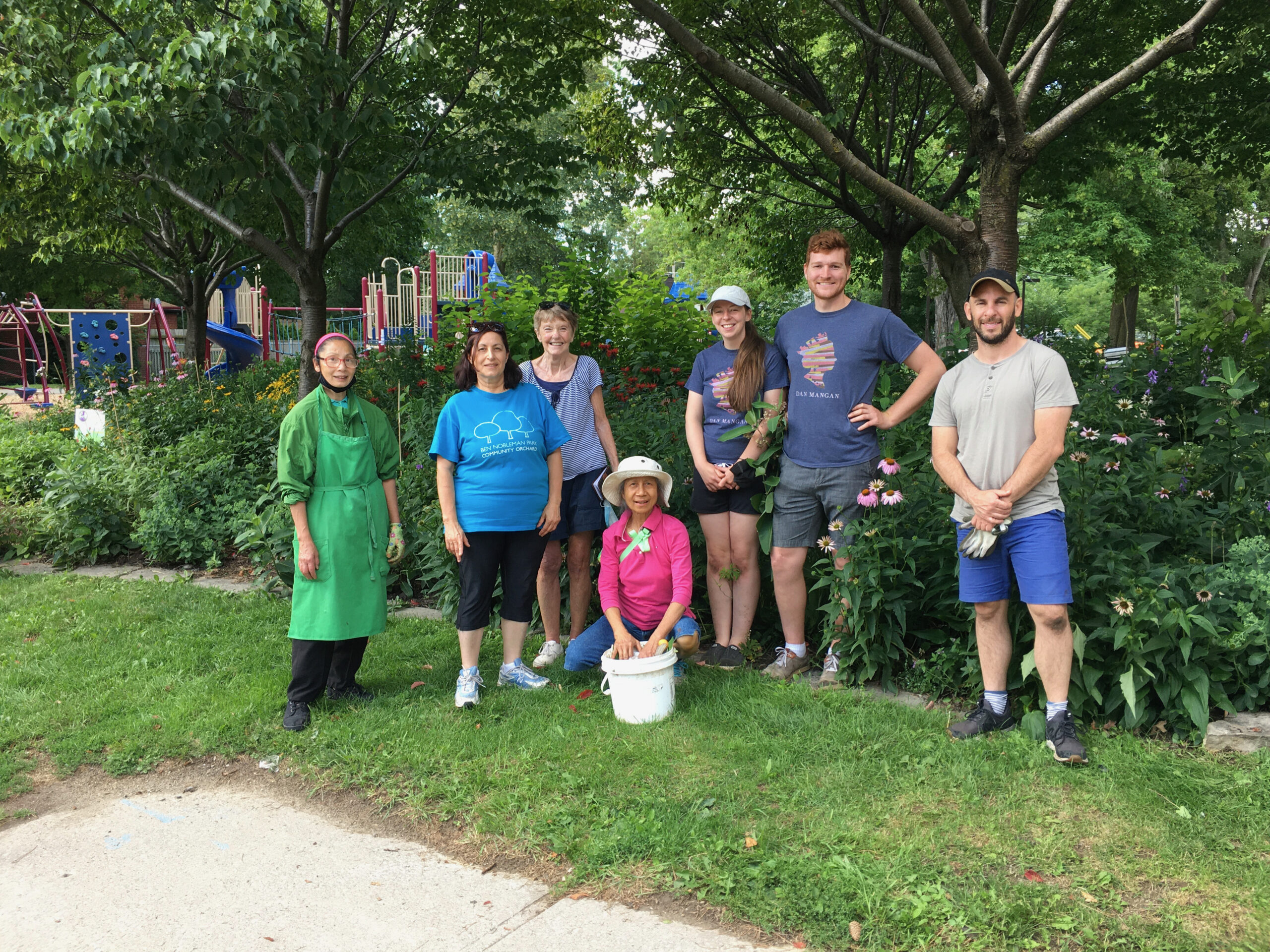
A number of volunteers in our group have spent hours and hours caring for the garden while others tend our fruit trees. It’s so wonderful to see all of our work pay off.
So what happened to the apricots? Who knows…
So in the end, what happened to the apricots in Ben Nobleman Park? Well, we will never really know. But what we do know is that our hard work did produce a beautiful, healthy crop. I hope someone out there is enjoying it.
Susan Poizner is one of the volunteers for The Ben Nobleman Park Community Orchard in Toronto. She is the creator of the fruit tree care education website OrchardPeople.com. Susan is the author of four fruit tree care books including Grow Fruit Trees Fast: A Beginner’s Guide to a Healthy Harvest in Record Time. She is also the host of the Orchard People podcast and an ISA Certified Arborist.