

For years, the dogwood bed on the west side of Ben Nobleman Park has been a bit of a challenge. Each year, city gardeners work hard to clean it out. But the weeds and dogwood suckers always grow back so quickly.
This year, the volunteers of The Ben Nobleman Park Community Orchard worked together with acting park supervisor Nancy Carneiro and a team of fantastic gardeners from The City of Toronto Parks Department to transform this bed into a shady oasis.
We decided to mulch the dogwood bed using the cardboard mulching technique (also known as “lasagna gardening”!) and we accomplished this in four steps.
Step 1: Weed and Remove Suckers from Overgrown Bed
The first part of the job was a huge challenge. City of Toronto Gardeners fought their way into the overgrown bed and cut down the dogwood and other tree suckers and weeded the bed. They pruned the dogwoods so that you could see through to the other side. Then they dug a perfect edge around the bed.
Then it was time for the Ben Nobleman Park Community Orchard Volunteers to do our bit to prevent the weeds and suckers from coming back. And so, Susan and Cliff took a little drive on recycling day to St. Clair Avenue West. That’s the day the local shops put out used cardboard boxes for city pickup. We picked up two carloads of cardboard to use in the park.
Step 2: Layer Cardboard on Bed to Smother Weeds
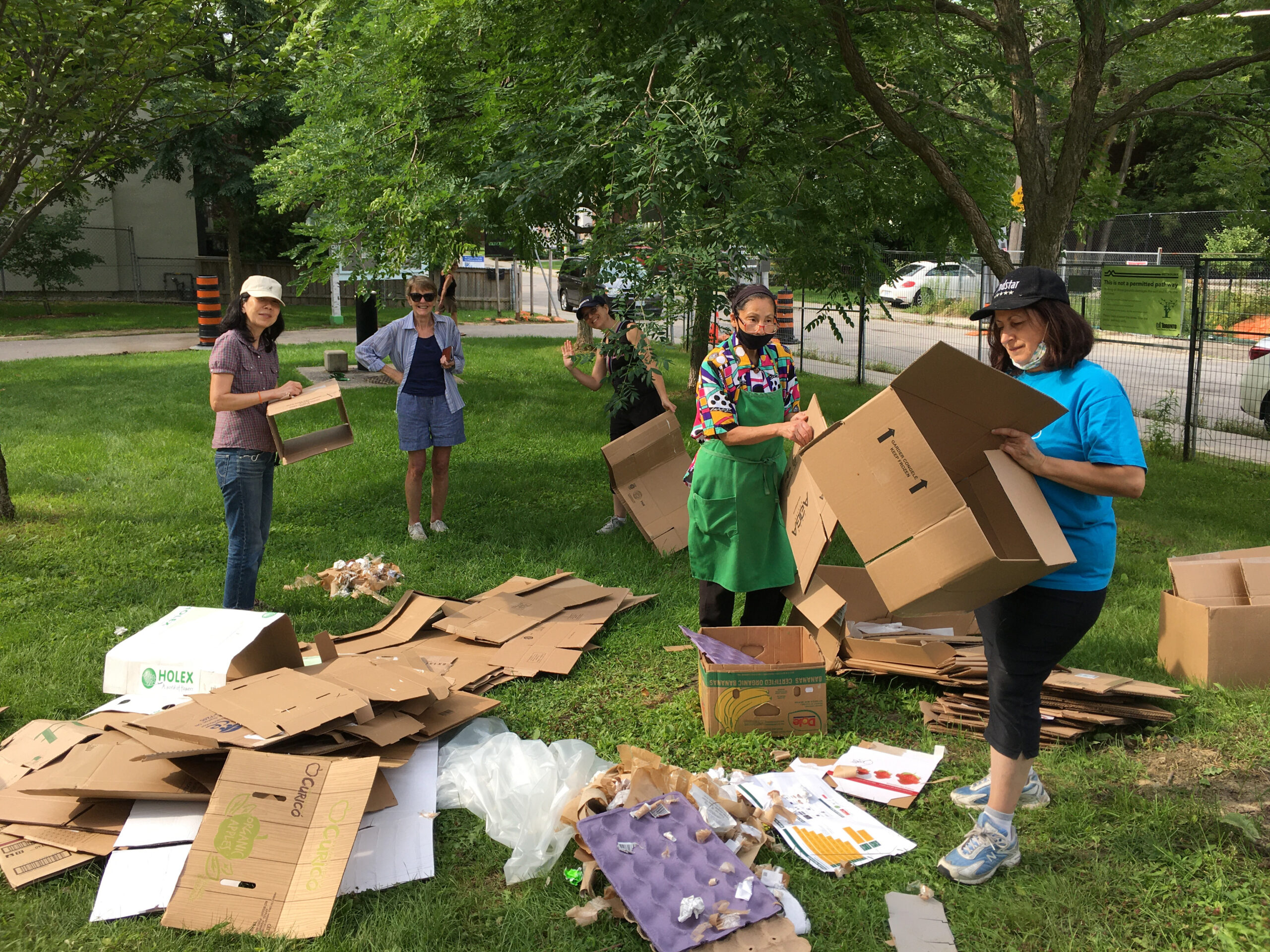
Next, the team gathered in the park on Stewardship Saturday for a session of Mulching Madness! The team included Gail, Nadine, Annie, Giselle, Leah, Naomi, Susan, Zeny, Rael, Dan, Tess with Lynn coming along for a while to cheer us on!
First the team removed the tape and labels from all the boxes and laid them out on the freshly weeded bed. Then Annie and Rael soaked the cardboard to help start the decomposition process.
Step 3: Cover Wet Cardboard with Wood Mulch
After the bed was covered with cardboard, Rael, Dan, Tess, Nadine and Leah used wheelbarrows to pile the wood mulch on top of the wet cardboard.
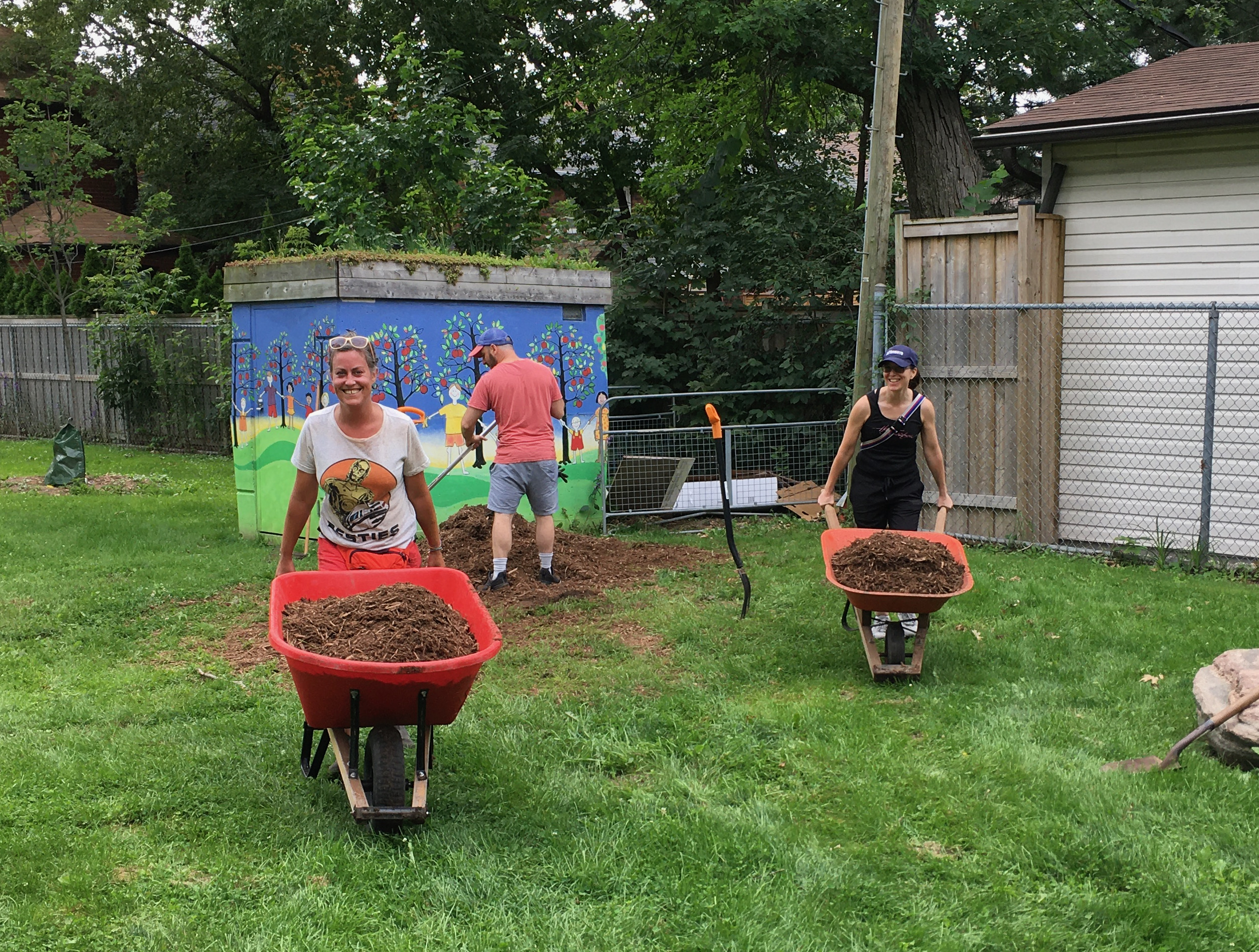
Slowly we covered the cardboard with yards and yards of wood chips generously supplied by City Staff. Our goal here was to have enough to cover the damp cardboard so that it doesn’t blow away. When we are finished the wood chip layer will be three or four inches thick.

Step 4: Rake Wood Chips and Water Again
Next we smoothed out the piles of wood chips with flat rakes and Annie watered the wood chips as a finishing touch. At this point, the mulch was not very thick. But next week, when the city drops off some more wood chips for us, we will pile on a few more inches.
A thick layer of mulch prevents weed seeds in the soil from sprouting. And it will also keep the dogwood bed looking great. It took just about two hours and 11 hard-working volunteers to whip this bed into shape!

Testing Pollinator Garden Soil for Beneficial Microbes
It was a wonderful day, but to end it we launched a new experiment. We have lovingly cared for our pollinator garden for over a decade. During our weekend stewardship sessions we plant new plants, weed and mulch the garden and deadhead the flowers.
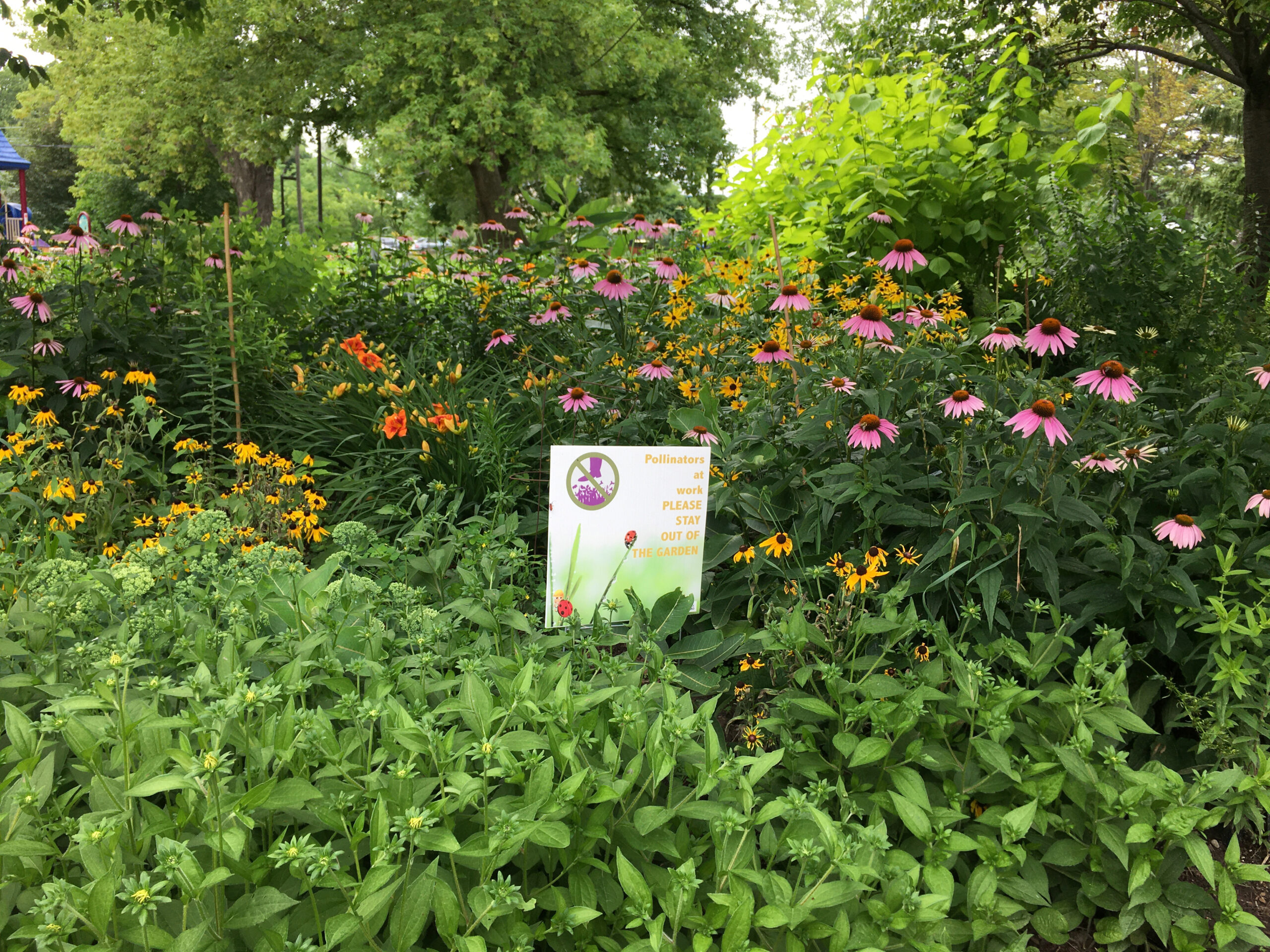
Our pollinator garden is filled with culinary herbs and insectary flowers and we think the soil is in pretty good shape. So we did a little experiment.
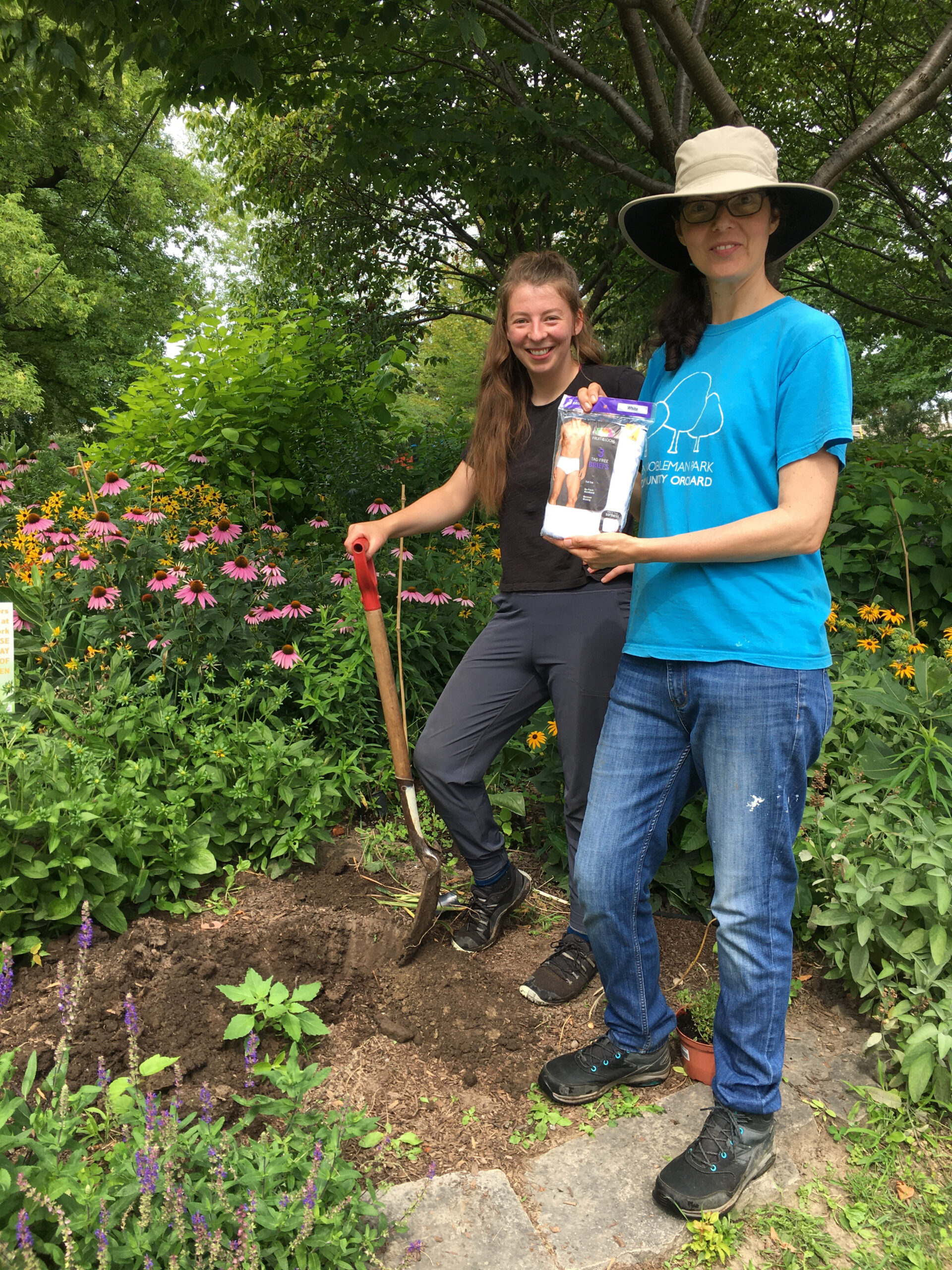
We decided to bury some underpants (Yup…you read that correctly) in an empty spot in the garden! This is called the “Bury Your Briefs” or “Soil Your Undies” test. You bury 100% cotton underwear in your garden and check back a month or two later. By the way, the undies need to be brand new…not used!
If your soil is healthy, a diverse population of beneficial microbes will break down the cotton. After a month or so, only the elastic waistband will be left behind.
You can learn more about the “Soil Your Undies” test in this short video:
So we will dig up the briefs in a month or so and see what’s left! And of course we will update you in this blog as to the results!

New Mural on the Park Bulletin Board
Finally, a little update on our new mural! Volunteers Jane and Jeff are creating a beautiful new mural on our bulletin board. The final design features birch trees filled with native birds. We can’t wait to see the final result!
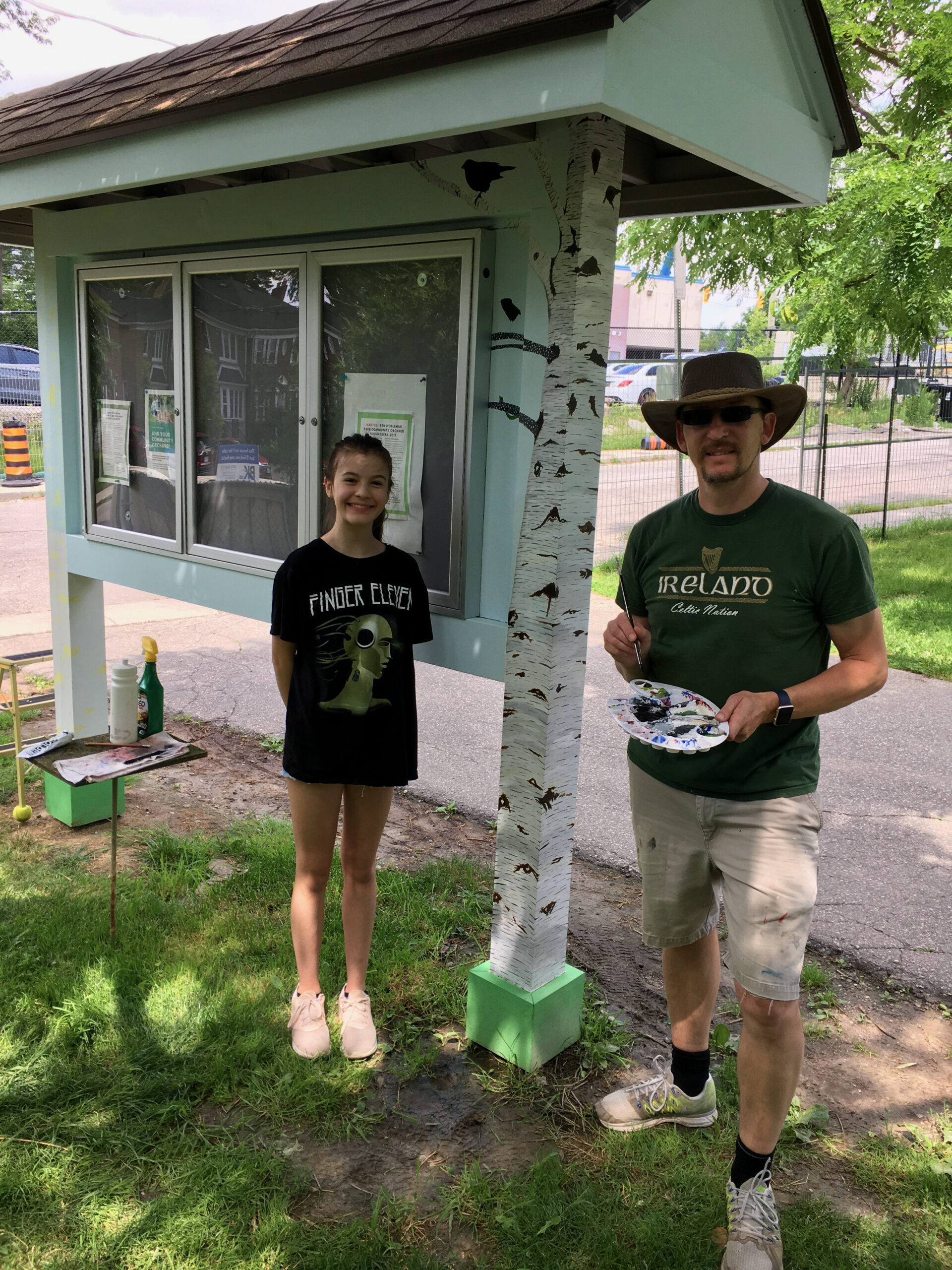
So I’d like to end this post with a huge “Thank You” to Acting Park Supervisor Nancy and the gardening staff from the City of Toronto. We so appreciate them! They partnered with us on the Dogwood Bed project and support us in so many of the activities that we do in the park.
And a huge thank you to all the fantastic volunteers! You guys love to roll up your sleeves every weekend and get the work done. Enjoy the park everyone!
Susan Poizner is one of the volunteers for The Ben Nobleman Park Community Orchard in Toronto. She is the creator of the fruit tree care education website OrchardPeople.com. Susan is the author of four fruit tree care books including Grow Fruit Trees Fast: A Beginner’s Guide to a Healthy Harvest in Record Time. She is also the host of the Orchard People podcast and an ISA Certified Arborist.