
Welcoming Beneficial Insects to Our Orchard
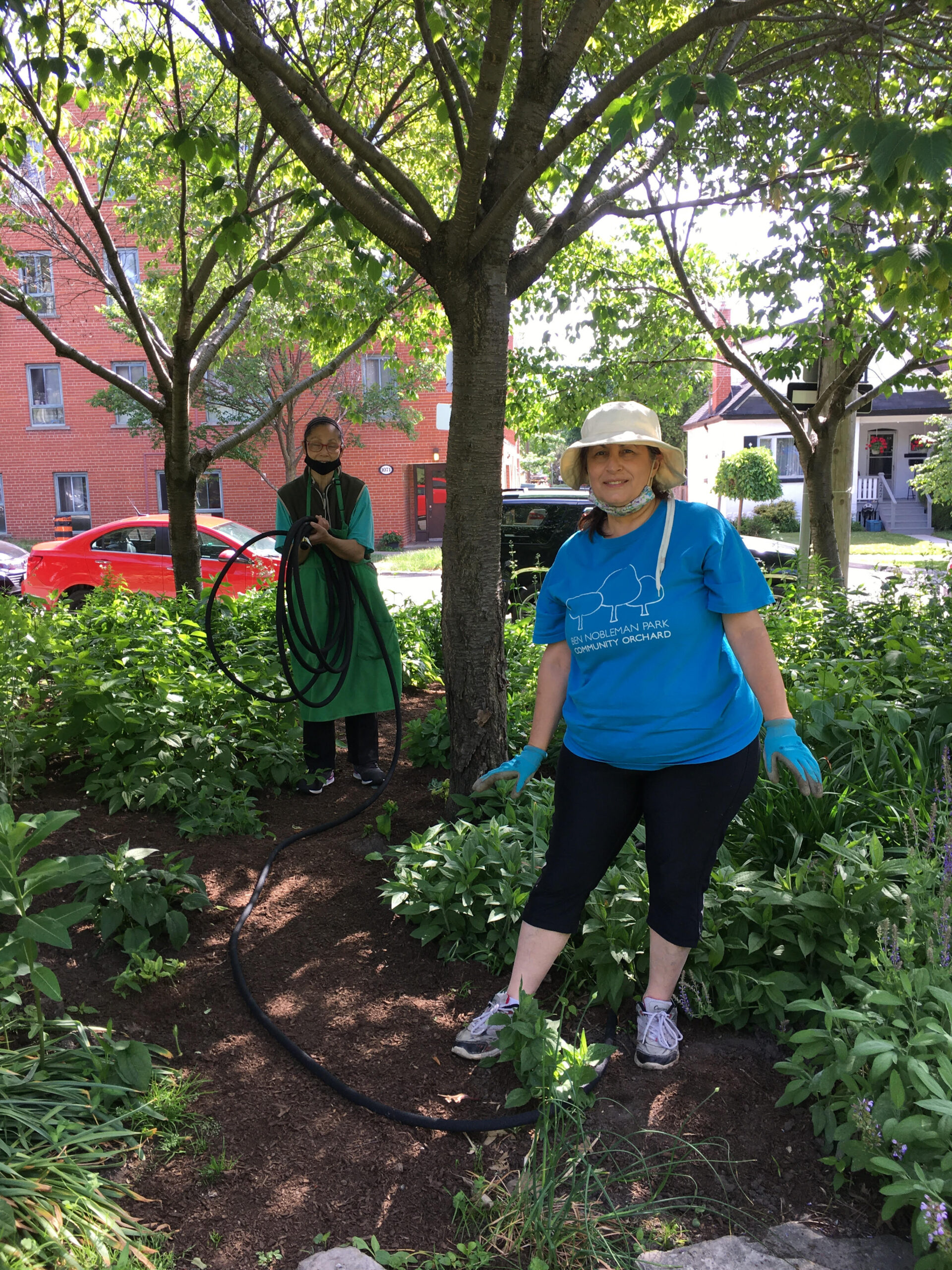
It’s mid June and the volunteers of the Ben Nobleman Park Community Orchard are preparing for a slew of new orchard guests. These guests are beneficial insects and we want lots of them!
Beneficial insects do a lot of work in our garden. Some are pollinators and they play an essential role in fruit production. Others are predators that prey on insect pests that damage trees and crops including aphids, coddling moth and plum curculio.
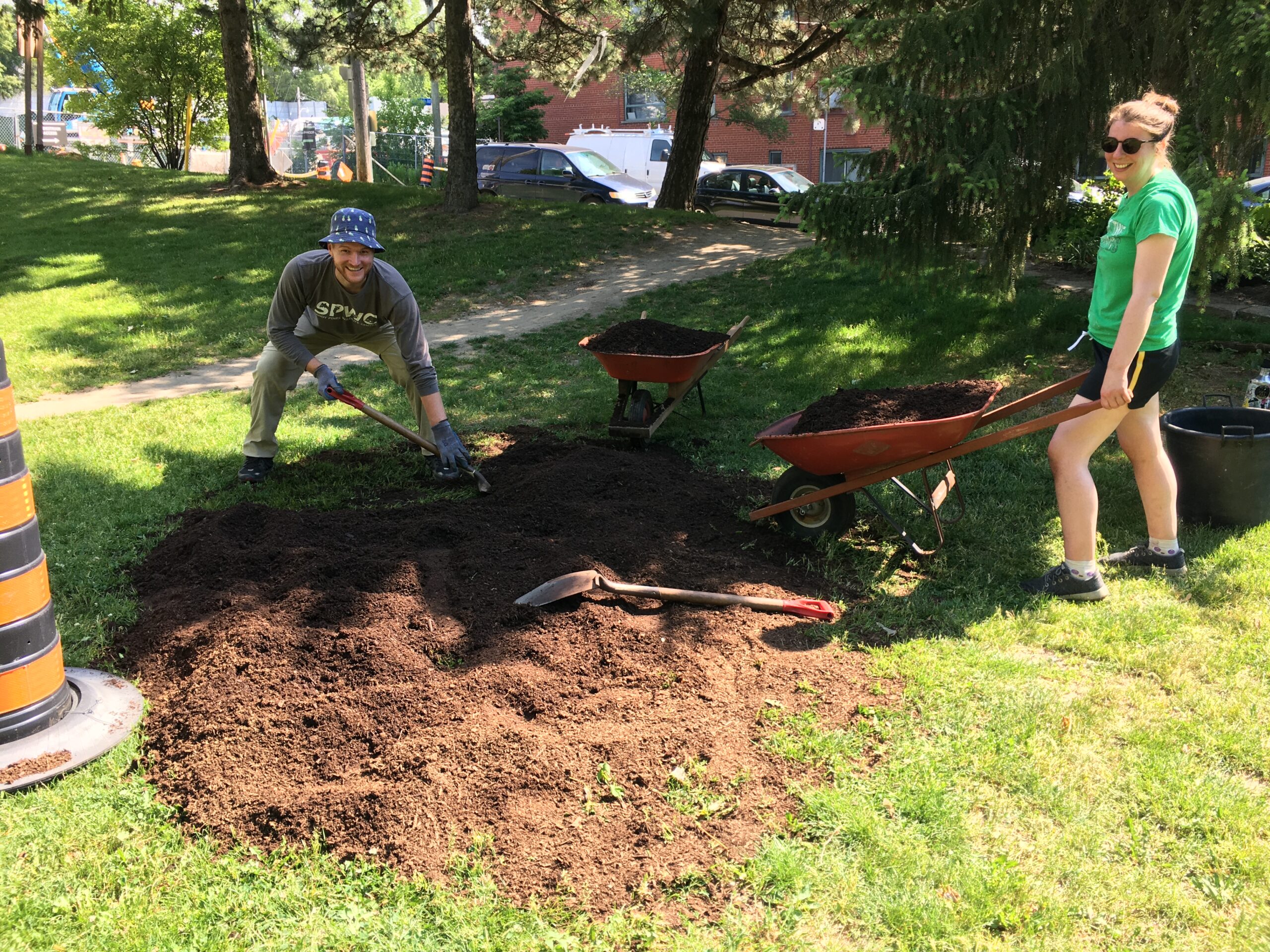
So we are transforming our pollinator garden. We want it to include carefully chosen native plants that offer habitat and food for beneficial insects. In recent weeks, volunteers have been busy weeding the garden, thinning out unwanted plants, and laying down compost.
Then next week our new plants will arrive! We carefully chose perennials that blossom at different times in the growing season. This is to ensure that there will always be food and habitat for beneficial insects. The new plants from native plant nursery Grow-Wild include:
- SPRING: Zizia Aura (attracts specialist bees and is larval host for Black swallowtail butterfly), Aquilegia canadensis (larval host for beneficial moths)
- SUMMER: Asclepia tuberosa (larval host for monarch butterfly and other beneficials)
- FALL: New England Aster (attracts specialist bees, larval host for butterflies and moths), Eupatorium purpureum (larval host for various beneficial moths), Solidago (attracts specialist bees and larval hosts for various butterflies and moths)
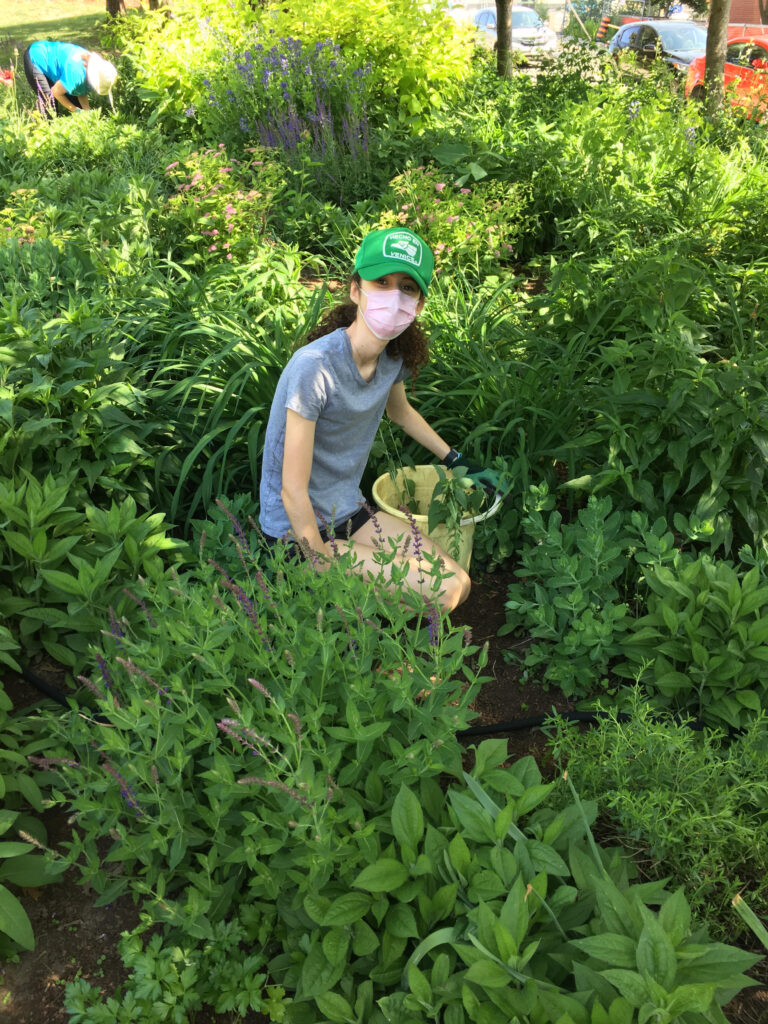
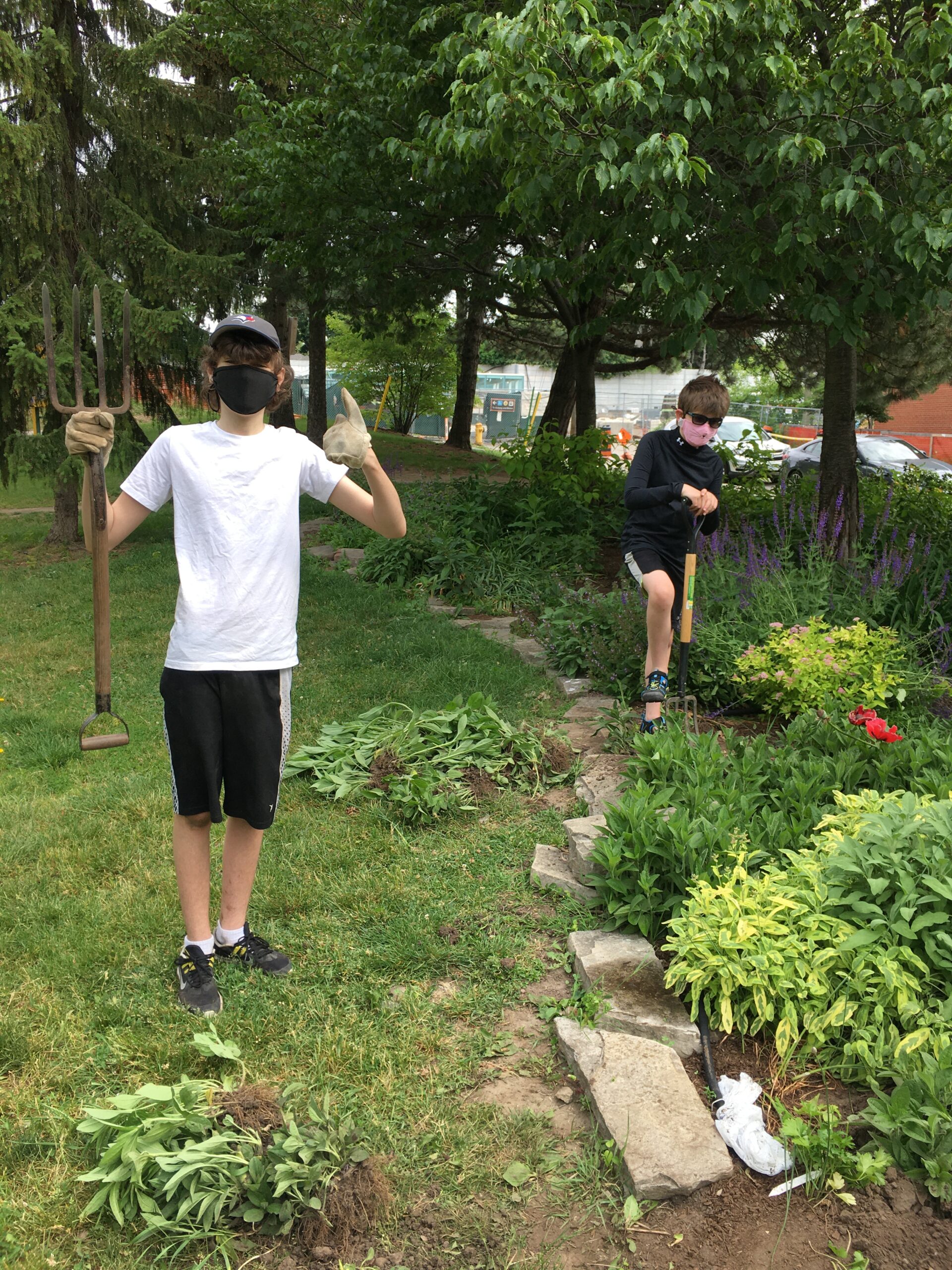
Madeleine weeds in the pollinator garden. 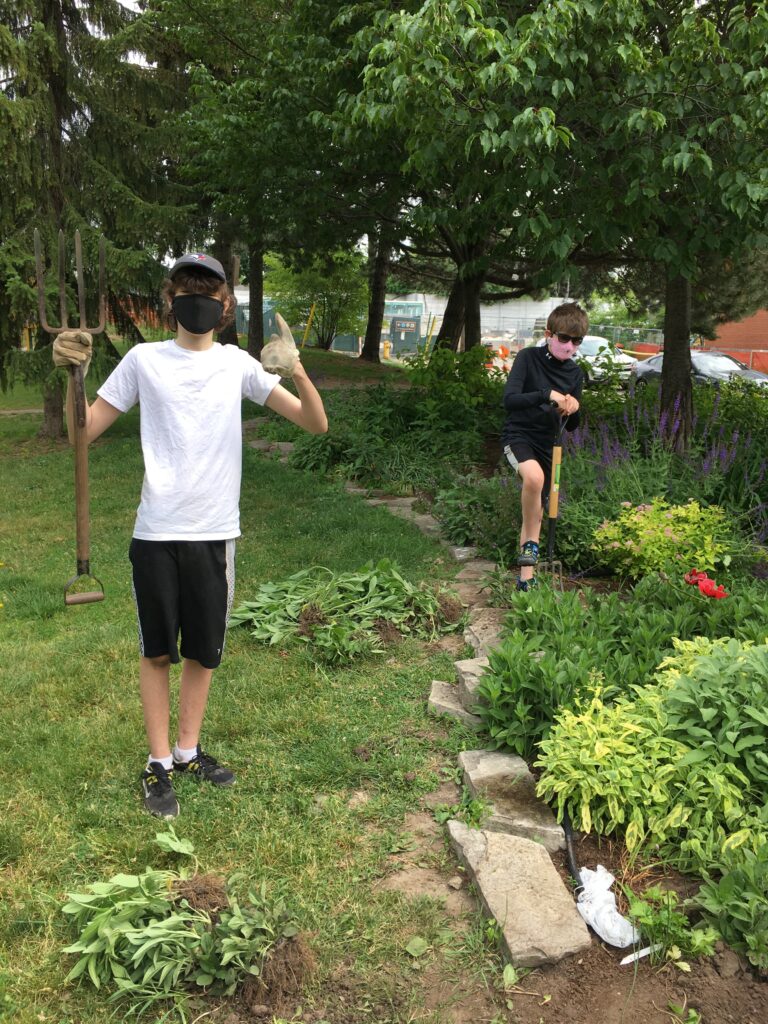
Harrison (left) and Nathan (right) work to divide plants.
“Farmscaping” with the Support of Landscape Ontario
This is part of Ben Nobleman Park Community Orchard’s new “Farmscaping” project which is being funded with the generous support of the Toronto Chapter of Landscape Ontario as part of their bursary program.
Farmscaping is an ecological approach to pest management in which growers use native, insectary plants to attract beneficial insects to control agricultural pests. The grant will cover the cost of the new native plants, compost and soaker hoses for the garden, garden tools for volunteers and a really important part of the project: educational signage.
Why Signage is Key to the Success of our Farmscaping Program
If this project is to be a success, we need to ensure that the public knows about it. And we want to help park visitors and local residents play their part in protecting the garden’s plants and insect inhabitants.
People love the garden! So, often parents, children and others walk into the garden to admire the plants or pick flowers. But we need to discourage that. When people pick flowers they are removing valuable food for insects. And when walking inside the garden bed, it is easy to accidentally crush emerging plants and disturb populations of ground-nesting insects.
So signage is a key part of this project. Orchard volunteer and Graphic artist Leah Tysoe offered to create a series of educational signs to place around the garden. The goal is to explain why it’s important that people stay out of the garden.
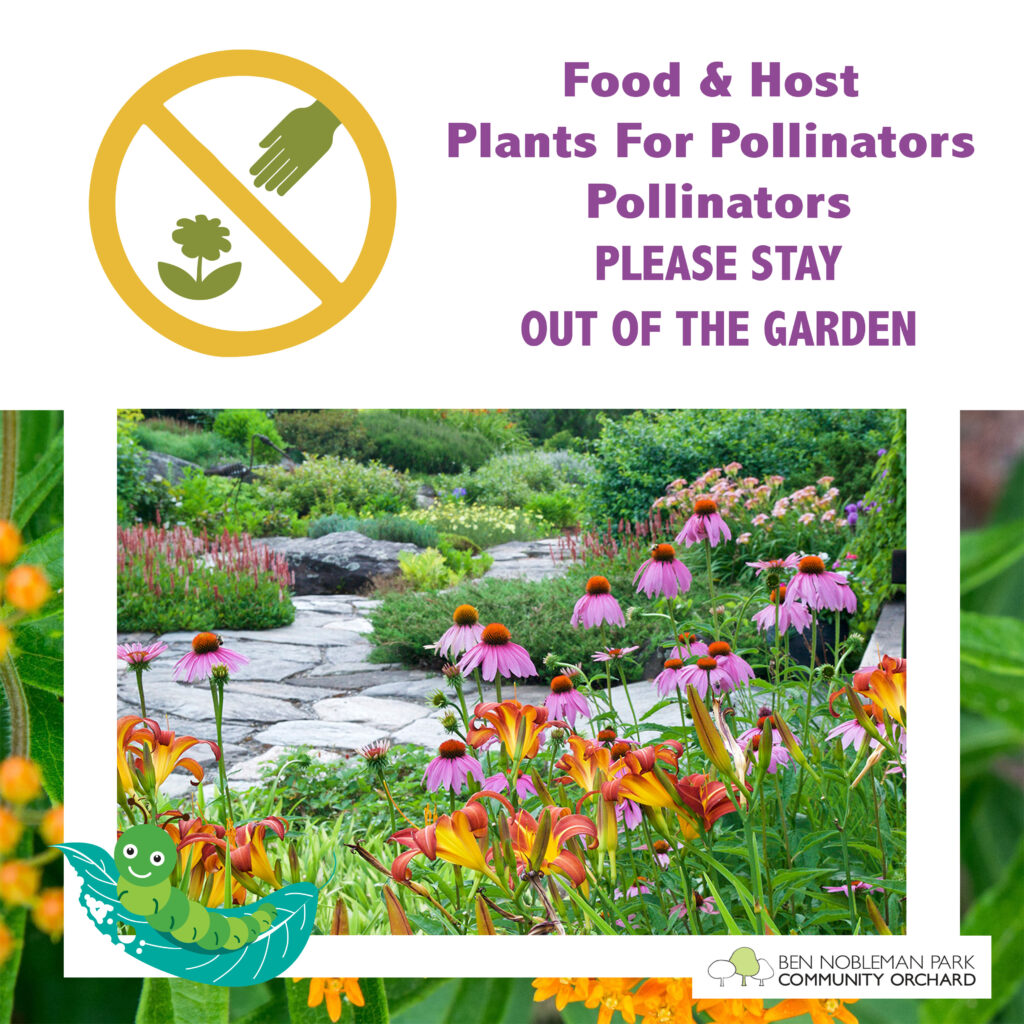
New signage designed by graphic artist Leah Tysoe. 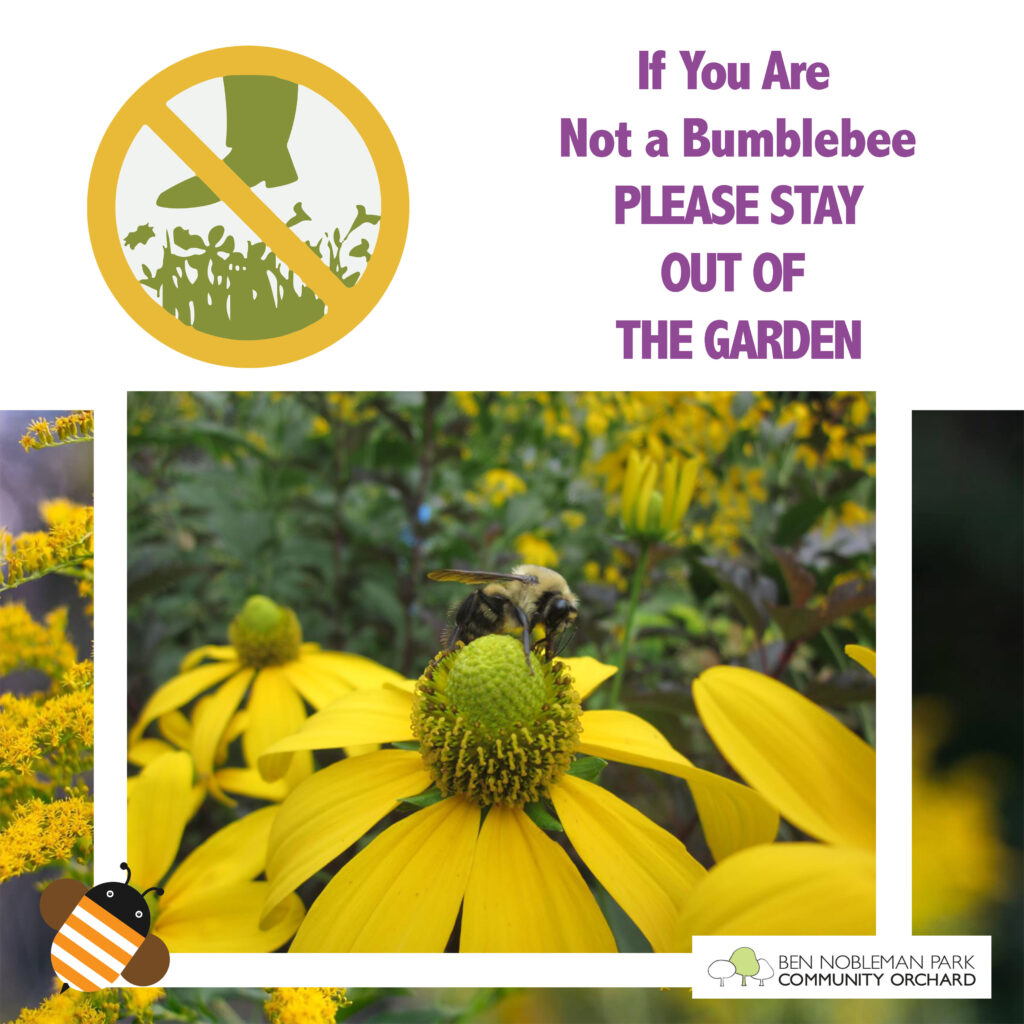
Farmscaping is Part of Integrated Pest Management
The farmscaping project is part of our park’s organic Integrated Pest Management (IPM) program. IPM is a decision-making process for managing pests in an effective, economical and environmentally sound way. IPM is used by organic and conventional growers worldwide.
In our park, our IPM team is using traps to catch insect pests before they damage the fruit on our fruit trees. We also monitor insect populations using Growing Degree Day (GDD) tracking. And our team includes volunteers of all ages.
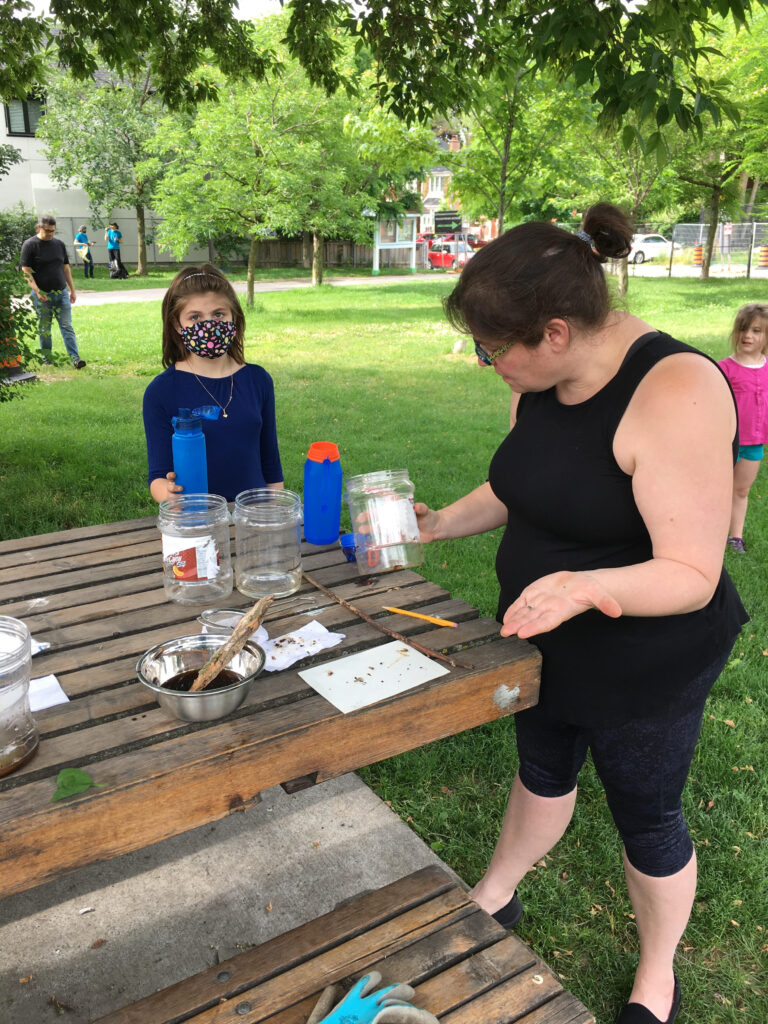
Rebecca helps her mom Sara prepare a molasses trap to protect our cherry trees from cherry fruit flies. 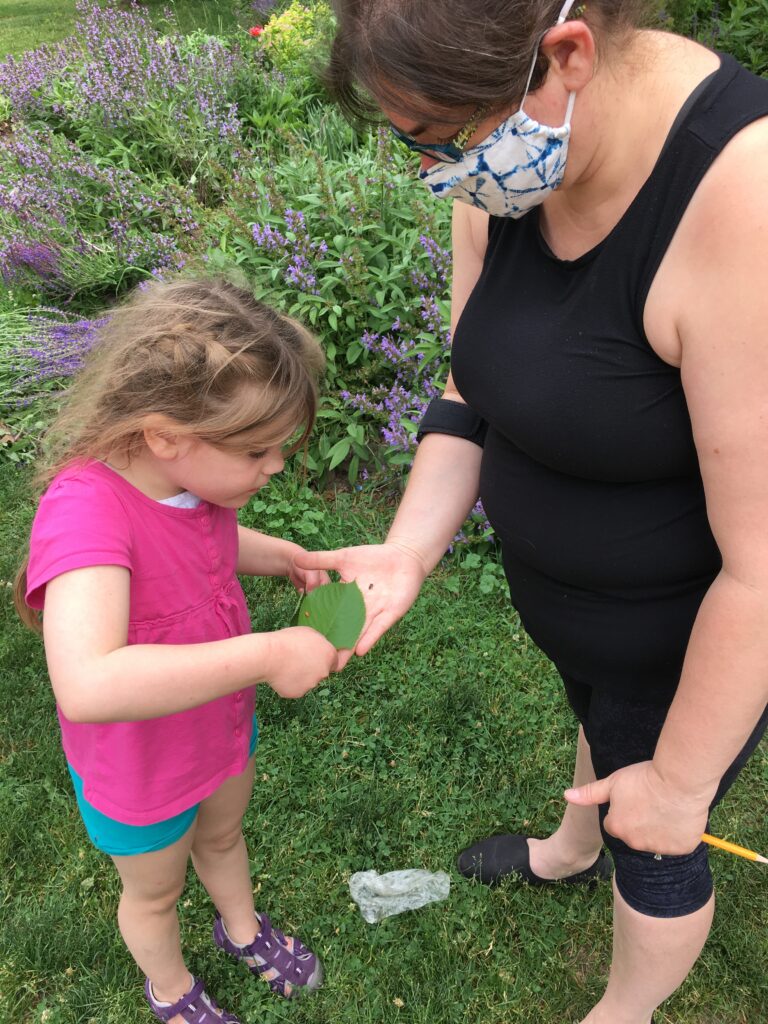
Ellie and her mom Sara compare an adult ladybug with a ladybug larva.
Other Spring Work in the Orchard
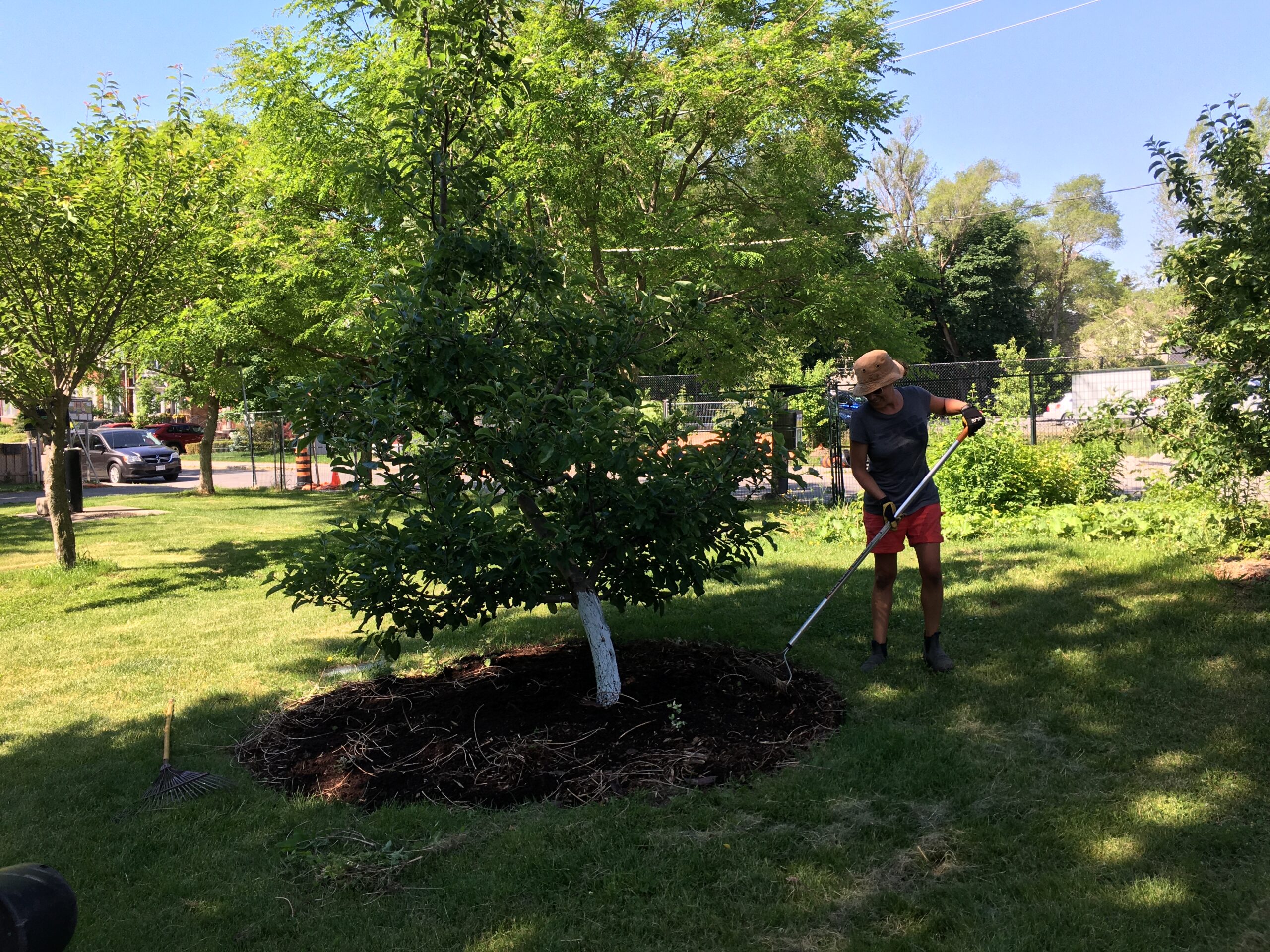
This is just part of the work we have been doing in our park. This spring, weekend volunteers have been weeding and mulching the fruit trees. We mulch our trees with compost annually to ensure our trees have the nutrients they need for healthy growth and a quality harvest.
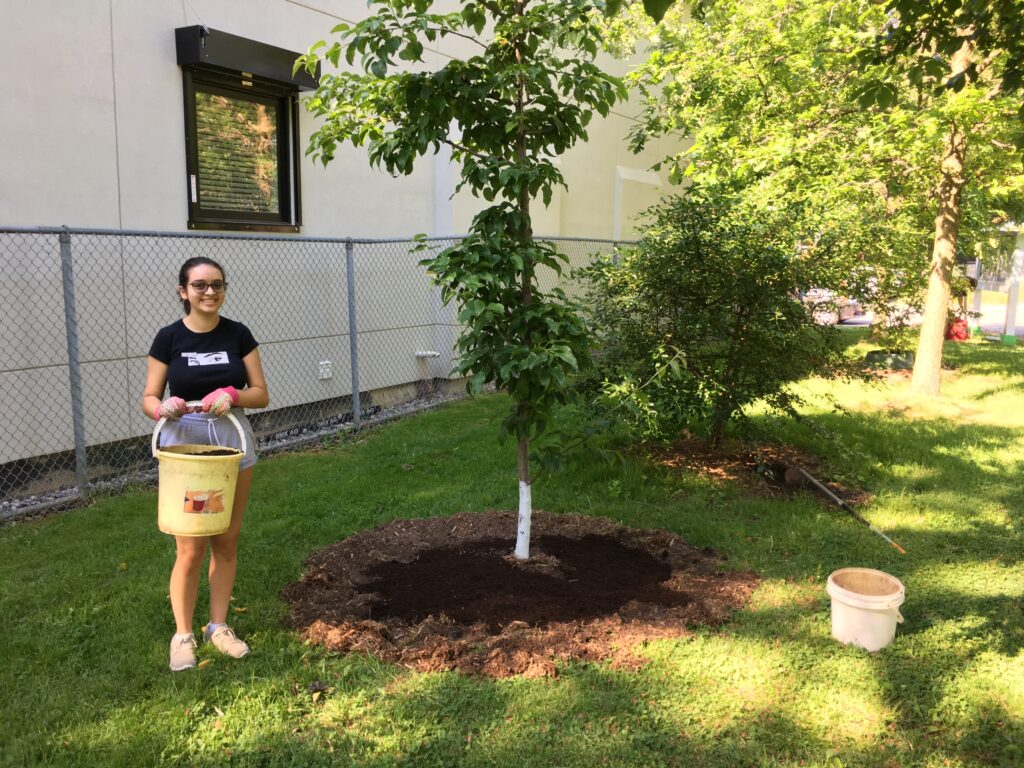
Sarah weeded and mulched our Asian pear tree. 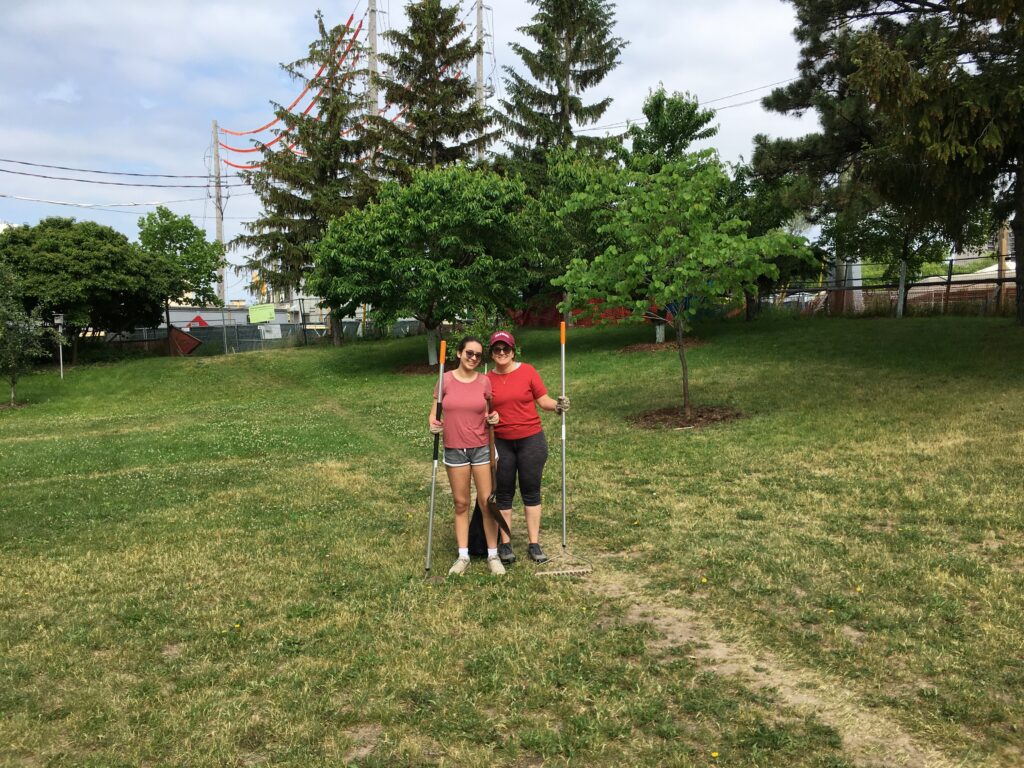
Sarah and her mom Ariella also mulched our serviceberry and other native trees.
Earlier this year, our pruning team, made up of Susan, Janina and Reenie, pruned all of the fruit trees in the early spring.
But right now, we are all excited about planting our farmscaping plants next week!
We offer so much thanks to Landscape Ontario for the generous grant and this wonderful opportunity! And thanks to all of the volunteers who have worked so hard this spring to make the park and garden beautiful, vibrant and healthy again this summer!
Local Residents and Visitors can Play their Part
As for local residents and park visitors, as you visit the park throughout the season, we would love it if you would come and admire the pollinator garden! If you visit us on a weekend morning, you may also be able to meet and chat with some of our garden volunteers.
Enjoy the colourful blossoms in the pollinator garden. And be sure to look for the buzzing and fluttering beneficial insects around our pollinator garden plants. These little insects are the best garden buddies you’ll ever meet.
See you in Ben Nobleman Park!
PS. We would love it if you wanted to volunteer with us! If you’re interested in becoming a volunteer, email Lynn at growingforgreen (at) gmail.com.
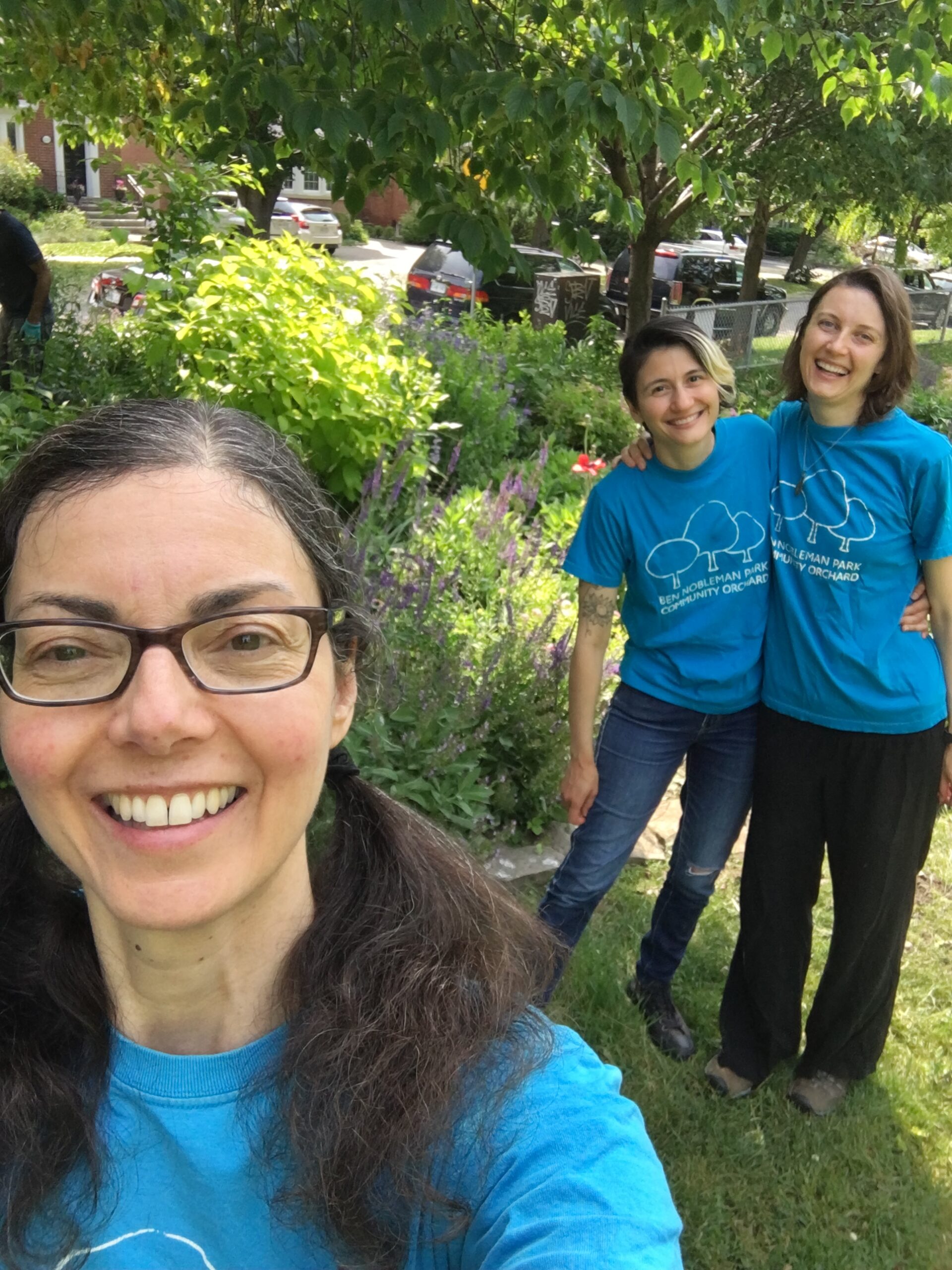
Susan Poizner is one of the volunteers for The Ben Nobleman Park Community Orchard in Toronto. She is the creator of the fruit tree care education website OrchardPeople.com. Susan is the author of four fruit tree care books including Grow Fruit Trees Fast: A Beginner’s Guide to a Healthy Harvest in Record Time. She is also the host of the Orchard People podcast and an ISA Certified Arborist.