
This weekend, while we were working in the pollinator garden, a passerby stopped me to comment on our work.
“You all are always so busy and industrious! Thank you for doing all you do to make the park so beautiful!”
We chatted and as it turns out, she would be interested in joining us in the park on our stewardship days. Only she goes to synagogue on Saturdays when we are working.
“At our synagogue, we all feel so strongly about the environment. This would be a great activity for us,” she said.
In years past, we have alternated between Saturdays and Sundays so that the church goers and the synagogue attendees would all know they are welcome to join us in the park. We are excited to try that again next year. So much of our mandate is knitting our beautiful and diverse community together, whatever our ethnic, religious or cultural background.
And the more people we have, the more fun it is to go out and play together in the park…all the while creating a landscape that we can all be proud of. We are making our park beautiful and productive with our annual crops of apples, pears, apricots, cherries and other fruits.
But what is it that we do during the growing season? I thought I’d take this blog to tell just part of the story.
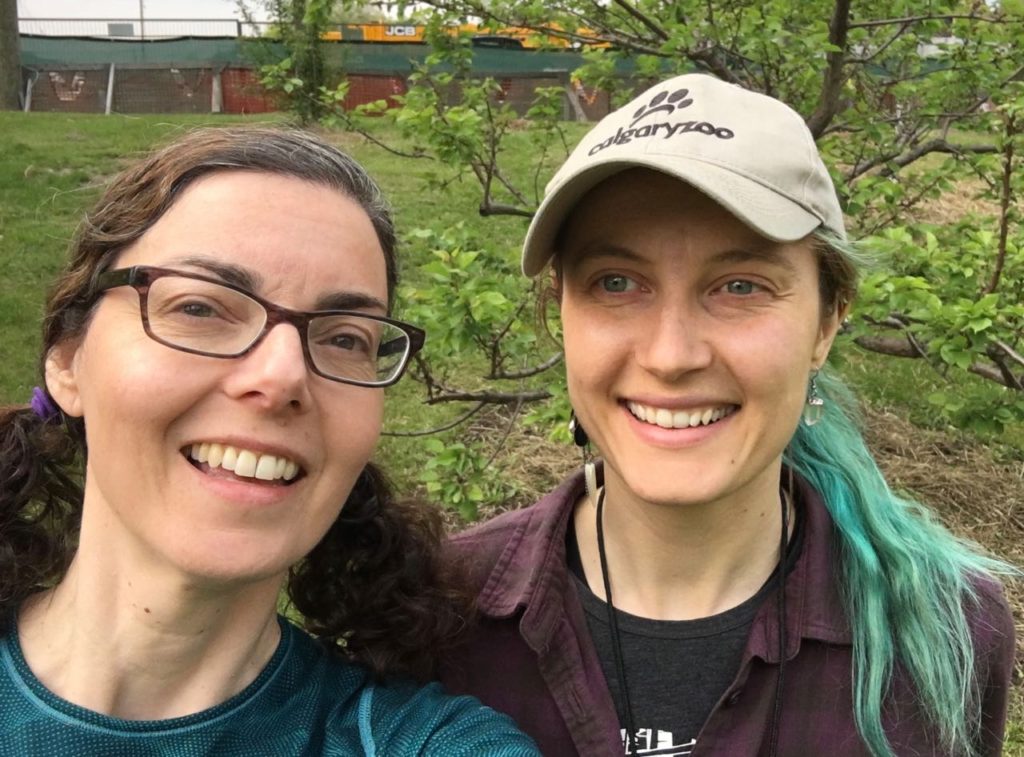
Susan and Janina 
Stacey pruned an apple tree 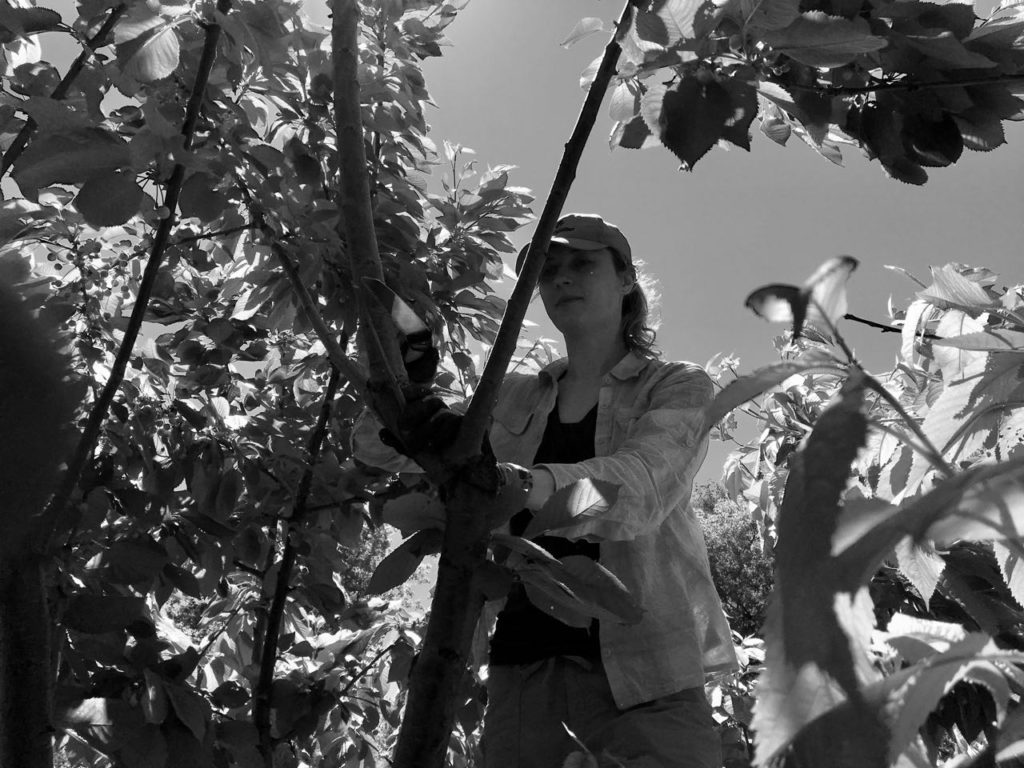
Janina pruning a chery tree 
Giselle pruning an apple tree 
Janina sterilizes her pruning tools.
Fruit Tree Pruning – March or April
A key part of caring for fruit trees is pruning those trees. It’s a specialist job and our goals include:
- Keeping large fruit trees small – or encouraging small fruit trees to grow more quickly. To find out how pruning can do both things read this blog on when to prune fruit trees.
- Preventing pest and disease problems by improving air circulation inside the tree’s canopy.
- Ensuring each branch has access to the sunshine so the fruit on the tree is able to ripen successfully.
Fruit tree pruning is a skill, and so only trained volunteers will prune the fruit trees. This year our pruning specialists included Susan, Janina, Giselle and Stacey.
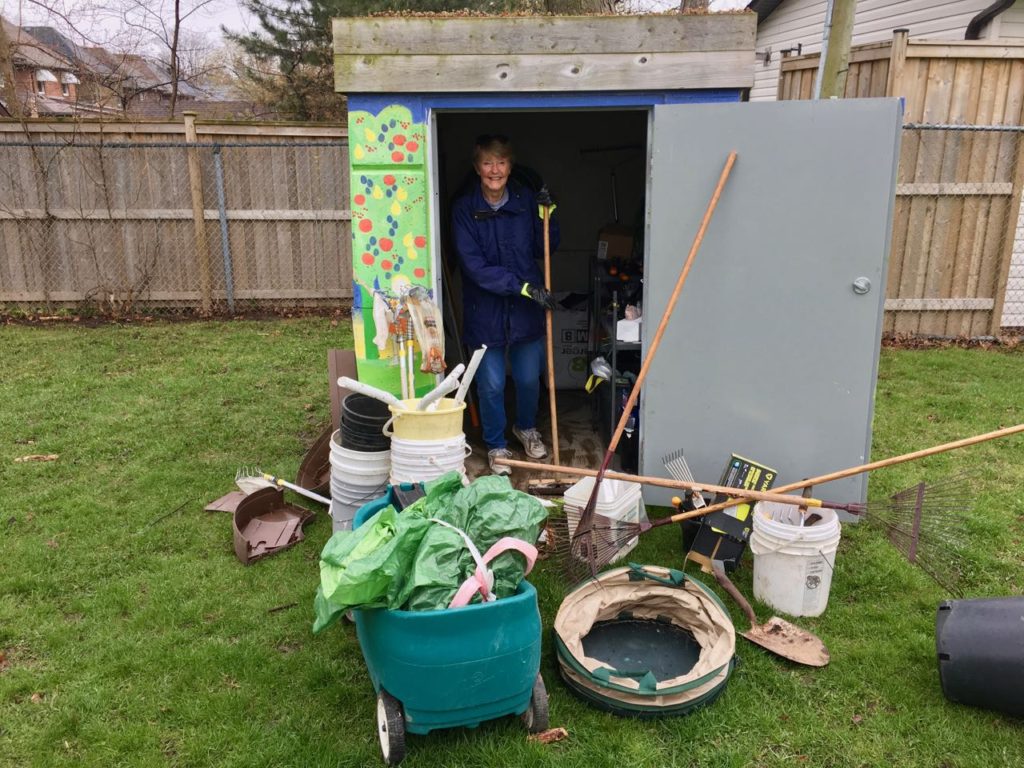
Others volunteers can help by cutting and bundling branches or doing other jobs in the park. Lynn is well trained in pruning, but she is also great at cleaning out the shed and cleaning up the tools, so that’s another important early season task.
Pollinator Garden Care
A big part of our volunteer work in Ben Nobleman Park is caring for the pollinator garden. The goal here is to provide food for the beneficial insects that both pollinate our fruit trees – and protect them from insect pests.
How do beneficial insects do that? Well, some beneficial insects feed on the bad guys. One good example is lady bugs. For them, aphids are a tasty treat. So by caring for the pollinator garden we are supporting our beneficial insects. And the end result is that the pollinator garden goes a long way in beautifying our park!
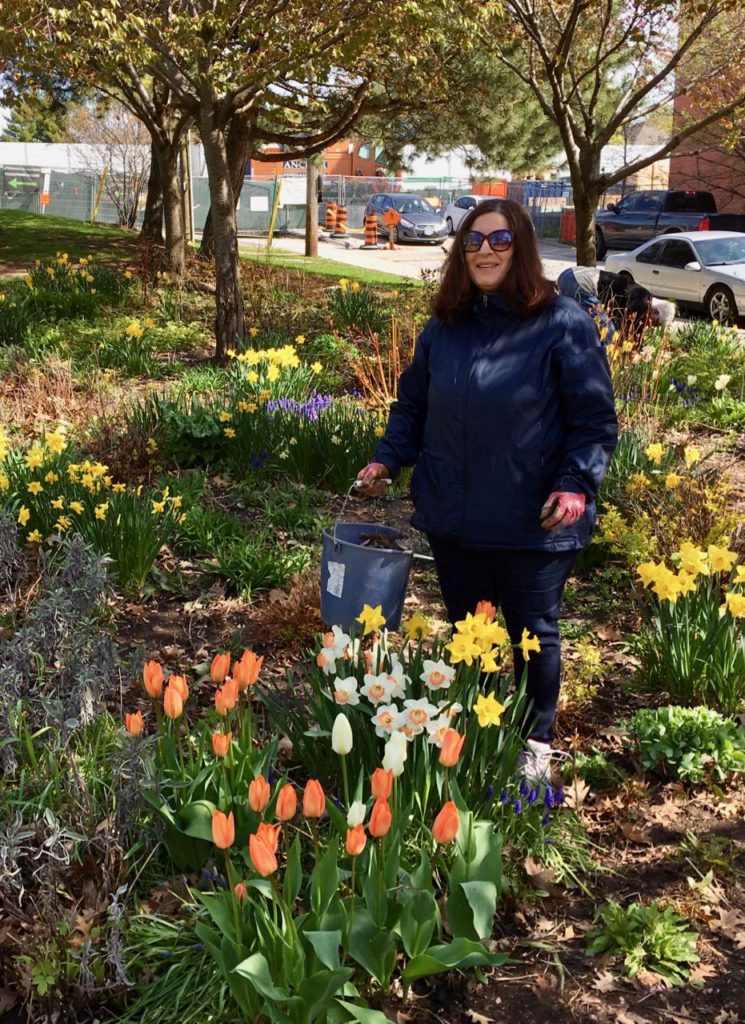
Giselle in the pollinator garden with spring daffodils in full bloom. 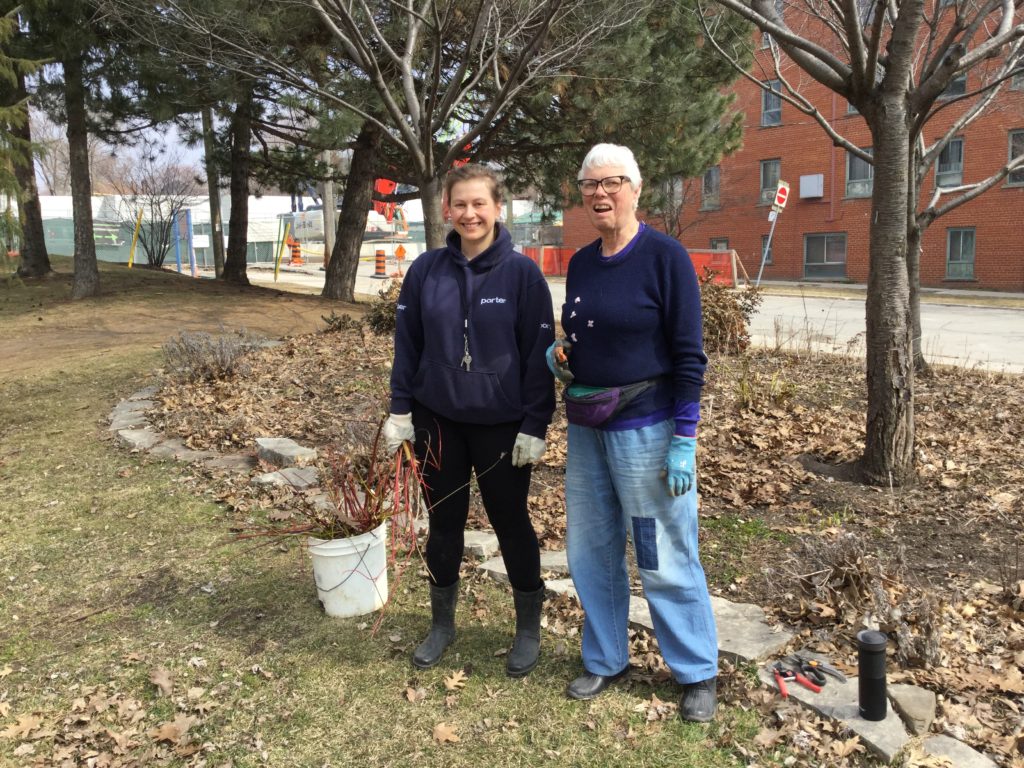
Marilyn and Sofia doing a spring cleanup on the pollinator garden. 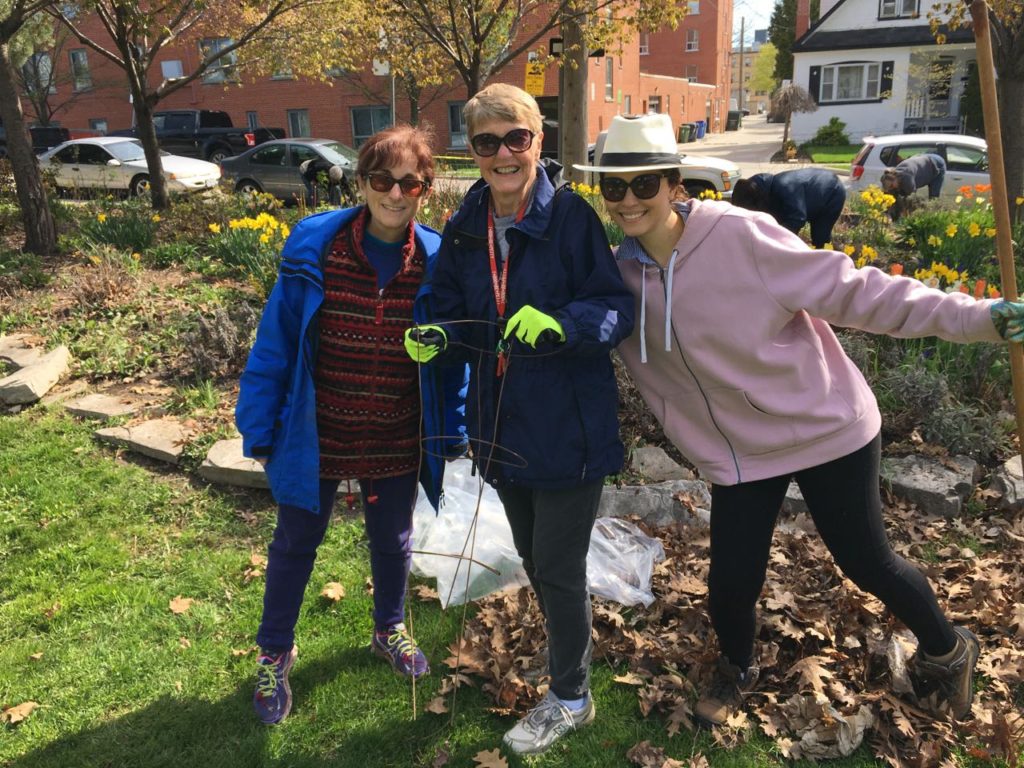
Ruth, Lynn and Rafaela pose after a morning of weeding in the pollinator garden.
Mulching the Trees and Garden
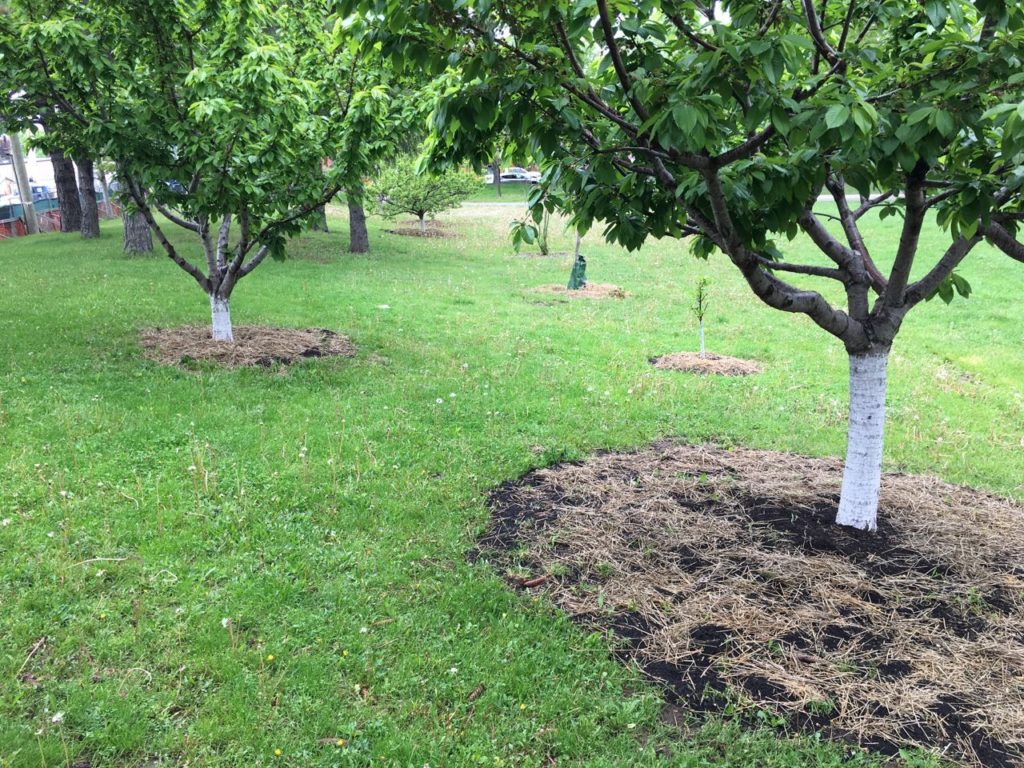
Another huge early spring job is mulching the fruit trees. We use a nutrient-rich compost and our main goals are:
- To remove all weeds around the base of the trees, as weeds will compete for food and water and take those essential nutrients away from our fruit trees.
- To feed our trees with the nutrient rich mulch in the spring, before they need all that nutrition to help power growth and fruit production.
- To widen the mulch circles around the trees since the tree’s feeder roots are at the edge of the canopy and they move further away from the tree each year.
- To protect the trees from string trimmer damage that can be caused with park employees need to trim grass growing near the tree’s trunk.
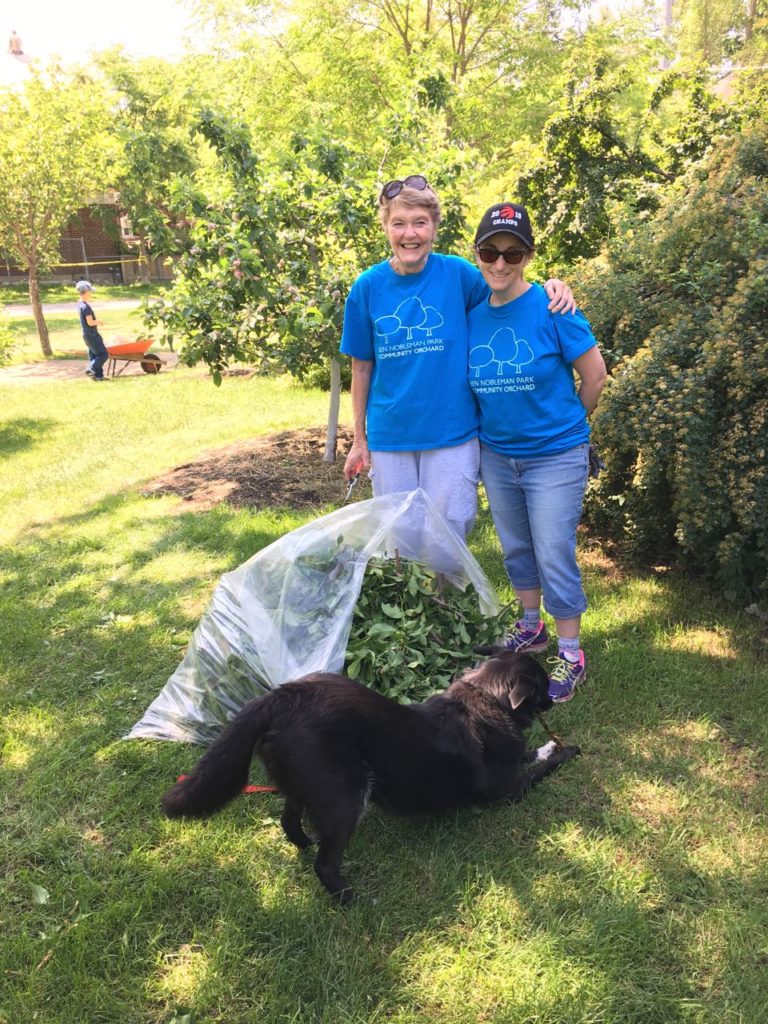
Lynn and Ruth on Mulching day 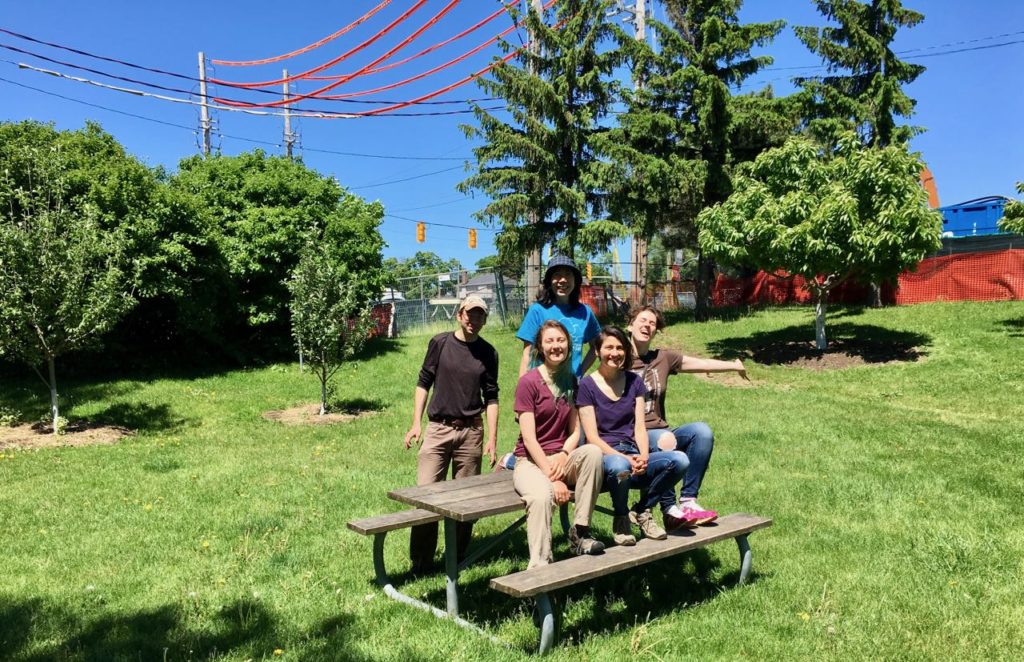
Relaxing after a May tree mulching session. 
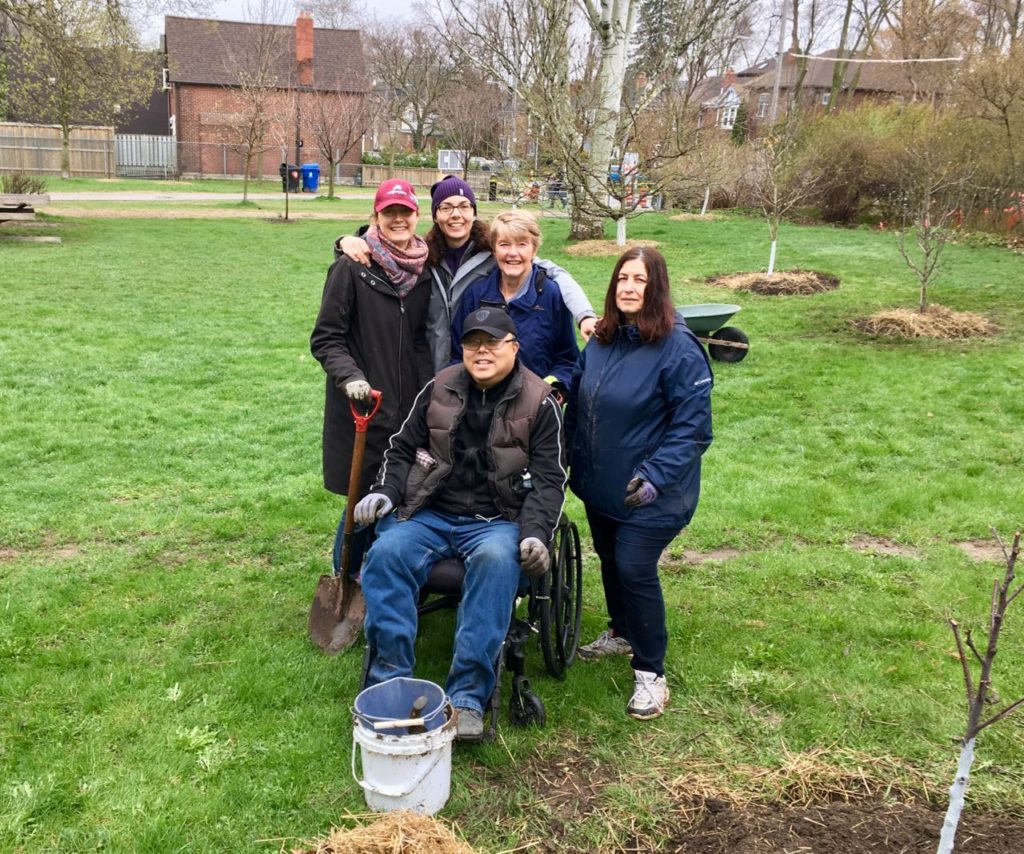
It took us three or four days to widen the mulch circles in 2019 and lots of volunteers were involved.
Harvesting the Fruit
There’s lots more involved in growing fruit trees. We monitor the trees for pests and disease and protect them. We need to irrigate during dry times. We have events to raise money for new plants for the pollinator garden and for orchard supplies.
But one of the fun parts is harvesting the apples, cherries, pears, plums and apricots and sharing the harvest. And now that our trees are getting bigger, harvesting can be a big job.

Reenie harvesting a cherry tree with an extension harvest tool. 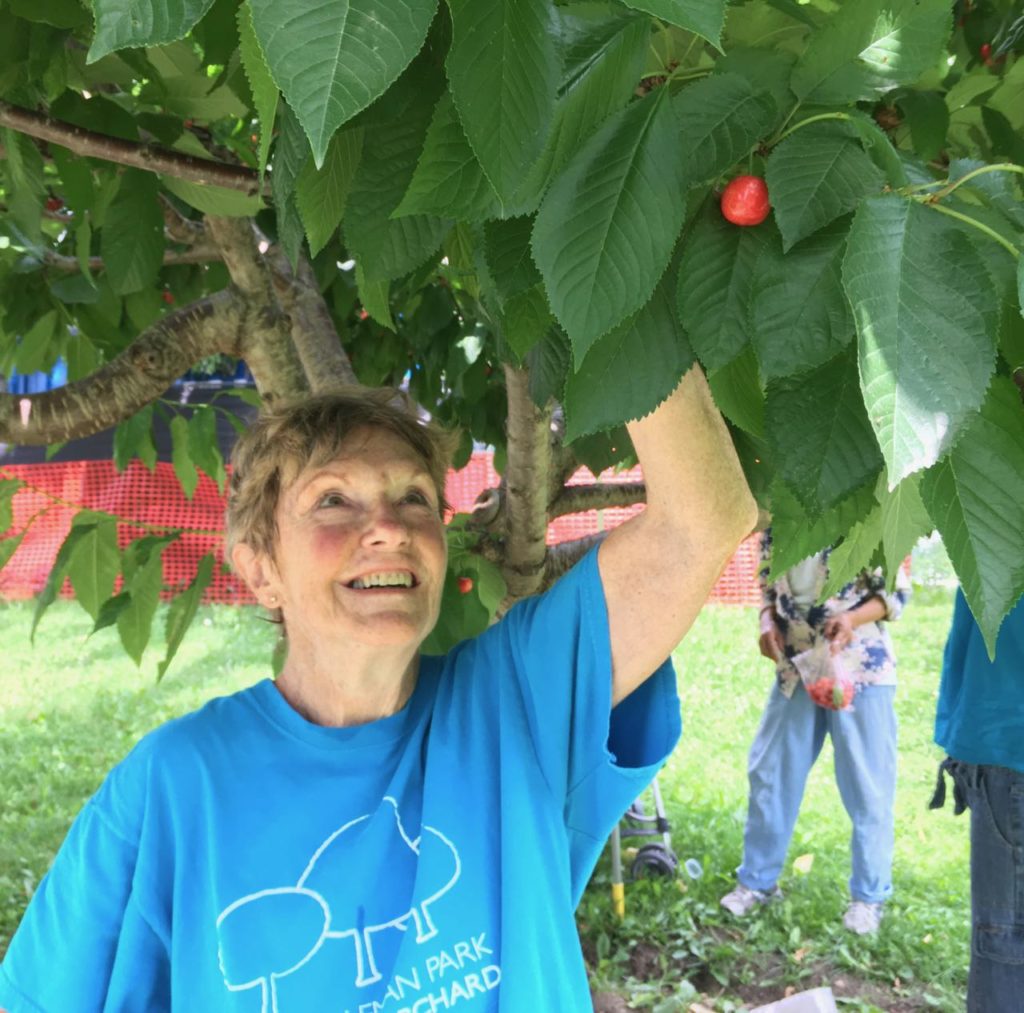
Lynn hand picking cherries.
Come and Join us!
There is so much we’d love to do in this park in the years to come. But we can only do that if we have lots of volunteers who will come and help out.
We’d love to have children’s activities, more events to bring the community together, and more plantings. We need help with this blog, organizing photos, with fundraising and marketing, and with the hands-on work in the park.
Would you like to join us? We hope so! Send an email to Lynn at growingforgreen (at) gmail.com and we’ll put you on our stewardship email list so you’ll know about our activities and can join in.
In the end, the park now brings so many of us so much joy. It’s more beautiful than ever before. It’s more productive with the fruit we grow. And it has helped us get to know our wonderful community.
Hey, sometimes the park just makes you feel you want to dance. Here volunteers Reenie and Janina felt moved to do a little jig after a stewardship day. Lea provided the music. Hope you’ll come and join us soon!
Susan Poizner is the coordinator of the Ben Nobleman Park Community Orchard. She is also the creator of the fruit tree care training website OrchardPeople.com and the author of the award-winning fruit tree care book Growing Urban Orchards. Susan hosts The Urban Forestry Radio Show and Podcast and is an ISA Certified Arborist.