
Click on images on this page to enlarge…
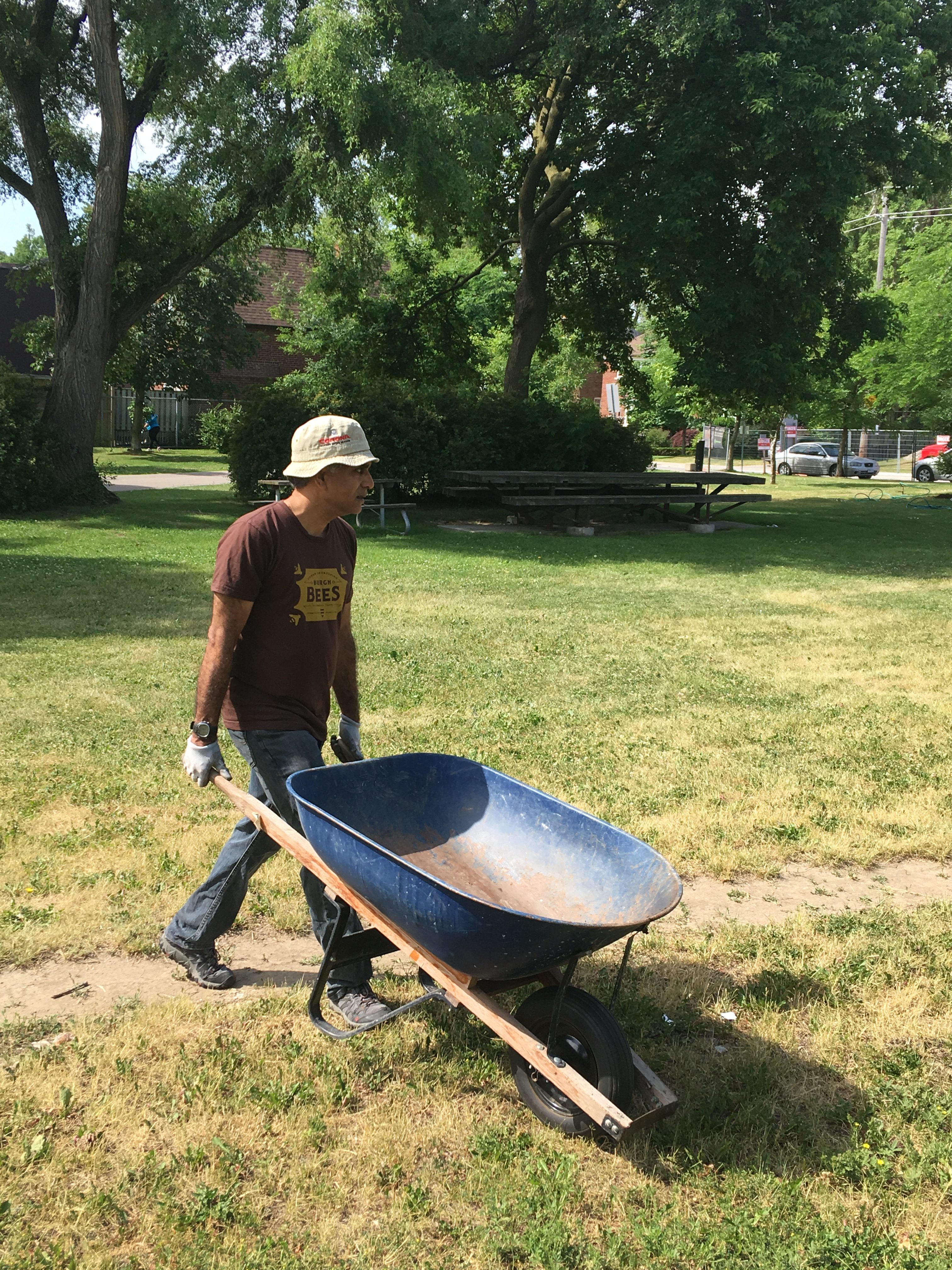
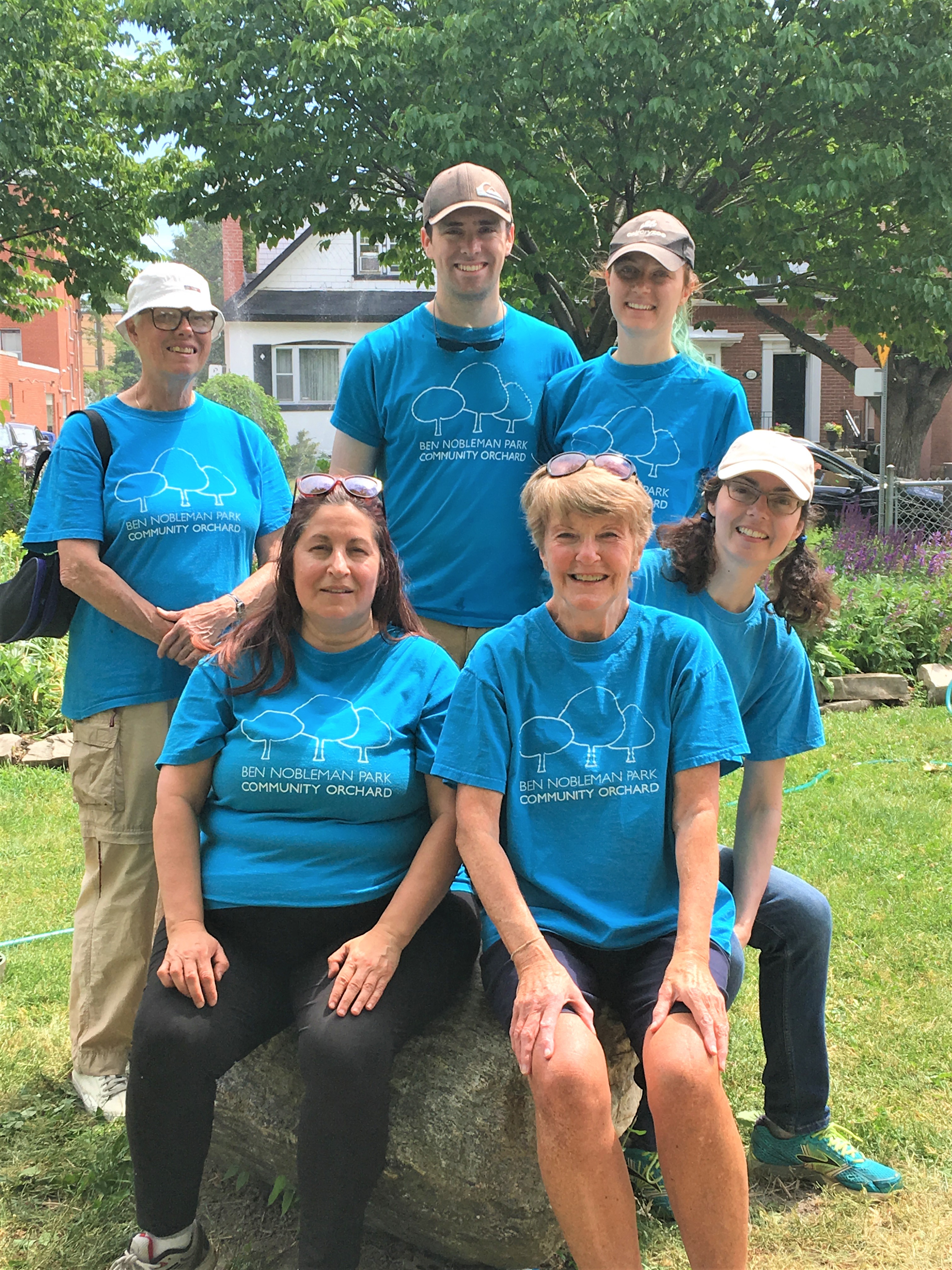
Mulching the trees in Ben Nobleman Park Community Orchard on June 16th finished in record-breaking time! In just over an hour, Lily, Alex, Cliff, Susan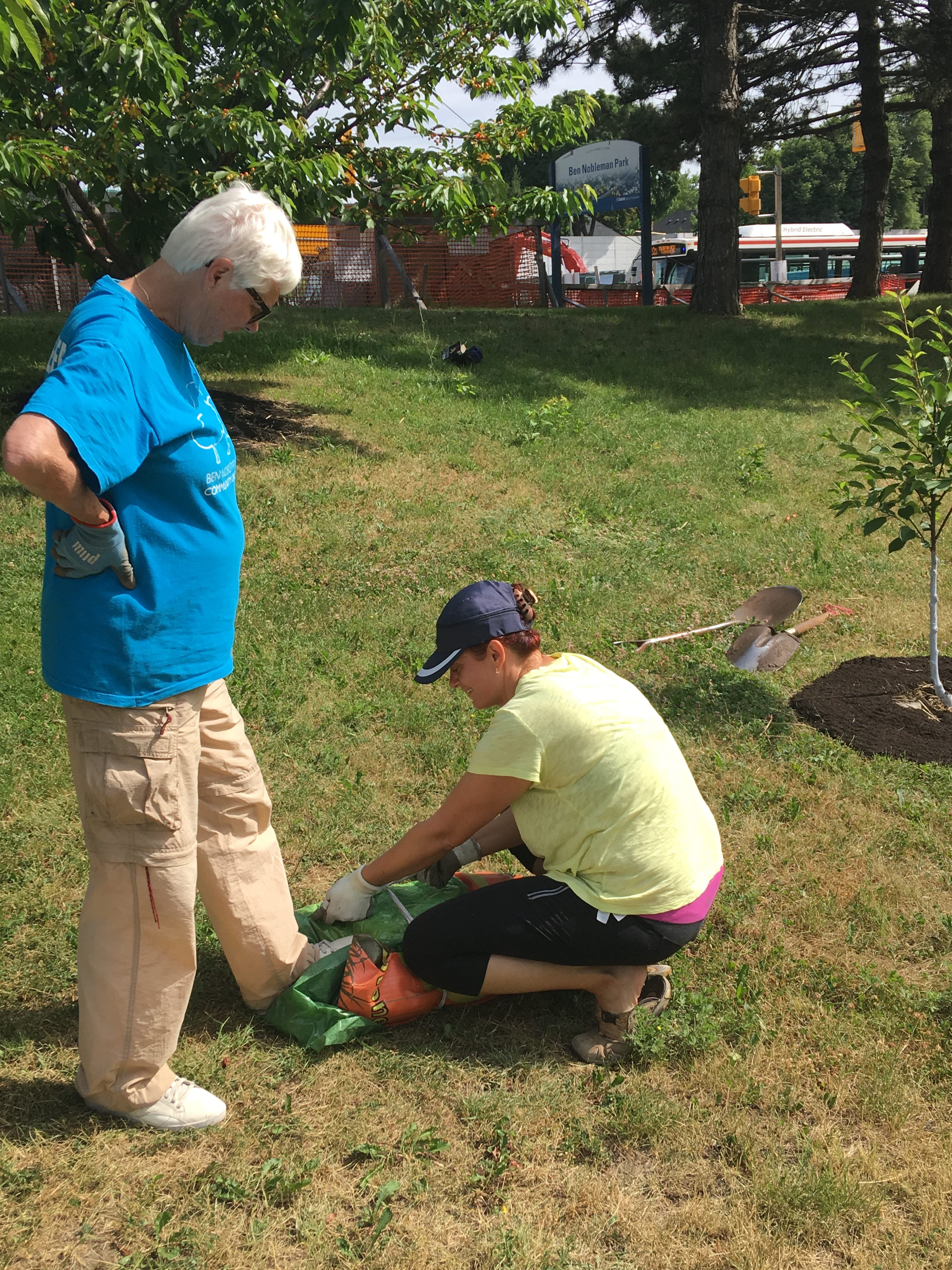 , Giselle, Marilyn, Lynn and I transported the nutrient-rich compost mulch to all the trees. Cliff and Lily handled the two wheelbarrows, while everyone else scooped and transported mulch in buckets. After depositing the mulch, Giselle and I spread the mulch around the mulch circles, taking care to leave the rootstock exposed. If the tree was on a slope, a small hill was created at the lowest part of the mulch circle to catch any water or eroding mulch.
The volunteers ra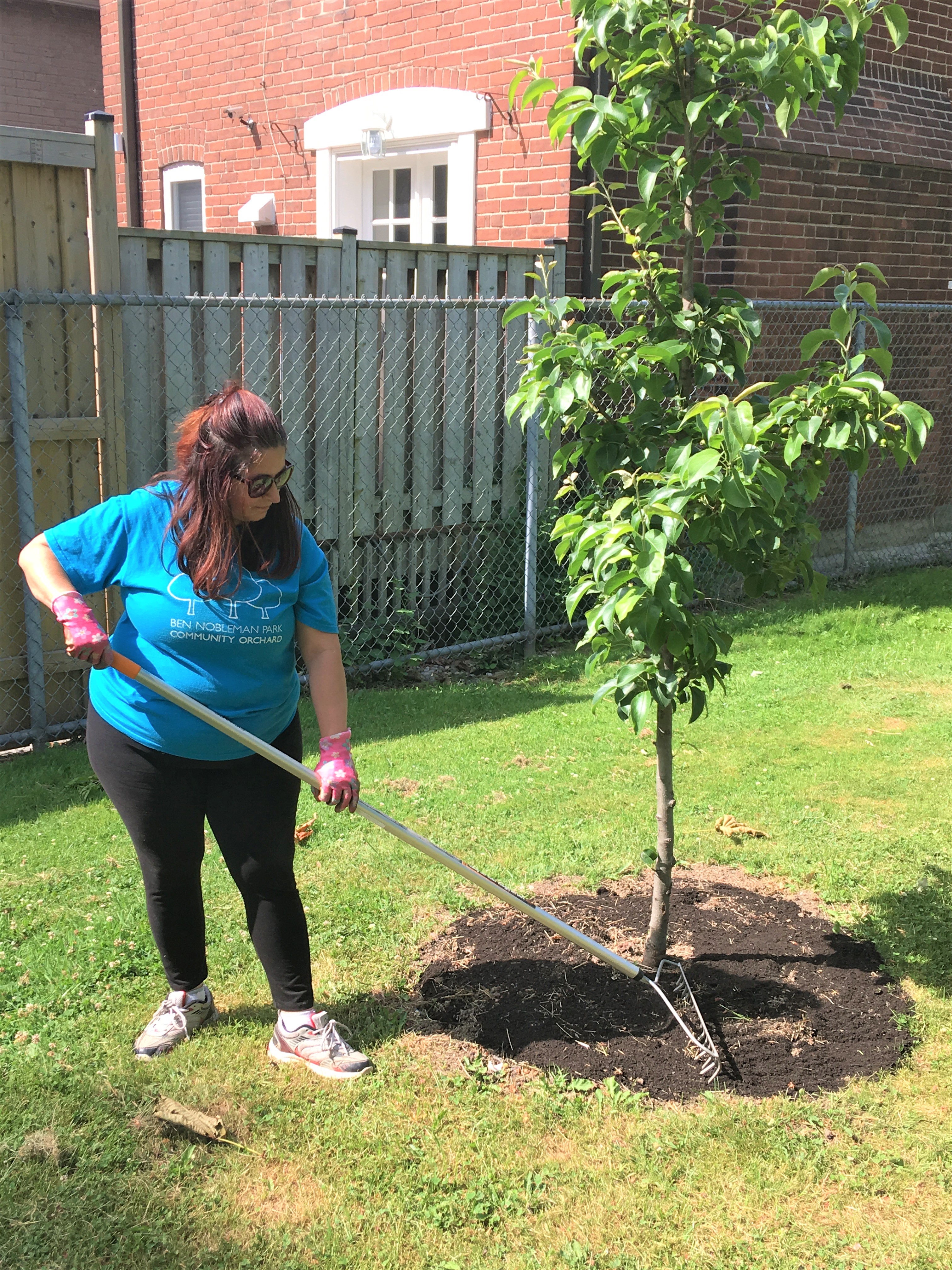 n out of mulch, but not
 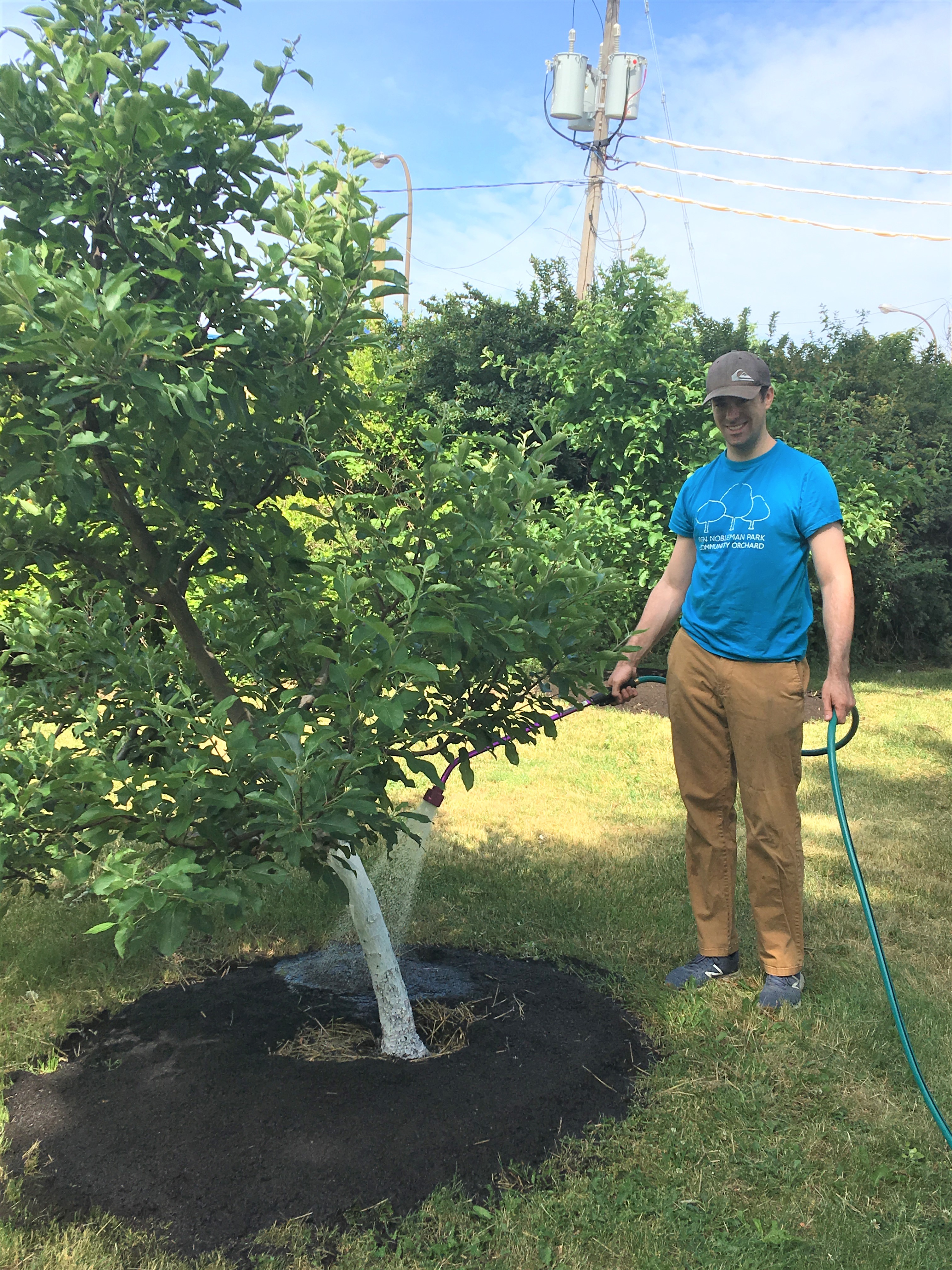 enthusiasm. During the second half of the stewardship session Alex watered the newly-mulched trees, while Giselle, Marilyn, Susan and I wrapped orchard sox around the tiny fruit. Orchard sox, the try-on socks/footies from shoes stores, are tied around fruit to prevent insects from laying eggs under the skin.
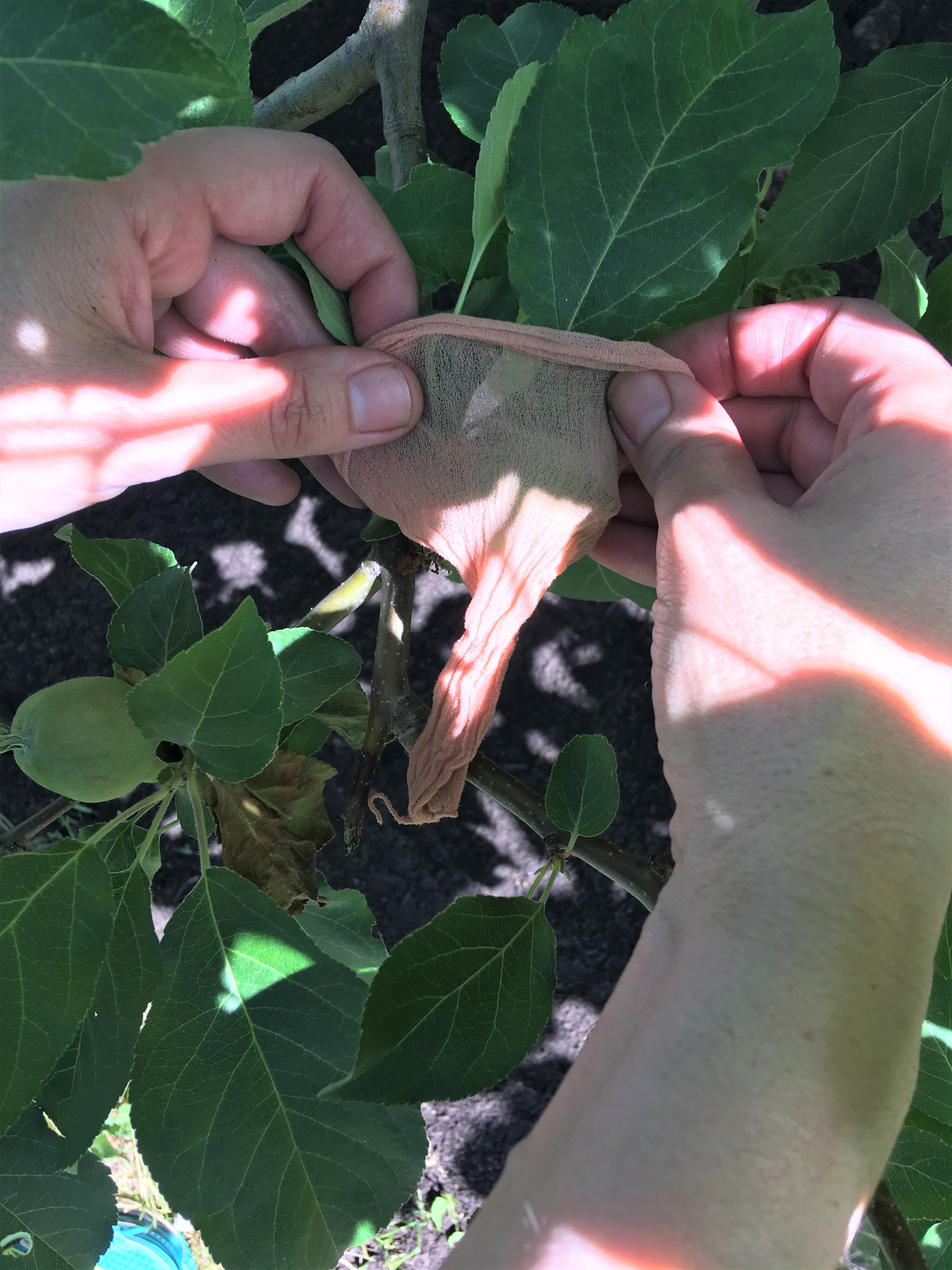
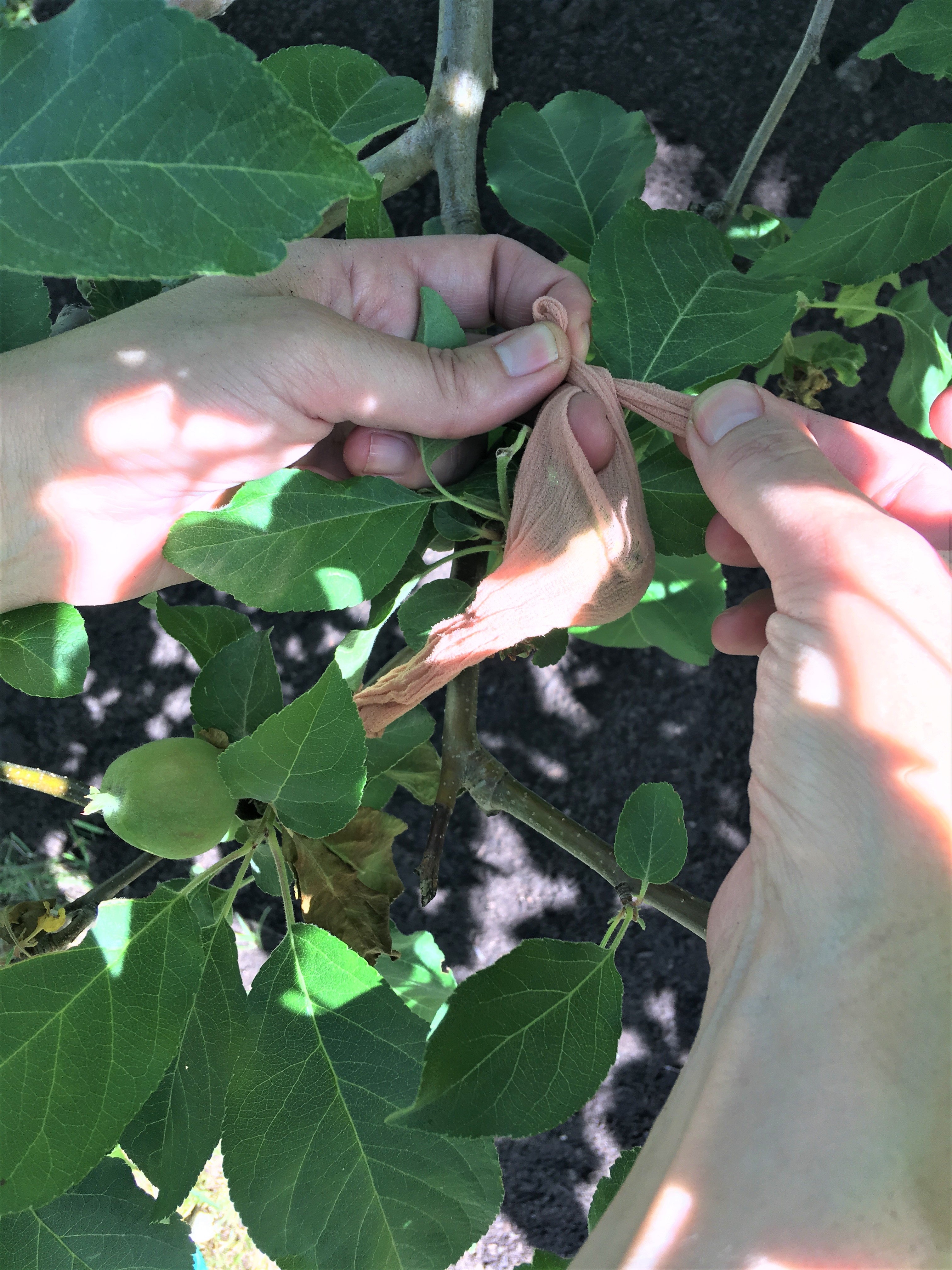
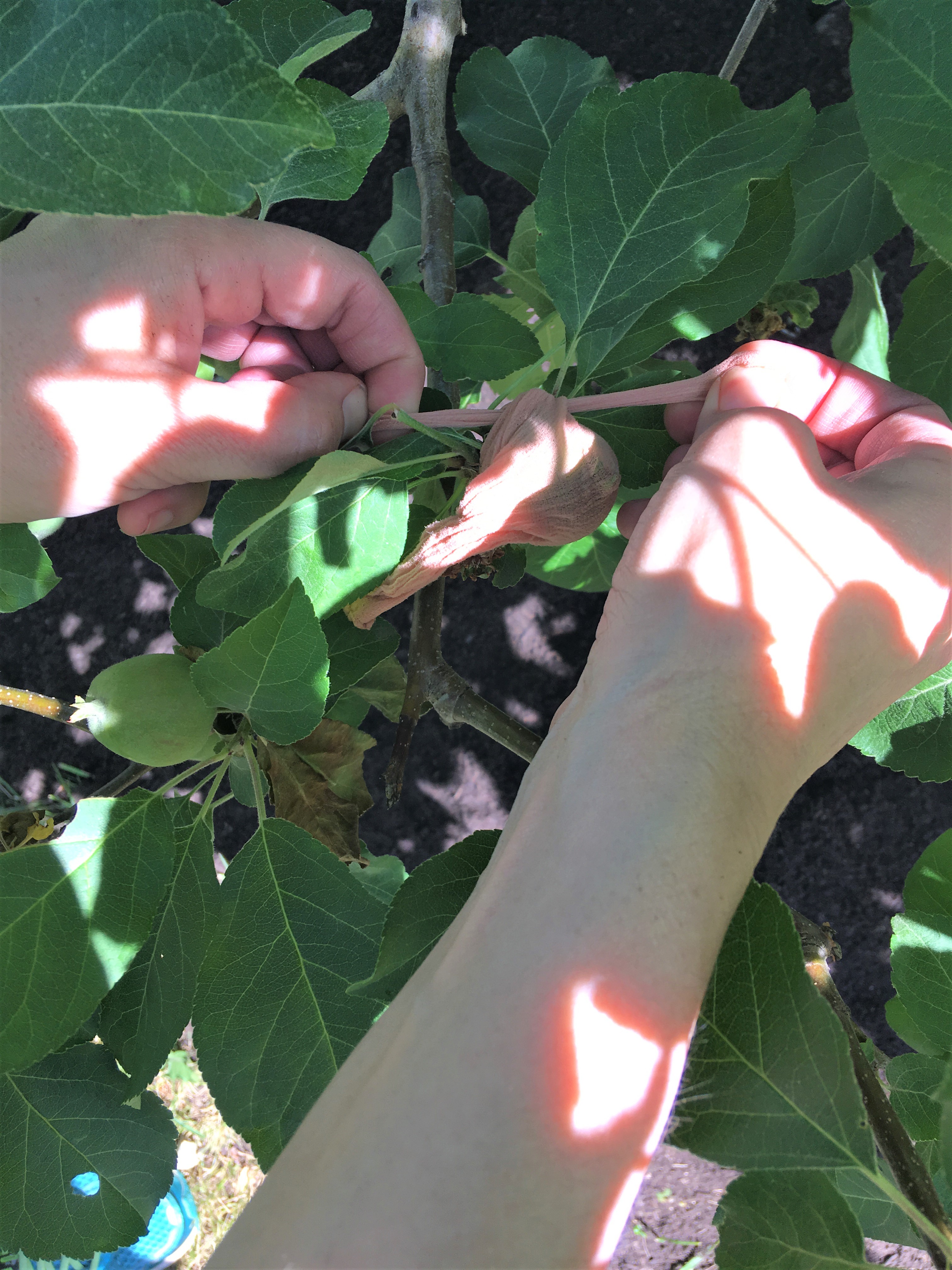 Before getting started, Susan quickly demonstrated the delicate and nimble process of tying orchard sox. The baby fruit are often hidden by leaves or branches, and you have to get up close and personal with the tree to tie the sox. When there are clusters of multiple pieces of fruit the smaller ones are removed so that more growth is focused on the larger one. This results in big, juicy fruit, and also prevents thinner branches from breaking from the weight of the fruit.
Giselle and Marilyn worked on covering the fruit on the apple trees in the north-east part of the park, while I worked on the apple trees along the western edge. We focused on the apple trees because none of the apricot fruit required thinning due to the small amount. Tying orchard sox on to the trees really gives a new perspective on how three-dimensional trees are, and how many little nooks and crannies fruit can hide in. Viewing a tree with orchard sox and noting where they are indicates good fruiting branches. This is important to remember for future pruning.
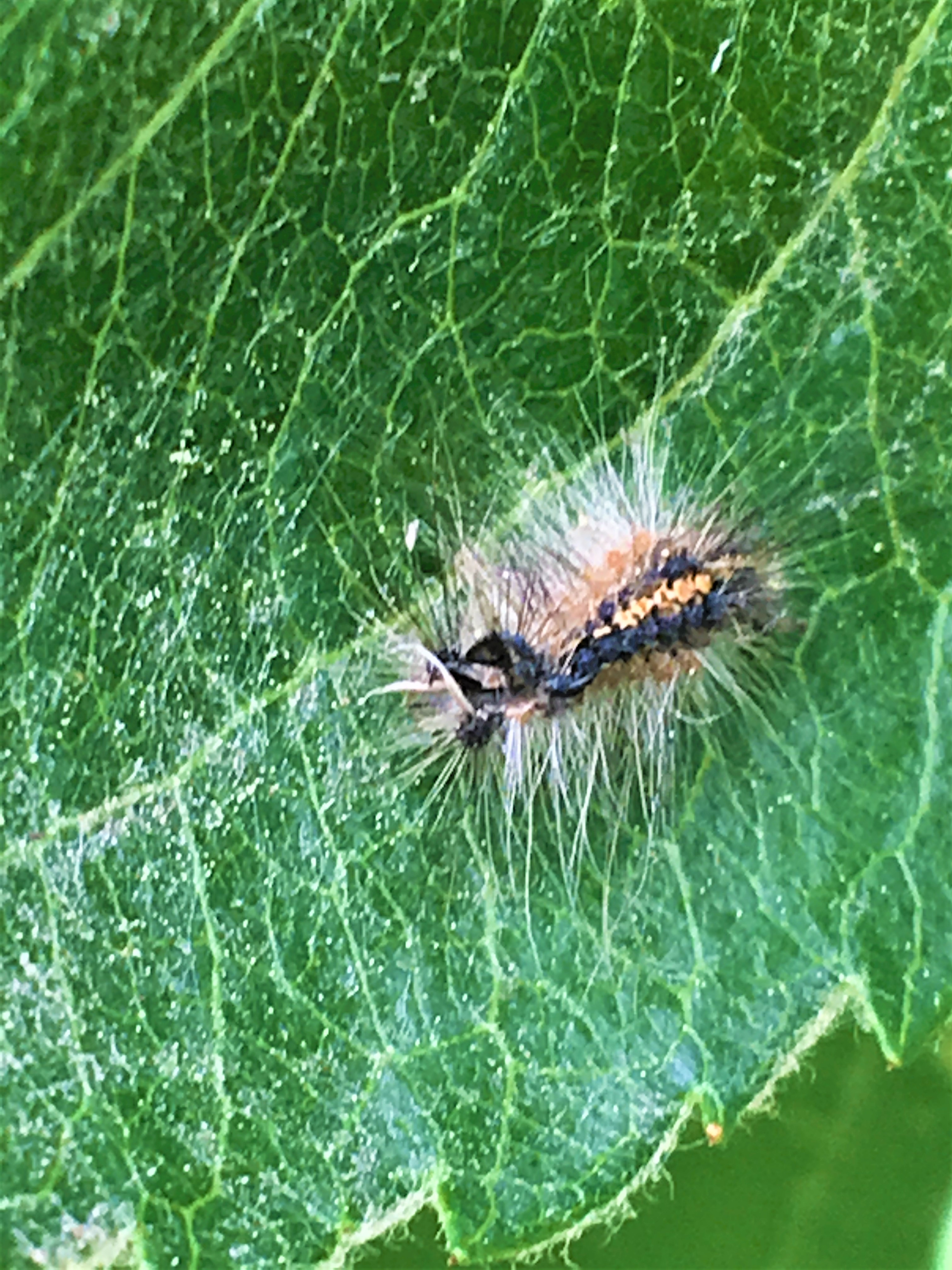
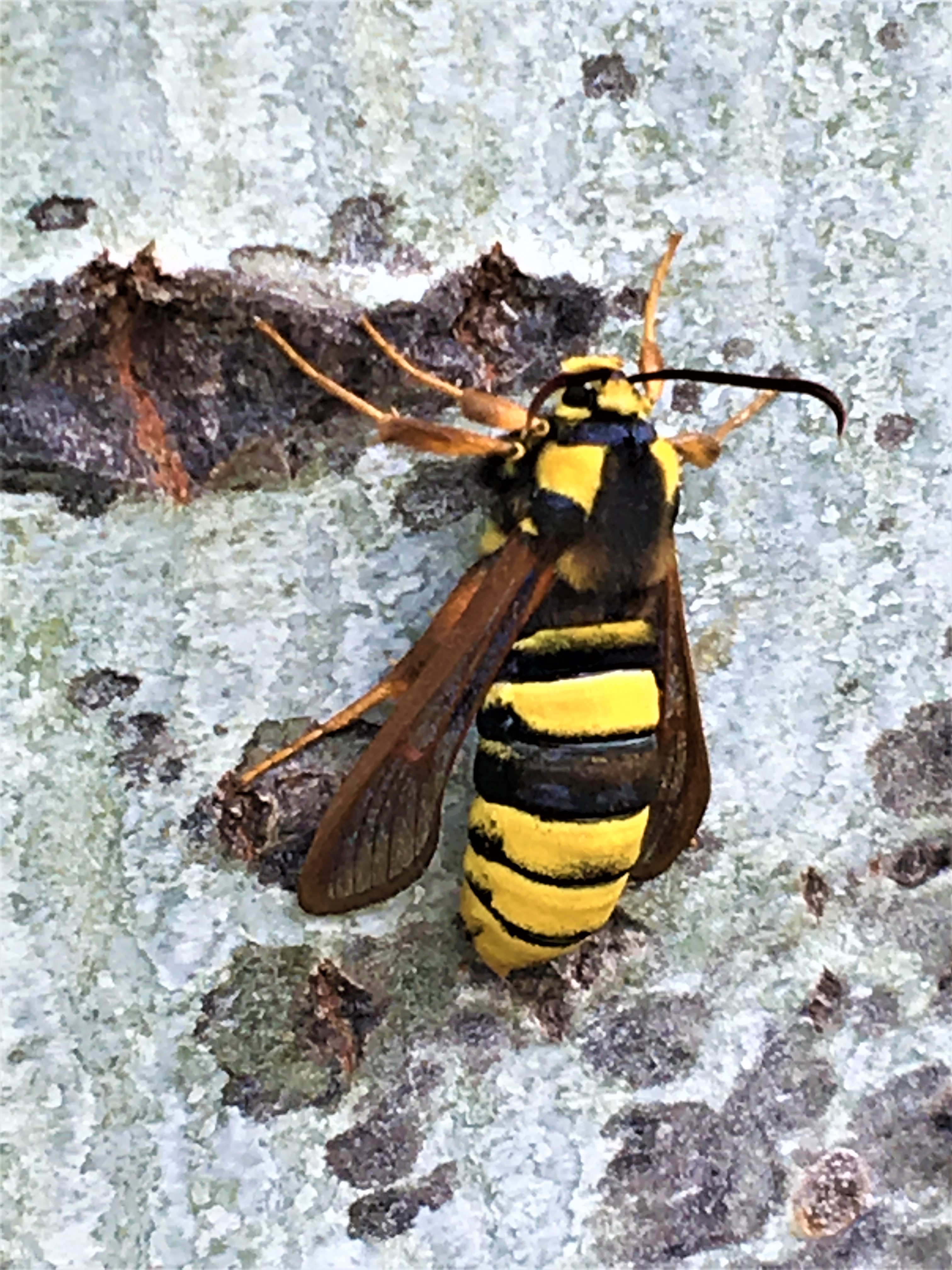 Yet again Susan and I encountered some insects hanging around the trees, but this time they did not appear to be gypsy moth caterpillars. After taking some photos and doing some online research, we have concluded that they are tarnished plant bugs (Lygus lineolaris) and a type of tent caterpillar (Malacosoma sp.). Hopefully their presence does not indicate a problem further down the line. Continuing with the theme of “cool insects in Ben Nobleman Community Orchard,” Alex and I spotted what we thought was a giant wasp. It turns out that it was a hornet moth (Sesia apiformis) with yellow and black markings imitating wasp stripes. We were tricked! A classic example of Batesian mimicry.
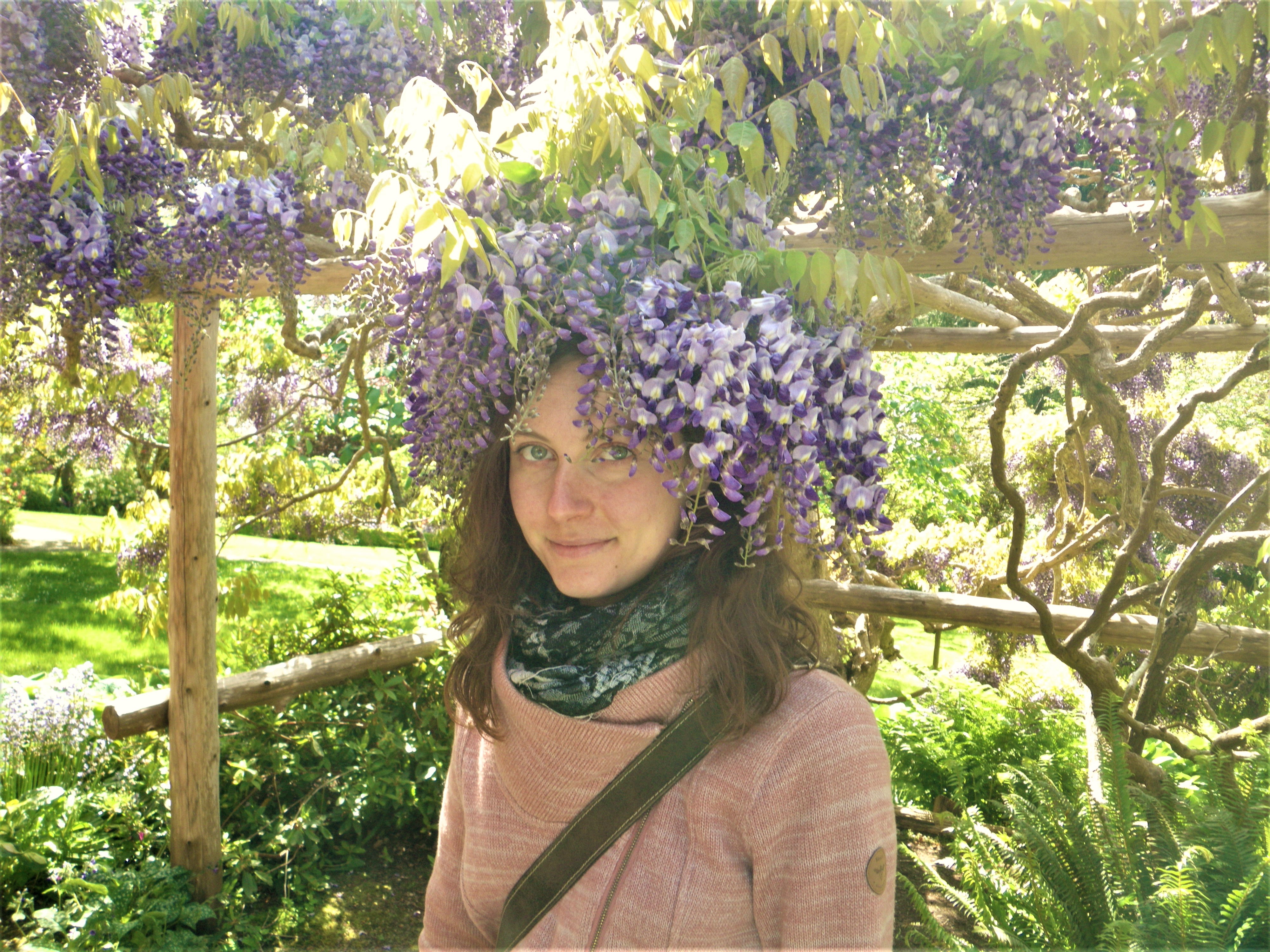 Janina Kowalski is a PhD student in Human Geography at the University of Toronto, researching urban food forests. She is a volunteer at the Ben Nobleman Park Community Orchard, and loves all things to do with trees!