
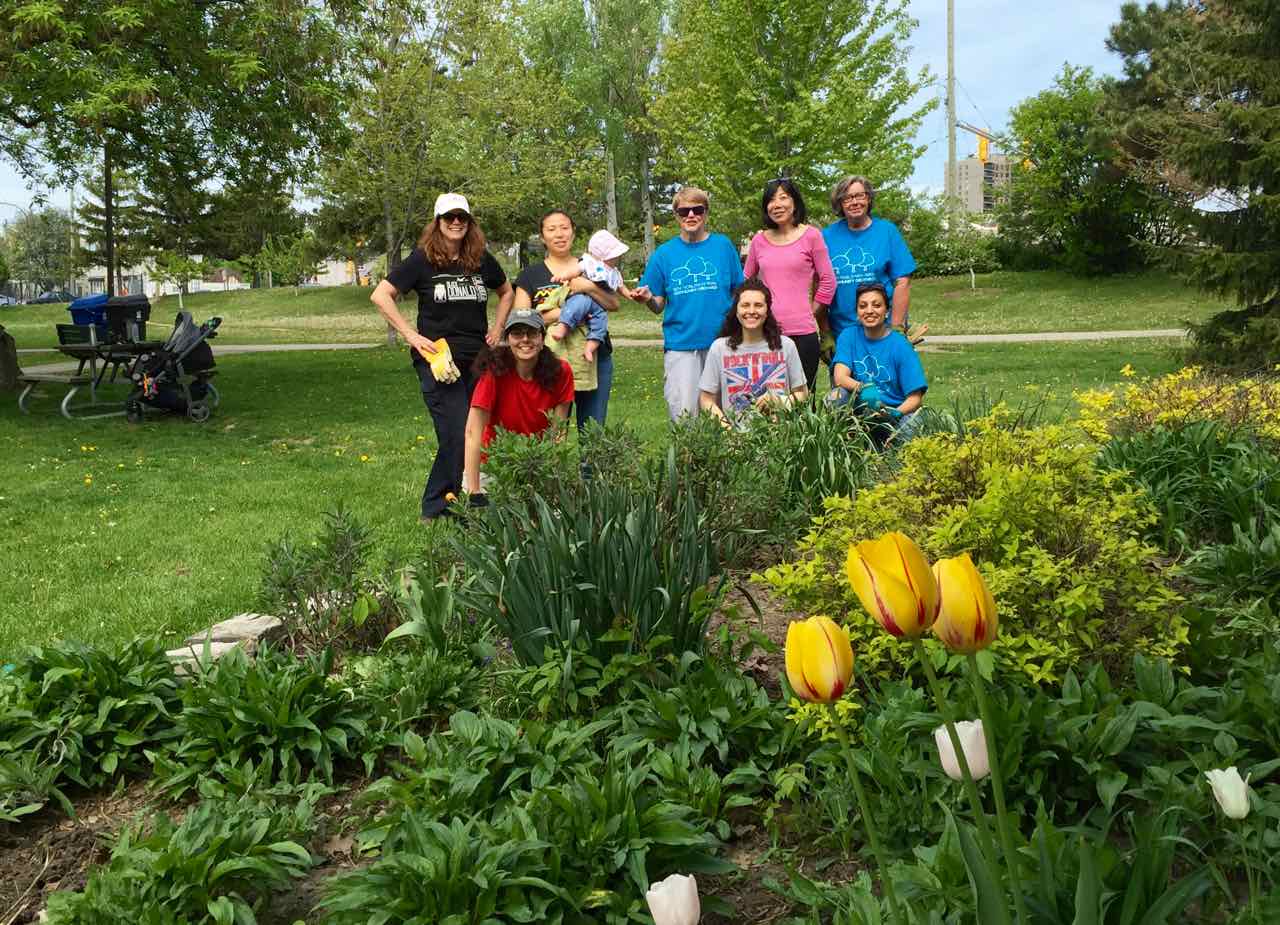
The Volunteers of the Ben Nobleman Park Community Orchard posing in front of their pollinator garden.
The perennials are leaping out of the ground, our fruit trees have blossomed and are leafing out and the volunteers of the Ben Nobleman Park Community Orchard are busy weeding, pruning and hunting for Black Knot and other problems in our fruit trees!
That’s because when you grow fruit trees one of your most important jobs is inspecting them for pest and disease problems. Our goal is to catch those problems early on and to nip them in the bud before they can spread to the rest of the orchard.
Inspecting Fruit Trees is Essential to Control Black Knot
This week, we found the dreaded black knot on our one remaining plum tree (The other two had to be removed because of black knot in the trunk). This tree is a fighter, so we carefully remove, bag up and throw out infected branches and in order to keep this tree healthy for another year.
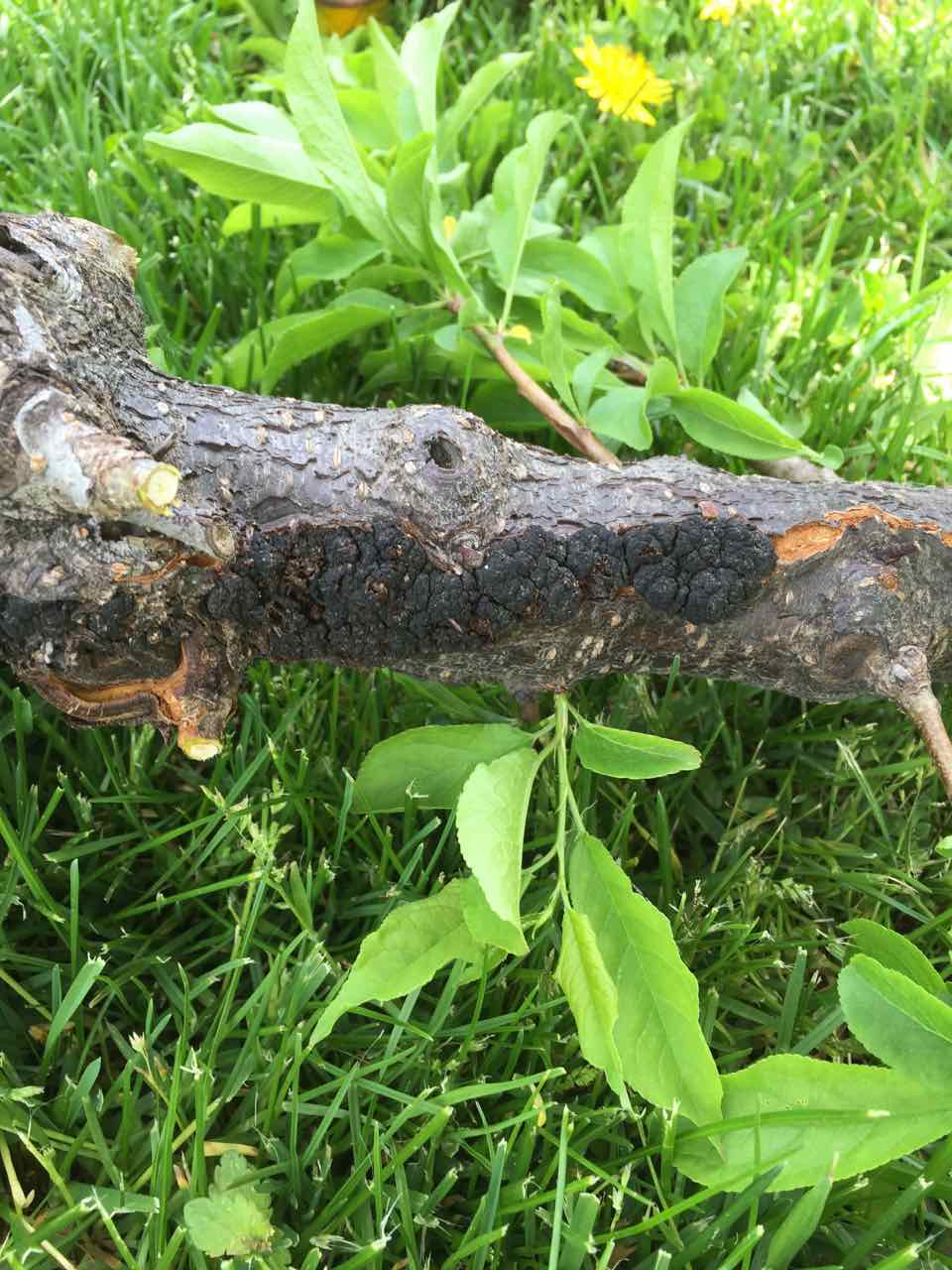
Black knot on the limb of a plum tree. It looks like a swollen black patch on the limb.
Pruning Out Black Knot Immediately To Prevent its Spread
Stacey is one of the graduates of my online Beginner Fruit Tree Care Workshops at www.orchardpeople.com and she and I tackled pruning our lovely old plum tree. We cut off the infected branch way back to the trunk in the hope of removing all signs of the black knot. But a dark patch on the cut branch seems to suggest that the infection has gone right into the trunk of the tree.

A sign of black knot inside the branch of our plum tree? In a healthy branch, the wood would be consistently brown…but that dark brown spot in the middle does not bode well…
Over time I have learned to identify most of the common fruit tree disease problems because different problems require different types of treatment. Sometimes pruning works – and it can work with Black Knot. At other times you need to use organic sprays or other techniques.
In any case, as far as we can see now, the Black Knot in our plum tree is gone. We will keep an eye open for any new manifestations of it and prune them off as necessary.
In the end, we all had a fantastic day in the park. Some of us worked with the trees, others worked tending our pollinator garden. And some of us just hung around looking cute – here I’m referring to our youngest volunteer Azalea who came with her mother Lindsay.
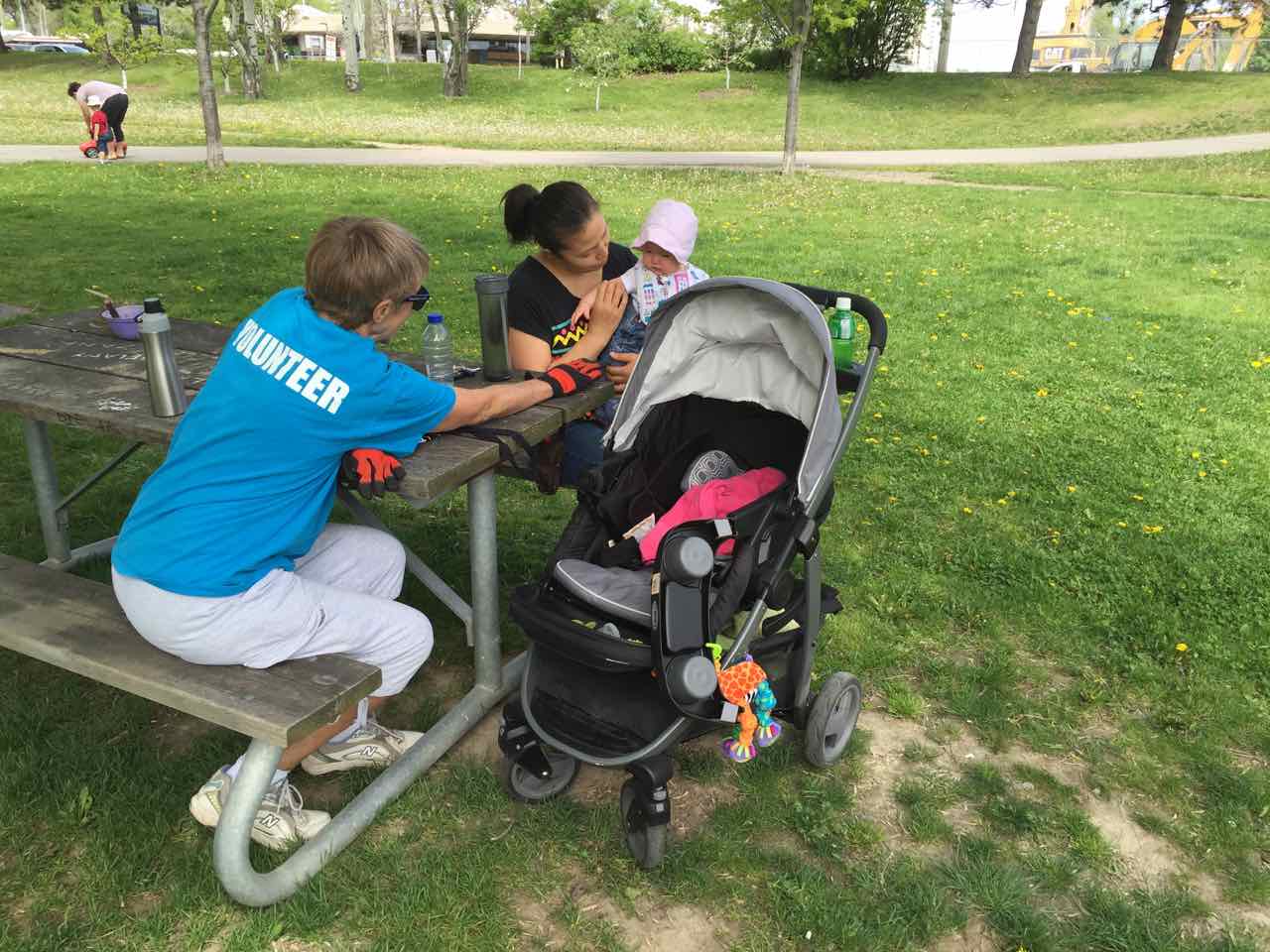
Lynn (in volunteer T-shirt) with Lindsay and her daughter, Azalea. At just 6-months, Azalea is Ben Nobleman Park Community Orchard’s youngest volunteer!
All in all, another great volunteering day. Come and join us next time! To join our group send an email to growingforgreen (at) gmail.com and we’ll get back to you. See you in the park!
 Susan Poizner is one of the founders of the Ben Nobleman Park Community Orchard and the author of the award-winning fruit tree care book Growing Urban Orchards. She is also the creator of the online fruit tree care educational portal at www.orchardpeople.com.